
24/7 Customer Support

Free returns

Same-day & Next-day Delivery

Quality Guaranteed

Unlock Your Welcome Offers: FREE Delivery | Up to 80% OFF | Free 30-day JoyPlus trial
Download the APP
Pruning a mature tree, overgrown shrub or fruit bush requires more than a sharp blade. The wrong tool can leave you struggling with thick branches, damaging green growth or working at an awkward height. For UK gardens, allotments and landscaping jobs, the right garden loppers and tree pruners should match the branch material, cutting diameter, reach and amount of force you can comfortably apply.
Before comparing products, it is worth understanding the common buying traps that make a pruning tool disappointing after only a few uses.
A stated capacity such as 38mm, 45mm or 50mm is a useful specification, but it is not a promise that every branch of that size will cut easily. Actual performance depends on whether the wood is fresh, dry, hard, knotty or positioned awkwardly.
A tool rated for 50mm may be excessive for routine shrub maintenance, while a smaller pair of pruning loppers may struggle with mature wood. Use the maximum diameter as a guide, not a target for every cut.
Bypass loppers use two blades that pass each other, producing a slicing action. They are generally suited to green, living stems and fresh branches where a clean cut is desirable.
Anvil loppers close a blade against a flat surface. This gives useful support when cutting dry, hard or brittle wood, although they may crush softer green stems if used incorrectly. Buyers looking for garden branch cutters should therefore identify the type of wood they usually prune before choosing a blade design.
Long handle loppers provide additional leverage and reach, but they can also be heavier and less manoeuvrable in dense borders. Telescopic loppers offer adjustable length, yet the extended handles may alter the balance of the tool.
For occasional pruning around roses and shrubs, a compact tool may be easier to control. For high branches or thick growth, extra reach can reduce the need to stretch or use a ladder. Always check both the closed length and the weight, not just the maximum reach.
Match the tool to the branches you expect to cut regularly:
The blade material also matters. SK5 steel, hardened steel and precision-ground blades are commonly listed specifications. A non-stick or low-friction coating can help reduce sap build-up and make cleaning easier, but it does not remove the need for maintenance.
For green branches, bypass loppers are usually the more suitable format. The Fiskars PowerGear Medium Bypass Lopper, for example, is listed with precision-ground, PTFE-coated blades and a cutting capacity of up to 38mm.
For dry and hard wood, anvil loppers can provide a more supported cutting action. The Fiskars Adjustable Long Handle Tree Pruner uses an anvil mechanism and is listed for branches up to 32mm, with an adjustable cutting angle of up to 26°.
Telescopic loppers can be useful when pruning higher branches from ground level or reaching into broad shrubs. However, extended tools require stable footing and careful control. The Fiskars Telescopic Lopper adjusts from 630mm to 830mm and is listed with a 45mm cutting capacity, while the Fiskars SmartFit Telescopic Lopper extends from 665mm to 915mm and is listed for branches up to 24mm.
Weight is particularly important during repeated overhead work. A lighter tool may reduce arm fatigue, whereas a heavier model may offer more robust construction or greater cutting capacity. Consider how long each pruning session normally lasts rather than focusing on a single maximum specification.
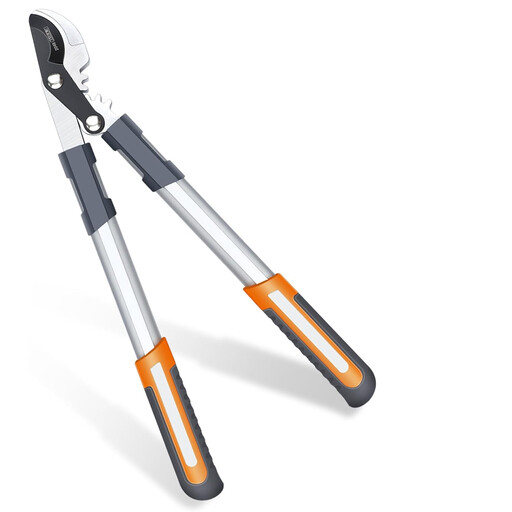
Why This Fits Their Persona: A practical option for UK gardeners handling shrubs, garden shoots and branches up to approximately 3cm without needing adjustable handles.
Its stated capacity, 43cm length and bypass design make the intended use clearer than vague “heavy duty” labelling.
SK5 steel blades, Teflon coating, aluminium handles and non-slip rubber grips.
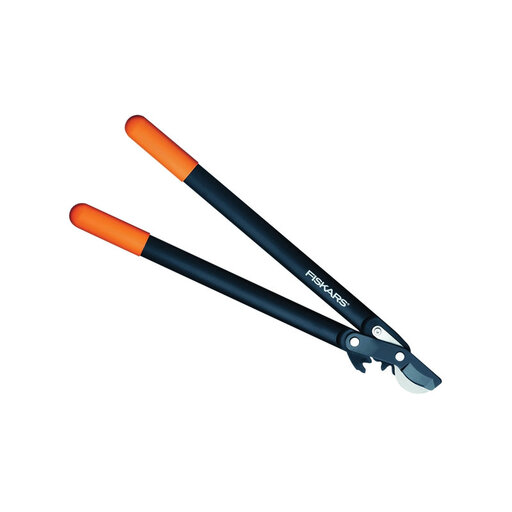
Why This Fits Their Persona: Suits gardeners who want a lightweight, structured tool for regular pruning of fresh wood and thicker shrubs.
The product information specifies a 38mm capacity, 545mm length and 550g weight, helping buyers assess proportion and handling.
PowerGear mechanism, PTFE-coated bypass blades and reinforced polyamide handles.
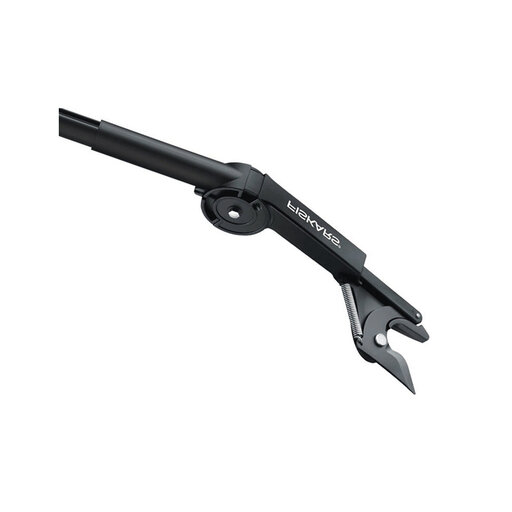
Why This Fits Their Persona: Designed for gardeners who need to access higher branches from a stable position without carrying a ladder around the garden.
Its anvil action is specified for dry and hard wood, rather than presenting one blade type as suitable for every branch.
Approximately 3.5m vertical reach, 32mm capacity, 26° adjustable cutting angle and 770g weight.
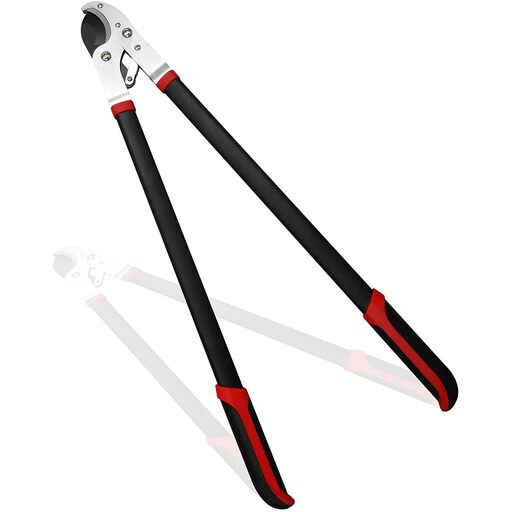
Why This Fits Their Persona: A substantial anvil branch cutter for users regularly dealing with thicker wood, hedges and mature shrubs.
The 73cm total length, 56cm handles and stated 5cm capacity clarify its scale before purchase.
High-carbon steel blade with Ilaflon coating and ergonomic non-slip handles.
Other options may suit different requirements. The Fiskars Xseries PowerGear Medium Bypass Pruner has a 24mm capacity and compact hand-pruner format, while the Fiskars Solid L11 Bypass Lopper is listed for branches up to 38mm with an 810mm length. For adjustable reach, the Gardena TeleCut Long-Handle Lopper extends from 65cm to 90cm and is listed for up to 50mm branches. Compare the full specifications before ordering.
We have compiled a complete, real-time list of products that fully satisfy these strict selection criteria and UK safety regulations.
Clean sap and debris from the blades after each session, then dry the tool before storage. A small amount of oil at the pivot can support smooth movement and help limit corrosion. Check that telescopic handles are securely locked before cutting, and keep fingers away from the blade area.
Work from stable ground and avoid cutting branches directly above yourself. Wear gloves and eye protection, particularly when dealing with brittle or dead wood. Do not use loppers on metal, wire or materials outside their intended purpose.
Neither format suits every branch. Bypass loppers are generally appropriate for fresh green growth, while anvil loppers are more suitable for dry or hard wood. Check the manufacturer’s stated use and cutting capacity.
Lifespan depends on frequency of use, branch hardness, storage and maintenance. Cleaning blades, oiling the pivot and avoiding oversized or unsuitable materials can help preserve cutting performance. Replace or service parts when blades become damaged or the handles develop excess movement.
They can cover some of the same tasks, but a dedicated tree pruner usually provides greater reach. Telescopic loppers are more versatile for both high and low branches, whereas a long-handle tree pruner is more suitable when extended reach is the main requirement.