What should you check?
Choose how the connection will reach the detached building before deciding which device will provide Wi-Fi inside it.
| Priority | What to check | Your needs |
|---|
| Backhaul route |
Measure the complete cable path, including patch leads. Fluke Networks describes a 100 m limit for a four-connector copper Ethernet channel. If cable is impractical, assess mounting positions for a paired wireless bridge. |
I need a dependable link for calls and several office devices, not merely a strong Wi-Fi signal beside the house. |
| Walls and distance |
Test a mesh node at its proposed position and check the connection back to the main network. For a bridge, check clear line of sight, including trees and other obstructions; TP-Link’s outdoor installation guidance calls for a clear path between devices. |
The office sits beyond external walls or across the garden, so I want to know whether a wireless link works at its actual location. |
| Outdoor installation |
Check whether equipment is intended for its mounting environment, along with the maker’s cable-entry, power and mounting instructions. Have proposed fixed electrical work assessed under the rules applicable to the property. |
I want the cable path, exterior equipment and power arrangement settled before choosing the final devices. |
| Local Wi-Fi |
If Ethernet reaches the office, check whether a dedicated access point or an existing compatible router can provide Wi-Fi there. TP-Link says access-point mode uses a wired connection, but some router-mode functions are unavailable in that mode. |
A cable already reaches my office; I would rather check whether my existing router can serve it than buy another device without need. |
Joybuy mesh options
These three mesh systems are options to consider only where a node can maintain a usable link to the home network. They do not replace an assessment of the cable or outdoor-bridge routes.
 No image available
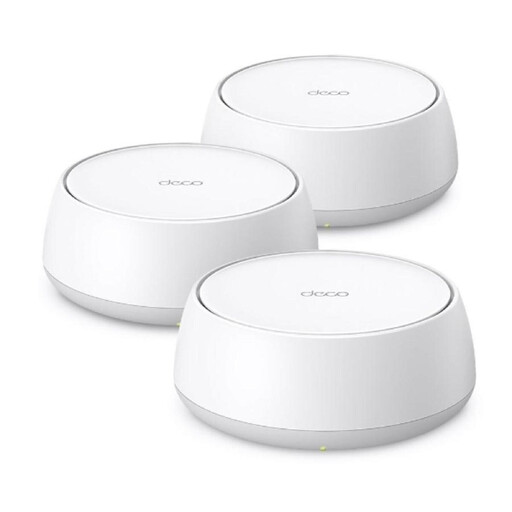
TP-Link Deco BE22 BE3600 Wi-Fi 7, 3-pack
Consider this mesh system if a unit can maintain a usable connection at the proposed garden-room position. The listing states wired and wireless combined backhaul and two 1.0 Gbps Ethernet ports per unit; check the actual route and keep the units away from rain and moisture.
View on Joybuy
 No image available
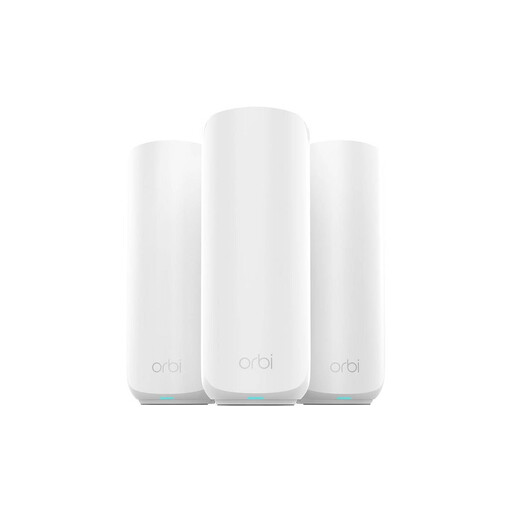
NETGEAR Orbi 370 RBE373 BE3600 Wi-Fi 7, 3-pack
This three-unit mesh system is worth assessing where a satellite can receive a strong link from the house. The listing specifies a 2.5 Gbps LAN port on each satellite; confirm wired-backhaul support if you plan to connect a satellite by Ethernet, and check suitability before placing any unit outside.
View on Joybuy
 No image available
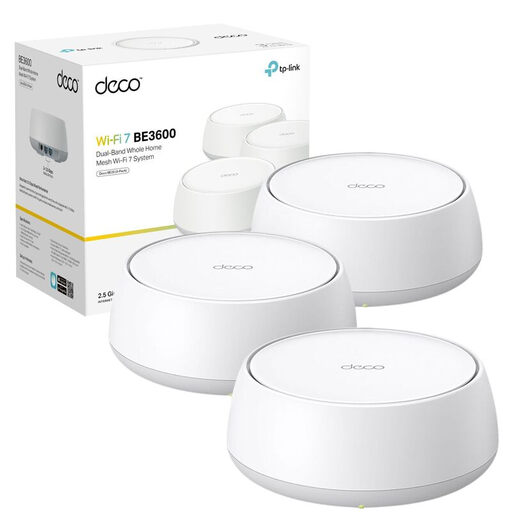
TP-Link Deco BE25 Wi-Fi 7, 3-pack
Consider its three mesh units if testing shows a usable backhaul at the detached room. The listing specifies 2.5 Gbps Ethernet ports; confirm wired satellite-backhaul support if that is your intended route, and do not expose the units to rain or moisture.
View on Joybuy
Frequently asked questions
Should I use Ethernet, a wireless bridge or mesh for a garden office?
Assess Ethernet plus a local access point first if a practical cable route can stay within the complete copper-channel limit. If cable is impractical but the buildings have clear line of sight, assess a paired outdoor bridge. Use mesh only after checking that a node has a strong connection back to the house at its proposed position.
Is a garden office 40 m away within Ethernet’s limit?
It may be: measure the full cable route, not the straight-line distance across the garden. Fluke Networks describes a 100 m limit for a four-connector copper channel, comprising a 90 m permanent link and up to 5 m of patch cable at each end.
Can an old router provide Wi-Fi in the office?
Yes, if a wired network connection reaches the office and the router supports access-point mode or can be configured appropriately. Check the exact model’s features: TP-Link says gateway functions including NAT forwarding, QoS and VPN are unavailable in access-point mode on the routers covered by its guidance.
Can I put a mesh node outdoors?
Check the exact unit’s outdoor-use rating and installation instructions before placing it outside. An indoor node should not be treated as outdoor equipment; TP-Link specifies IP65 enclosures for particular outdoor products, but that rating does not apply to every mesh system.
Do building rules matter for a garden-office network?
They can if the project involves fixed electrical work or power provision for an outbuilding. Electrical Safety First says electrical installation work in homes, gardens and outbuildings must comply with applicable Building Regulations; Wales and Scotland also publish their own guidance. Ask a suitably qualified installer or the relevant local authority what applies to the proposed work before it starts.


