Garden photographers making framed prints
If you want to display flowers, wildlife or wider garden scenes, decide how large those prints need to be. A4 may suit albums and standard frames; regularly making larger display prints points towards A3+.


For repeated garden-photo printing, choose a refillable photo inkjet with the borderless size you will use: A4 for albums and standard frames, or A3+ if larger display prints are a regular goal. A compact photo printer suits postcards and keepsakes instead, but its smaller output cannot replace an A4 or A3+ print. Check compatible media, consumables and the space needed to load paper before buying.
If you want to display flowers, wildlife or wider garden scenes, decide how large those prints need to be. A4 may suit albums and standard frames; regularly making larger display prints points towards A3+.
If you print seasonal records, edited photographs or family garden pictures repeatedly, consider a refillable printer and account for both ink and photo paper.
If your garden photographs are mainly for cards, small albums or keepsakes, a compact printer may fit the task better than a printer chosen for large sheets.
Set the largest print you expect to make regularly before comparing printer formats; then check the media, consumables and workspace that format requires.
Choose when: Borderless prints for albums and standard frames are your main goal, and you expect to print repeatedly.
Trade-off: An A4 maximum will not make an A3+ display print.
Choose when: Larger botanical, wildlife or landscape prints are a regular part of your hobby.
Trade-off: Allow space for the printer and for loading larger sheets.
Choose when: You chiefly want postcard-size garden snapshots for albums or cards.
Trade-off: Check the model-specific paper and consumables; this route does not make A4 or A3+ prints.
Choose when: Small creative keepsakes from phone photographs are the goal.
Trade-off: Film is a continuing purchase, and the picture area is much smaller than A4.
| Concern | What to check | Who this matters to |
|---|---|---|
| Print size and display detail | Compare maximum borderless sizes with the frames you intend to use; allow for rear-feed clearance if choosing larger sheets. | If I want to frame a garden scene, I need the print to be large enough for its details to show. Around 33% of consumers put display-print size first. |
| Consumables for frequent printing | Check the correct ink bottles or film packs and photo paper for your planned print sizes. Treat manufacturer yields as format-specific estimates. | When I print seasonal changes and try different edits, what I use up with each print matters. For around 33% of consumers, repeat-print consumables are the primary concern. |
| Compact snapshot printing | Check the actual picture dimensions and whether the printer connects to the phone or other device you use. | I mainly want small garden snapshots without setting up a larger printer. Compact convenience comes first for around 17% of consumers. |
| Paper finish and compatibility | Confirm supported paper types, sizes and weights for the exact printer, then select the matching media settings. | To choose the finish for my flower and foliage photographs, I need media the printer can handle. Around 17% of consumers make paper choice their primary concern. |
Postcard-size and instant-film pictures are smaller than A4 or A3+ prints. If a framed enlargement is the goal, a compact print format will not meet it.
Choose the largest size you will actually frame before comparing printer features.
Ink-tank yields and film-pack quantities describe different print formats, so they do not establish a like-for-like cost per finished garden photograph.
Compare the correct consumables and paper for the sizes and number of prints you expect to make.
Paper size, weight and finish must fall within the exact model's supported media range; compact printers may require their own media sets.
Check the printer's media list, position the paper guides and select the corresponding paper settings before printing.
Misfeeds or unsuitable settings can use up photo paper and ink.
Suitability and current availability are separate purchase decisions.
Check the live product listing, included consumables and delivery options when you are ready to order.
Canon offers two distinct formats relevant here: the PIXMA G650 refillable A4 photo inkjet and the compact SELPHY CP1500.
Epson's EcoTank ET-8550 is a reference point for hobbyists considering larger garden-photo prints.
The instax Link WIDE is relevant to small creative prints made from phone photographs.
These choices address two different garden-photo plans: considering an A3+ refillable printer for larger prints, or making smaller phone-connected snapshots. Choose by the print size you need rather than treating the formats as interchangeable.
 No image available
Consider this model if larger garden photographs are your priority. Before choosing it, confirm the exact model's borderless print sizes, supported photo paper and the room needed to load sheets.
 No image available
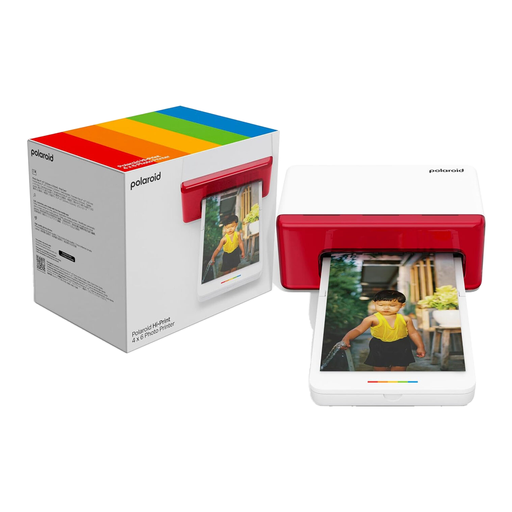
Consider this Bluetooth model for small garden-photo snapshots rather than A4 or A3+ display prints. Its stated format is 4 × 6 inches; check the compatible paper cartridges and phone requirements before buying.
A4 can suit albums and standard frames; choose A3+ if larger display prints are a regular goal. Canon specifies borderless output up to A4 for the PIXMA G650, while Epson specifies borderless A3+ output for the EcoTank ET-8550.
Not when you need A4 or A3+ garden prints. Canon specifies postcard-size output for the SELPHY CP1500, while Fujifilm gives the instax Link WIDE a 62 × 99 mm picture area; choose either for its small-print use instead.
Use paper supported by the exact printer. Canon notes that portable printers can require specific media, while inkjets accept different sizes, weights and finishes only within their stated limits. Match the tray guides and print settings to the paper you choose.
Compare the ink or film and paper needed for the print sizes you will actually make. Canon's estimated 3,800-photo yield for a PIXMA G650 bottle set is based on 10 × 15 cm photos; it should not be treated as the number of A4 prints you will get or compared directly with film-pack output.