
24/7 Customer Support

Free returns

Same-day & Next-day Delivery

Quality Guaranteed

Unlock Your Welcome Offers: FREE Delivery | Up to 80% OFF | Free 30-day JoyPlus trial
Download the APP
Choosing garden planters can seem straightforward until a container proves too heavy to move, lacks adequate drainage or is too shallow for the plants you want to grow. UK weather adds further complications: persistent rain, winter frost, strong winds and changing light levels can all affect how well a planter performs.
This guide explains the practical details to check before buying, from capacity and construction to positioning and maintenance. It also matches four garden planters to different growing needs, including balconies, patios, herbs, flowers and climbing plants.
A stone-effect planter or oakwood-effect planter may look convincing online, but appearance does not indicate weight, durability or drainage. Traditional stone and timber can be difficult to reposition once filled with compost. Recycled plastic planters can provide a similar visual style while being easier to handle, but buyers should still check dimensions, base design and stated outdoor suitability.
A tall container is not automatically suitable for deep-rooted plants, while a wide trough may have less planting depth than expected. Check the internal planting area or stated capacity where available. A 45-litre planter, for example, offers a different growing environment from a small decorative pot, even if both appear suitable for flowers.
Remember that wet compost, plants and added gravel can make a container considerably heavier. Balcony growers should also consider the combined load and consult their building guidance where necessary.
Outdoor planters may be described as weather-resistant or UV-resistant, but placement still matters. Standing water can damage roots, while strong winds can tip tall planters. Wooden planters generally require more care than recycled plastic planters, including inspection and periodic treatment with a suitable preservative or sealant.
Match the container to the plant’s eventual root space and the available location.
Leave enough room around the container for watering, pruning and air circulation. On patios, avoid blocking drainage channels or doorways.
Each material has practical trade-offs:
Healthy roots need excess water to escape. Check whether the planter has drainage holes or a recessed base, and use a suitable liner or saucer indoors to protect flooring. Do not seal drainage holes simply to prevent staining; instead, use a tray or raise the container slightly where appropriate.
Tall planters and wooden planters with trellis designs need particular care in exposed gardens. Place them on a level surface, position trellises near a wall or support, and check fixings periodically. A charcoal planter can create a strong contrast with foliage, but colour and finish should be considered alongside the amount of direct sunlight and heat reflected from paving or walls.
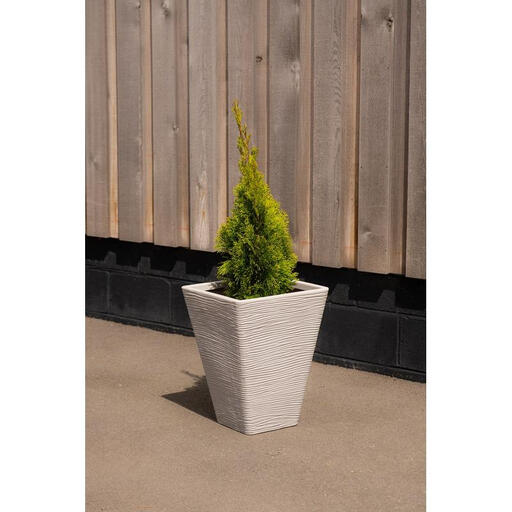
Why This Fits Their Persona: A practical starting point for homeowners wanting a substantial feature planter without the handling demands of solid stone. Its 40cm width and 52cm height suit entrances, patios and indoor decorative planting.
The stone appearance does not mean a solid-stone build. Its recycled plastic construction is listed as lightweight and easier to reposition, while the product information states weather and UV resistance.
Stone-effect finish; recycled plastic construction; suitable for indoor and outdoor decorative planting.
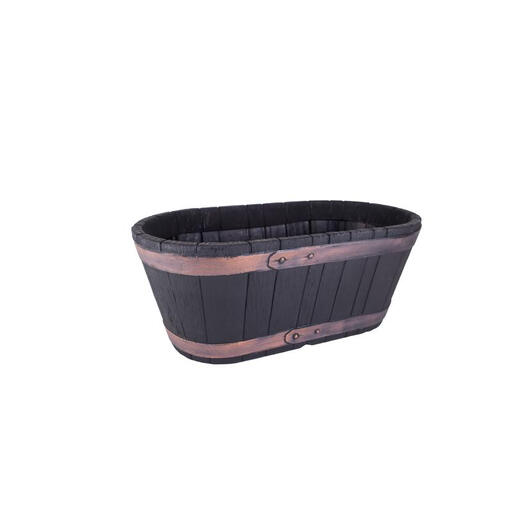
Why This Fits Their Persona: Suitable for shoppers who want a traditional timber-inspired look along a fence, beneath a window or on a patio wall, without choosing a solid wooden container.
The oakwood-effect finish avoids relying on untreated timber. The recycled plastic construction is lightweight, and the product information describes resistance to rot, splitting and seasonal weathering.
60.5cm trough length; oakwood-effect appearance; suitable for herbs, flowers and layered displays.
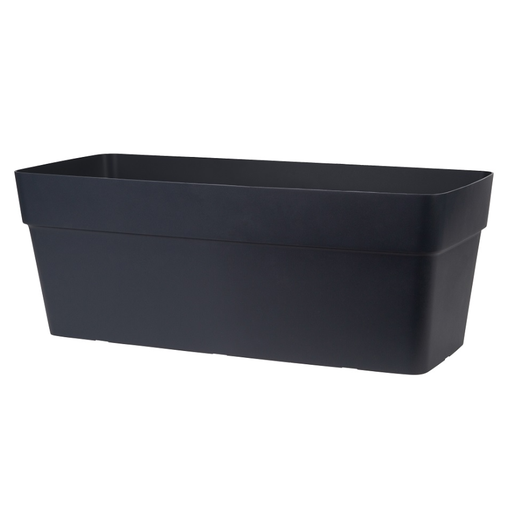
Why This Fits Their Persona: The 60cm by 25cm footprint is suited to narrow balconies, raised decks, patios and entrances where a long planting bed is more useful than a round pot.
Its narrow trough format helps use limited floor space efficiently. The listed recessed base supports drainage, while the lightweight recycled plastic construction is easier to rearrange.
45-litre capacity; charcoal finish; listed as weather-resistant and fade-resistant.
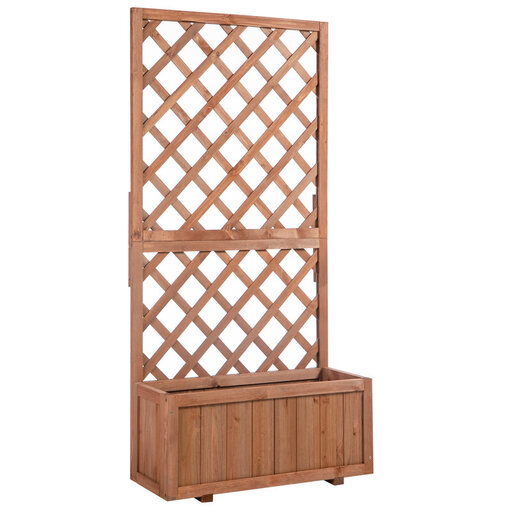
Why This Fits Their Persona: Designed for gardeners growing climbing plants, herbs, vegetables or flowers who need vertical support as well as a 45-litre planting bed.
The listing clearly identifies assembly, wood treatment and stability requirements. Position it on a level surface, secure the trellis near a support and inspect fixings regularly.
Solid wood construction; 45-litre capacity; topped trellis for climbing plants; paintable or varnishable surface.
We have compiled a complete, real-time list of products that fully satisfy these strict selection criteria and UK safety regulations.
Lightweight planters are usually easier to manage on balconies, but total weight remains important once compost and water are added. Measure the available width and select a stable, low-to-moderate-height container where possible. The Strata Soho trough is 25cm deep and has a 45-litre capacity, so balcony owners should assess the combined load before filling it.
Lifespan depends on material, exposure, drainage and maintenance. Recycled plastic planters do not require wood preservative and are listed with weather-resistant features, but should still be positioned securely and kept free from standing water. Solid wood planters can remain useful for many seasons when inspected and treated with an appropriate outdoor preservative or sealant.