
24/7 Customer Support

Free returns

Same-day & Next-day Delivery

Quality Guaranteed

Unlock Your Welcome Offers: FREE Delivery | Up to 80% OFF | Free 30-day JoyPlus trial
Download the APP
A well-planned container display can brighten a patio, balcony, entrance or window box without demanding constant watering and pruning. However, choosing garden planters and artificial flowers based on appearance alone can lead to avoidable problems.
Three common buying traps are worth checking before you order:
The right combination should match your available space, the weight your balcony or decking can support and whether you want real planting, decorative stems or a mixture of both.
Recycled plastic planters can be a practical option for renters, balcony gardeners and anyone who regularly changes a display. Compared with traditional timber or stone, they are generally easier to lift and reposition. The listed Strata planters are made from recycled plastic and are described as resistant to rot, moisture damage, cracking or fading, depending on the model.
A lightweight design is useful, but remember that soil and water add substantial weight. For balconies, check the available floor area and avoid overloading the space. On exposed patios, a very light planter may also need a heavy inner pot or suitable placement to reduce the risk of tipping in strong wind.
Compare the internal planting area rather than relying only on the product’s external measurements. Barrel planters typically provide deeper space for shrubs, herbs and seasonal displays, while trough planters are better suited to narrow areas beneath windows, along fences or beside patio walls.
For example, the Strata Soho charcoal trough measures 60cm long, 25cm wide and 30cm high, with a stated 45-litre capacity. This elongated format can support grouped plants or a row of decorative stems without taking the floor space of several round pots.
For real plants, look for drainage provision or plan to use an inner pot with drainage holes. Standing water can damage roots, particularly during wet UK winters. Use a saucer indoors and avoid blocking drainage holes outdoors.
Colour affects how foliage and flowers appear. Charcoal planters create a strong contrast with pale flowers, grasses and bright artificial blooms. Oakwood-effect finishes work well with cottage-style planting, herbs and natural textures. Stone-effect planters offer a neutral background for colourful flowers and can suit both traditional and contemporary gardens.
If you are combining several containers, vary height and shape while keeping one shared colour or material feature. This creates a coordinated display without making every planter identical.
For outdoor use, check whether the listing specifically states UV resistance, fade resistance or waterproof construction. These terms describe product features, but they do not guarantee an unchanged appearance in every location. Direct, uninterrupted sunlight can be more demanding than a sheltered porch or covered balcony.
Also inspect:
Artificial wheat stems can add height and rustic texture to a barrel planter or entrance arrangement. Artificial bougainvillea is more suitable when you want trailing movement, colour and flexible branches for a hanging basket, tall vase or event display.
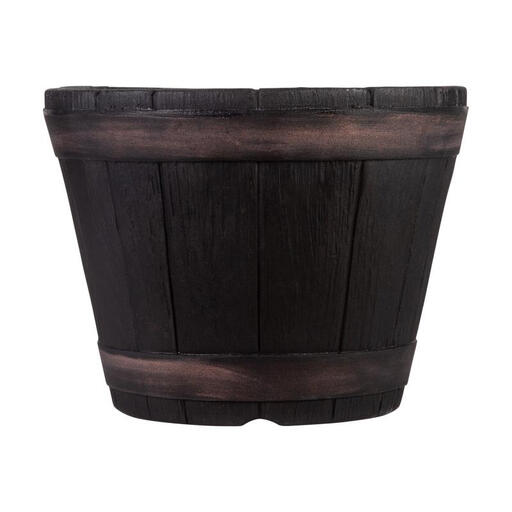
Why This Fits Their Persona: A compact round planter for first-time container gardeners, renters and shoppers wanting rustic character without the upkeep associated with real timber.
The recycled-plastic construction avoids the warping, rotting and regular treatment associated with genuine wood, while its stated dimensions make the available footprint clear.
Oakwood-effect texture; lightweight recycled plastic; suitable for flowers, herbs and decorative shrubs.
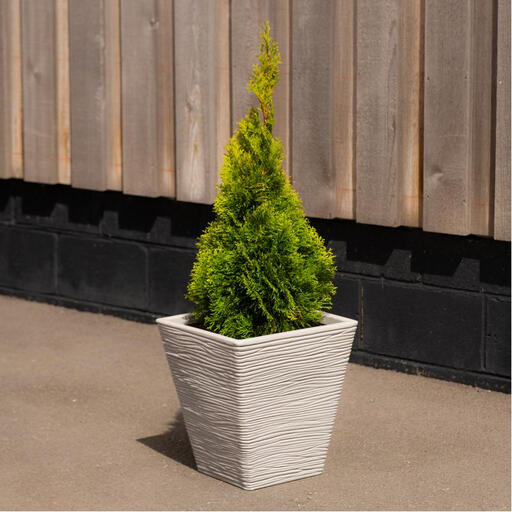
Why This Fits Their Persona: A stone-effect option for homeowners and landlords seeking a more architectural look in an entrance, conservatory, patio or balcony display.
It provides the visual effect of stone while being described as lightweight and easier to reposition, reducing the handling issue associated with heavy masonry containers.
Neutral stone colour; tapered square profile; stated resistance to weather, UV exposure and frost damage.
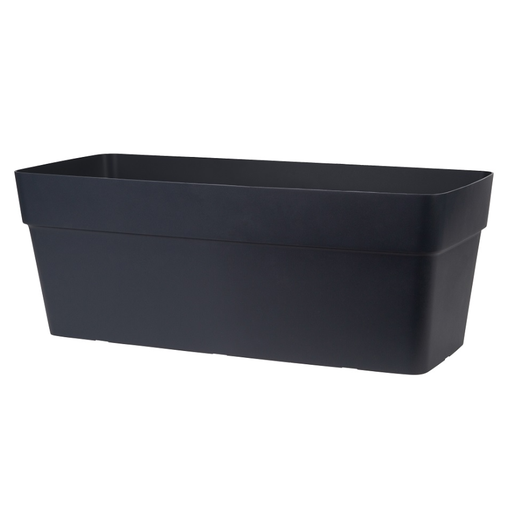
Why This Fits Their Persona: Designed for repeated seasonal rearrangement, narrow patio edges, balcony gardens, window areas and grouped planting schemes.
Its stated dimensions and 45-litre capacity help shoppers assess space and filling requirements before purchase, while the trough shape uses narrow areas efficiently.
Charcoal finish; recycled-plastic construction; long planting space for herbs, trailing plants or grouped flowers.
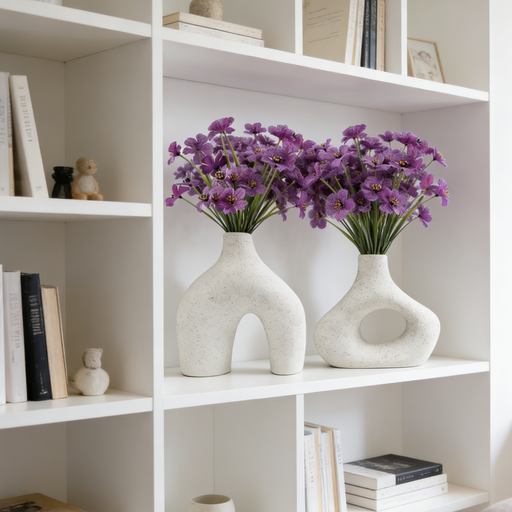
Why This Fits Their Persona: Suitable for busy households, window boxes, porches and event styling where regular watering is impractical.
The listing specifies waterproof, UV-resistant and fade-resistant features, giving outdoor shoppers clearer information than a generic “decorative flowers” description.
Four bundles with 20 flexible branches and 72 flower heads in total; can be wiped or rinsed for routine cleaning.
We have compiled a complete, real-time list of products that fully satisfy these strict selection criteria and UK safety regulations.
Start with the container’s shape. Use a round barrel planter as a central feature, a trough planter for a linear border or a tapered stone-effect planter beside a doorway. Then add contrast through height and texture:
For a natural look, vary the direction of flexible branches and avoid placing identical flower heads at the same height. Dust artificial flowers gently and inspect outdoor displays after severe wind or heavy rain.
Some can, particularly products that specifically state UV-resistant, waterproof or fade-resistant construction. A sheltered position will usually expose them to less direct sunlight and wind than an uncovered border. Check the product details and secure stems properly in windy locations.
Real plants generally need drainage to reduce the risk of waterlogged compost. If the planter has no visible drainage information, use a suitable inner pot or contact the seller before filling it. Artificial flowers do not need soil, so a liner, gravel or weighted insert may be more practical.
They can be useful because they are easier to move, but the filled weight still matters. Soil, compost, water and decorative stones can make a lightweight planter considerably heavier. Check your balcony’s permitted load and position containers securely away from edges.