
24/7 Customer Support

Free returns

Same-day & Next-day Delivery

Quality Guaranteed

Unlock Your Welcome Offers: FREE Delivery | Up to 80% OFF | Free 30-day JoyPlus trial
Download the APP
Choosing garden planters is not simply a matter of picking a colour you like. The wrong shape can restrict root growth, a poorly placed container can become unstable in strong wind, and an attractive finish may need more maintenance than expected.
For UK gardens, balconies and patios, three buying traps appear regularly:
The right choice balances planting depth, available floor space, weather exposure, material and the amount of maintenance you are prepared to provide.
Start with the position rather than the planter itself. Measure the width, depth and height available beside a wall, beneath a window, on decking or along a balcony edge. Remember to leave room for watering and for plants to spread.
Trough planters are useful where floor space is narrow. For example, a 60cm-long design can create a continuous display of herbs, flowers or trailing plants without taking up the circular footprint of several pots. Square planters are easier to position against walls and in corners, while round planters can work well as standalone features near entrances or in the centre of a patio.
Check the internal planting area where this information is available, rather than relying only on external dimensions. A wide planter may still have a tapered interior.
Plant choice should guide size. Annual flowers and many herbs can grow in smaller containers, while shrubs, grasses and small ornamental trees generally need more soil volume and depth.
A 45-litre garden trough planter, such as the Strata Soho model, offers room for grouped planting and horizontally spreading roots. A smaller round planter may suit a single display plant, whereas a tall square planter can provide visual height for entrances and patio arrangements.
Allow space for a suitable compost mix, and avoid filling a container to the rim. This helps reduce runoff during heavy rain. If the planter will contain a climbing plant, also consider how far roots may spread and whether the trellis can be securely positioned.
Recycled plastic planters are often suitable for shoppers who want low maintenance and easy repositioning. The products featured here use recycled plastic and include finishes designed to resemble timber or stone. These designs avoid some of the upkeep associated with untreated wood, but you should still check drainage, weight and UV or weather-resistance information in the listing.
Wooden trough planters offer a natural appearance and can be painted or treated to suit a garden scheme. However, solid wood requires periodic inspection and suitable preservative or sealant. The Outsunny pine trough, for instance, requires assembly and ongoing care, with the manufacturer advising regular checks and protection from extreme weather.
A stone-effect or oakwood-effect planter can provide the visual character of heavier materials while being easier to handle. This can be especially useful for renters, balcony gardeners or anyone who changes their layout seasonally.
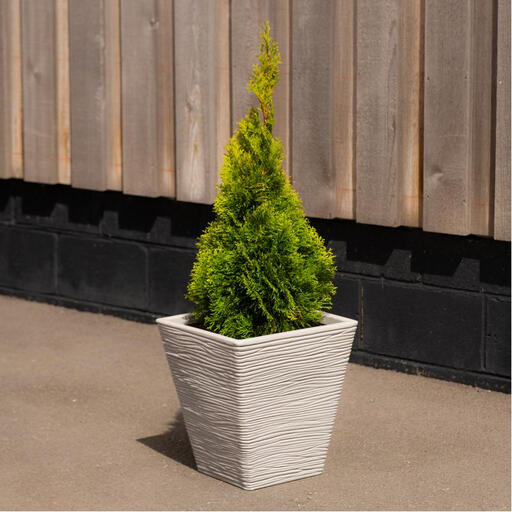
Why This Fits Their Persona: Its 36cm width and 39cm height suit smaller patios, entranceways and balcony corners where space is limited.
The tapered square format makes the external footprint clear, helping shoppers avoid buying a round container that does not fit their intended corner.
Recycled plastic construction; stone-effect finish; lightweight design for easier repositioning.
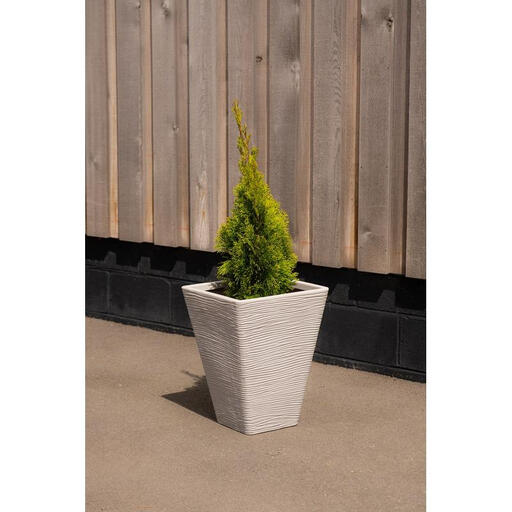
Why This Fits Their Persona: The 52cm height creates a defined feature for contemporary patios, pathways, conservatories and front entrances.
The stated 40cm width and 52cm height make it easier to plan spacing, while the lightweight material avoids the handling difficulty associated with solid stone.
Recycled plastic; stone-effect appearance; listed as weather- and UV-resistant.
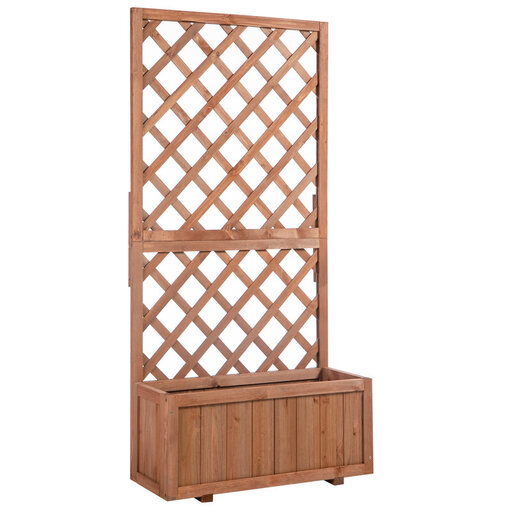
Why This Fits Their Persona: Its 45-litre capacity and integrated trellis suit climbing plants, herbs, flowers and vegetable displays in gardens, patios and greenhouses.
The product information states its dimensions, capacity, assembly requirement and need for a stable, level position, so buyers can plan installation before ordering.
Solid wood construction; 45-litre planting volume; topped trellis for climbing plants.
Before adding compost, place the planter where it will remain. Even lightweight planters can become difficult to move when filled with wet soil. Tall containers and trellis designs should sit on a stable, level surface and be positioned away from walkways where they could be knocked.
Use a liner only where the product instructions allow it, and do not block drainage points. For balconies, check the load restrictions with the property manager or landlord before adding several large containers. In exposed areas, group containers together or position them near a wall, while keeping sufficient airflow around foliage.
For a low-maintenance arrangement, consider weather-resistant planters in recycled plastic. Oakwood-effect, charcoal and stone finishes can coordinate with fencing, paving and rendered walls without requiring regular repainting. Wooden trough planters may need more attention, but they can be treated or painted to match an existing outdoor scheme.
We have compiled a complete, real-time list of products that fully satisfy these strict selection criteria and UK safety regulations.
Many recycled plastic planters are designed for outdoor use and may be listed as weather- or UV-resistant. Check the individual product description, drainage arrangement and placement guidance before leaving one outdoors through winter.
Most outdoor containers need a way for excess water to escape. Confirm whether drainage holes are already provided, and use a suitable saucer or raised position where necessary. Avoid allowing the base to sit permanently in standing water.
Narrow troughs and smaller square planters can make efficient use of balcony space. Lightweight designs are easier to reposition, but the combined weight of the planter, compost and water must be considered. Check balcony load guidance before creating a large display.