
24/7 Customer Support

Free returns

Same-day & Next-day Delivery

Quality Guaranteed

Unlock Your Welcome Offers: FREE Delivery | Up to 80% OFF | Free 30-day JoyPlus trial
Download the APP
Garden planters can transform a patio, entranceway, balcony or conservatory, but an attractive finish does not always mean a practical purchase. Many planters look suitable online yet create problems once they are filled with compost and exposed to British weather.
Before choosing outdoor planters, watch for three common buying traps:
The right choice depends on your available space, the plants you want to grow and how much upkeep you are prepared to provide. The following checks can help you compare garden planters more accurately.
Planters may be made from wood, ceramic, metal, stone-effect composite or recycled plastic. Each material has practical considerations.
Recycled plastic planters are usually lightweight and do not absorb moisture in the same way as untreated timber. Look for descriptions that clearly state resistance to outdoor exposure, UV fading, cracking, frost or rot. A wood-effect finish can provide a traditional appearance without requiring regular wood preservative.
Wooden planters can bring warmth and natural texture to a garden, but they generally need inspection and suitable treatment. Check whether assembly is required and whether the product instructions recommend a sealant or preservative.
For year-round use, weather-resistant planters should be placed on a stable surface with enough drainage. Weather resistance does not remove the need to prevent standing water inside the planter.
Measure the location rather than relying only on product photographs. Check the planter’s external width, depth and height, then allow space for access, watering and plant growth.
Capacity matters as much as external size. A 45-litre trough, for example, offers a different planting opportunity from a similarly sized decorative container with a shallow internal cavity.
Confirm whether the planter includes drainage holes or whether they need to be created according to the instructions. Excess water can damage roots, particularly during wet UK winters. For indoor use, place a tray or waterproof mat beneath the container to protect flooring.
Tall planters and a planter with trellis should be positioned on level ground. Once filled with compost, their centre of gravity changes. A trellis may also catch wind, so it should be placed against a suitable wall or support where the product instructions advise this.
For balconies, check the available floor area and building or landlord requirements before buying heavy containers. Lightweight garden planters are easier to reposition, but they still require stable placement when planted.
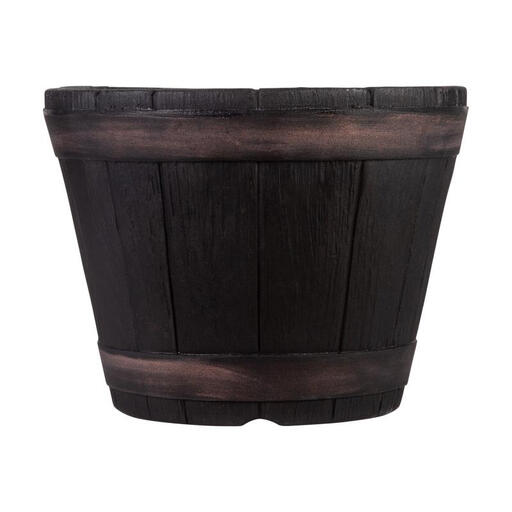
Why This Fits Their Persona: Its 34cm diameter and 25cm height suit smaller patios, front door areas and first-time container displays where a rustic look is wanted without the weight of a traditional timber barrel.
The recycled plastic construction provides a wood-style appearance without the stated warping, rotting or regular treatment concerns associated with genuine wood.
Recycled plastic; oakwood-effect textured finish; suitable for flowers, herbs, shrubs and decorative planting.
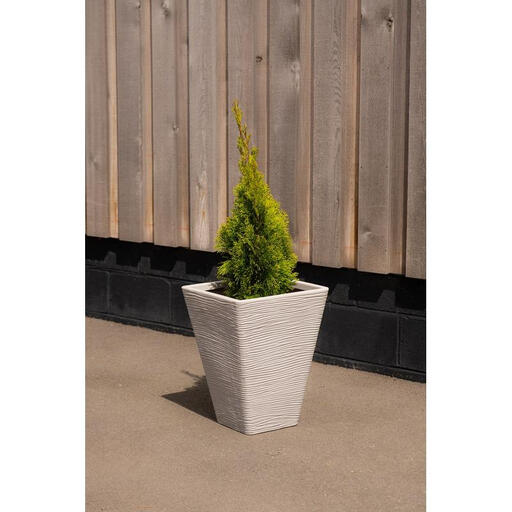
Why This Fits Their Persona: The 40cm width and 52cm height create a noticeable feature for patios, entrances, conservatories and structured planting schemes without the handling difficulty of a solid stone container.
Its recycled plastic body delivers a stone-effect appearance while remaining lighter to reposition than a comparable solid-stone planter.
Stone finish; recycled plastic construction; described as lightweight and suitable for indoor or outdoor planting.
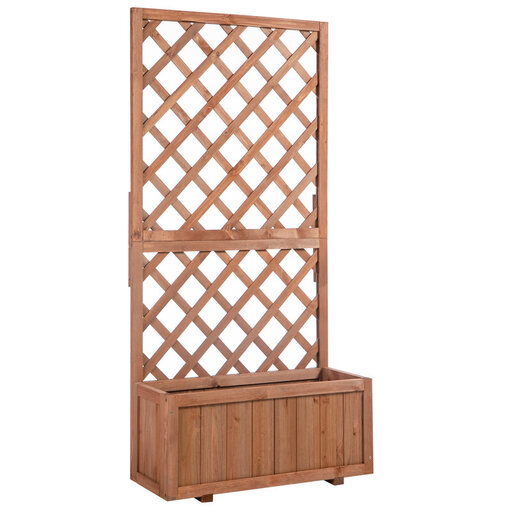
Why This Fits Their Persona: Gardeners growing herbs, vegetables, flowers or climbers can use the 45-litre trough and integrated trellis to create vertical interest on a patio, in a garden or greenhouse.
The listing clearly states its dimensions, 45-litre capacity, assembly requirement and need for regular wood treatment, making ongoing care easier to plan.
Solid wood construction; 45-litre planting volume; topped trellis for climbing plants; customisable surface.
Shape should support both the plant and the available layout. Round flower planters create softer visual lines and work well as standalone features. Square tapered designs are easier to arrange against walls or in symmetrical pairs beside a doorway.
Troughs make efficient use of narrow spaces and can separate a seating area from the rest of the garden. If you are planting herbs, select a position with suitable daylight and keep plants with similar watering needs together. For shrubs or small ornamental trees, prioritise depth and check the mature size of the plant before choosing a container.
A finish such as pewter, stone or oakwood effect can also influence how the planter looks through the seasons. Neutral colours generally allow bright flowers and green foliage to remain the main focus.
We have compiled a complete, real-time list of products that fully satisfy these strict selection criteria and UK safety regulations.
Most outdoor planters need effective drainage to reduce waterlogging. Check the product information before purchase and follow the manufacturer’s instructions about drainage holes, liners and placement. Indoor containers should sit on a suitable tray or mat.
Lifespan depends on material, exposure, planting weight and maintenance. Recycled plastic planters do not require the same preservative treatment as wooden containers, while solid-wood planters should be inspected and treated as recommended. Moving containers away from severe exposure where practical can also help protect finishes.
They can be, but placement is important. Use a level surface, avoid exposed edges and consider the planter’s height and shape. Tall containers or those with trellises may need additional support, especially after planting or during strong winds.