
24/7 Customer Support

Free returns

Same-day & Next-day Delivery

Quality Guaranteed

Unlock Your Welcome Offers: FREE Delivery | Up to 80% OFF | Free 30-day JoyPlus trial
Download the APP
Garden planters can transform a patio, balcony, entrance or small garden, but the wrong choice may create more work than expected. A pot that looks convincing online may be too shallow for the plant, unstable when filled or difficult to move once saturated with rainwater.
For UK homes, the most useful buying decision usually comes down to material, dimensions and drainage, rather than appearance alone. This guide explains the common purchasing traps and compares practical options for flowers, herbs, shrubs and climbing plants.
Wood-effect and stone-effect finishes can look attractive, but the underlying material determines how much maintenance is required. Genuine wooden planters may need preservative, paint or sealant and can eventually split, warp or rot if exposed to persistent moisture.
By contrast, many plastic garden planters and recycled plastic planters are designed to resist moisture damage and require less routine treatment. However, lightweight construction can also make an empty planter easier to tip in exposed positions. Check the base, footprint and intended location before buying.
A decorative pot may suit bedding plants but provide insufficient room for shrubs, grasses or plants with expanding root systems. Small containers also dry out more quickly during warm weather, increasing watering requirements.
Look beyond the external height and width. Check the usable planting depth and, where provided, the capacity in litres. A 45-litre trough, for example, offers substantially more planting volume than a shallow pot with similar visual proportions.
A weather-resistant planter may withstand rain, frost and sunlight, but that does not automatically mean it has adequate drainage for every plant. Waterlogged compost can damage roots, particularly during wet UK winters.
Before planting, check whether drainage holes are present and whether the planter should be raised slightly from the ground. For balconies and paved patios, use a suitable saucer or tray where appropriate, while ensuring excess water cannot create a slip hazard or damage the surface.
Do not confuse “lightweight” with flimsy. For larger outdoor planters, look for a stable base and position them away from areas where strong winds could catch tall foliage.
Match the shape to the planting area:
Measure the available area, including clearance for watering and access. On balconies, confirm the surface can safely support the combined weight of the planter, compost, water and mature plants.
Use a good-quality growing medium suited to the plant rather than ordinary garden soil alone, which may become compacted in containers. Keep drainage openings clear and avoid placing a planter where rainwater naturally collects.
For tall wooden trough planters with trellis, position the structure on a level surface and follow the manufacturer’s assembly and stability instructions. A trellis should not be treated as a handrail or climbing frame and it may need additional shelter from strong winds.
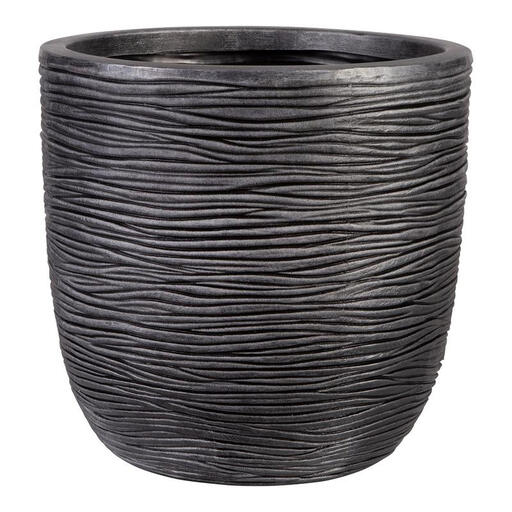
Why This Fits Their Persona: A compact round shape suits renters, first-time container gardeners and smaller patios where a simple decorative plant pot is easier to place and reposition.
Its stated lightweight recycled-plastic construction avoids the upkeep associated with untreated timber and makes seasonal rearrangement more manageable.
Stone-effect pewter finish; suitable for indoor and outdoor decorative planting; resistant to weather and UV exposure according to the product description.
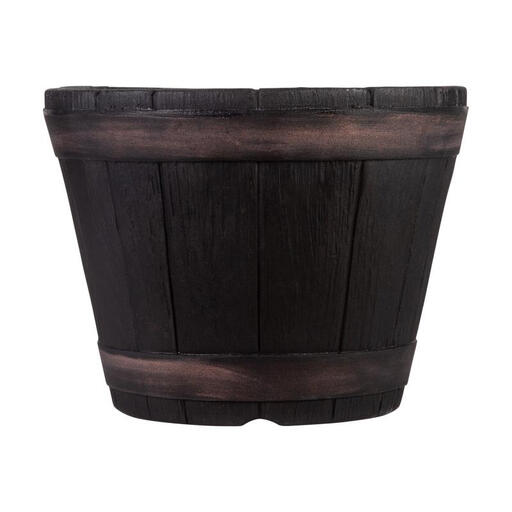
Why This Fits Their Persona: This is suited to shoppers wanting a rustic focal point for a front entrance, decking area, cottage-style border or patio display without choosing real timber.
The oakwood-effect recycled plastic does not require the regular wood treatment associated with genuine wooden planters, while its rounded form provides deep planting space.
34cm diameter and 25cm height; oakwood-effect appearance; recycled plastic construction described as rot-proof and UV-stable.
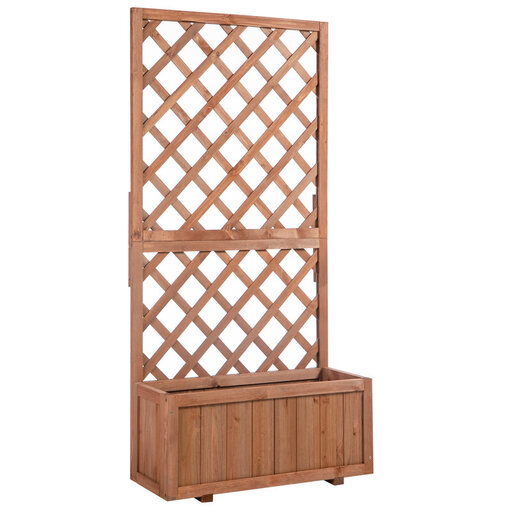
Why This Fits Their Persona: Its elongated raised-bed format and tall trellis suit gardeners growing herbs, vegetables, flowers or climbing plants in a patio, greenhouse, garden or balcony setting.
The listed 45-litre capacity helps avoid choosing a shallow decorative trough for demanding plants. Solid wood is practical, but it must be treated and inspected as directed.
45L planting volume; integrated decorative trellis; paintable wooden surface; suitable for climbing plants and mixed planting.
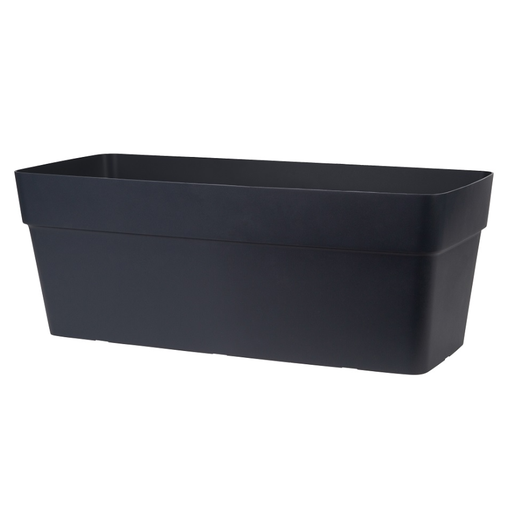
Why This Fits Their Persona: The 60cm by 25cm footprint provides a practical option for balcony edges, patio walls, pathways and other narrow areas where round pots may waste space.
Its stated 45L capacity gives the long format useful planting volume, while recycled plastic avoids the rot concerns associated with untreated wood. Check balcony load limits before filling.
45L capacity; charcoal finish; long rectangular planting area; described as lightweight and suitable for year-round outdoor use.
We have compiled a complete, real-time list of products that fully satisfy these strict selection criteria and UK safety regulations.
Many are made for outdoor use and may be described as weather-resistant, UV-resistant or frost-resistant. Check the individual product specification, keep drainage clear and avoid assuming that every plastic planter has identical performance.
Their lifespan depends on wood quality, drainage, exposure and maintenance. Regularly inspect joints and surfaces and apply suitable preservative or sealant as instructed. A wooden planter with a trellis may also need extra protection from strong wind.
The planter itself does not usually create a significant running cost. The main ongoing expenses are compost, water, plant feed and replacement plants. Larger containers hold more compost and may require more water, but they generally offer greater planting volume and can reduce the need for frequent repotting.