
24/7 Customer Support

Free returns

Same-day & Next-day Delivery

Quality Guaranteed

Unlock Your Welcome Offers: FREE Delivery | Up to 80% OFF | Free 30-day JoyPlus trial
Download the APP
Choosing new garden planters should be an exciting step towards beautifying your space. Yet, many UK gardeners find themselves disappointed when their stylish new pots crack after the first frost, fade in the summer sun or cause their plants to struggle. The market is filled with options that look good on the shelf but fail to perform in the varied British climate.
Before you invest in new containers for your garden, patio or home, it helps to be aware of a few common purchasing pitfalls. Many shoppers are caught out by planters that are not as durable as they seem, leading to wasted money and effort.
To ensure your planters are a long-term asset rather than a short-term frustration, focus on a few core specifications. Analysing these details will help you select containers that are fit for purpose.
The material of your outdoor plant pots is the single most important factor for longevity.
A planter's dimensions and drainage capabilities directly impact plant health.
To help you navigate the options, we have matched a few planters from our collection to different types of gardeners and spaces.
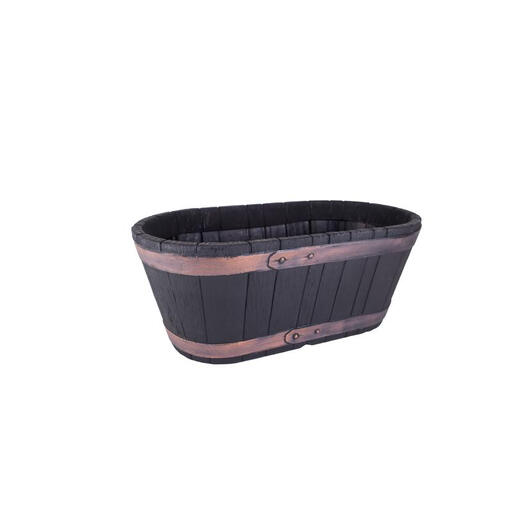
Why This Fits Their Persona: This trough is ideal for creating layered displays of flowers or herbs on a patio, beneath a window or on a balcony. It provides the rustic look of a wooden barrel without the weight or risk of rot, perfect for someone who values classic style with minimal upkeep.
It directly counters the misleading material pitfall. Made from durable, recycled plastic, it is designed to resist weathering, fading and splitting, offering the charm of wood without its vulnerabilities.
Lightweight for easy repositioning and its trough shape fits neatly into narrow spaces where round pots would be impractical.
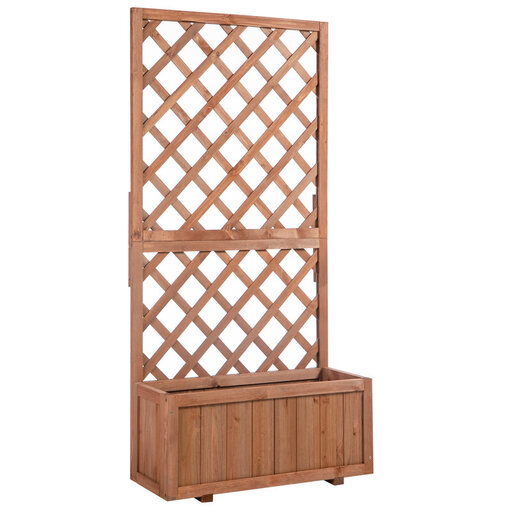
Why This Fits Their Persona: This is an excellent solution for gardeners with limited ground space. It is perfect for a balcony, patio or small courtyard, providing a generous planting bed for flowers or vegetables, plus a trellis for growing climbing plants like sweet peas or beans.
This product is transparent about its material. As solid wood, it requires maintenance, and the product information sets this expectation. The integrated trellis is a functional feature, not just a decorative afterthought.
It combines a 45L planter and a support structure in one unit, saving space and providing an instant vertical garden.
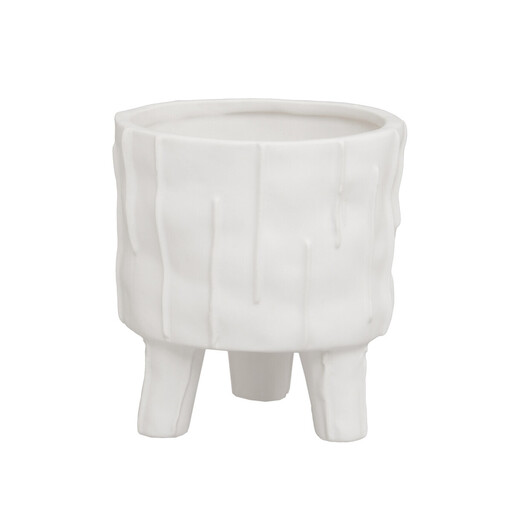
Why This Fits Their Persona: For the houseplant enthusiast who sees a planter as a piece of decor. This small, elevated pot is perfect for showcasing a prized succulent or trailing plant on a shelf, desk or windowsill, adding a touch of minimalist, geometric style.
It is clearly and correctly marketed for indoor use only, so there is no risk of it failing due to weather exposure. Its value is in its handcrafted aesthetic and design, not its outdoor durability.
The stable, three-legged design elevates the plant for better visual impact and air circulation, while the textured ceramic finish adds artisanal character.
We have compiled a complete, real-time list of products that fully satisfy these strict selection criteria and UK safety regulations.
For the vast majority of plants, yes. Drainage holes allow excess water to escape, preventing the soil from becoming waterlogged, which can lead to root rot. If you have a decorative outdoor pot without holes, you can either drill them yourself (if the material permits) or use it as a cachepot—placing a smaller plastic pot with drainage inside it.
Frost is the main enemy of many ceramic and terracotta pots. To prevent cracking, you can bring them into a shed, garage or greenhouse for the winter. If they must stay out, raising them off the frozen ground with "pot feet" can help water drain freely and reduce the stress on the material. Choosing pots specifically labelled as "frost-resistant" is also a wise step.
Planters made from recycled plastic can be a good choice for sustainability. They divert plastic waste from landfills and give it a new, long-lasting purpose. Because high-quality recycled plastic is so durable and resistant to weather, these planters often have a much longer lifespan than cheap, single-season alternatives, reducing the need for frequent replacements.