
24/7 Customer Support

Free returns

Same-day & Next-day Delivery

Quality Guaranteed

Unlock Your Welcome Offers: FREE Delivery | Up to 80% OFF | Free 30-day JoyPlus trial
Download the APP
A well-chosen planter can define an entrance, organise a patio or create growing space where there is no garden bed. However, attractive product photography does not always reveal whether a planter is suitable for British weather, the weight of wet compost or the plant you want to grow.
Before buying garden planters, watch for three common pitfalls:
The right choice depends on your available space, planting plan, preferred maintenance level and the amount of weight your patio, balcony or decking can accommodate.
Product dimensions describe the outside measurements, not always the usable planting area. Compare the planter’s width and depth with the plant’s expected root spread.
Capacity is also useful when comparing products. For example, a 45-litre planter provides considerably more compost volume than a small decorative pot, but it will also be heavier once planted.
Recycled plastic planters are often practical for balconies, patios and gardeners who regularly rearrange displays. They are generally lightweight and do not require the same routine treatment as real timber. The Strata models listed below use recycled plastic and are described as weather-resistant, with finishes designed to resist moisture-related deterioration.
Real wood can bring natural texture and may be painted or varnished to suit your outdoor décor. However, a wooden trough planter requires periodic inspection and suitable preservative or sealant. Timber can weather over time, especially when exposed to persistent rain and poor air circulation.
If you prefer a stone or concrete appearance without the associated weight, stone-effect recycled plastic can provide a visually similar finish while being easier to reposition.
For planters that remain outdoors throughout the colder months, look for clearly stated frost-resistant planters or weather-resistant construction. Frost resistance does not remove the need for good drainage: trapped water can freeze and expand, placing stress on some materials.
Place outdoor planters on a stable, level surface. Tall designs, including a trellis planter, may need additional support or positioning against a wall in windy locations. Keep access routes clear and avoid placing heavy containers where they could obstruct inspection covers or drainage points.
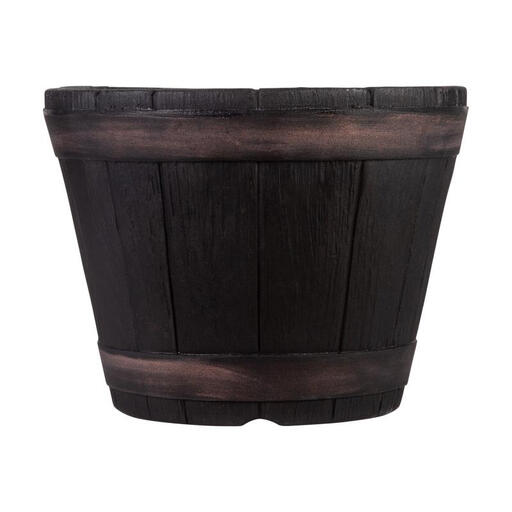
Why This Fits Their Persona: A compact choice for first-time container gardeners, front-door displays and smaller patios where moving a heavy pot would be inconvenient.
Its recycled plastic construction avoids the ongoing treatment associated with genuine timber, while the 34cm diameter and 25cm height make the planting scale easier to judge.
Oakwood-effect finish; lightweight recycled plastic body described as weather-resistant and rot-proof.
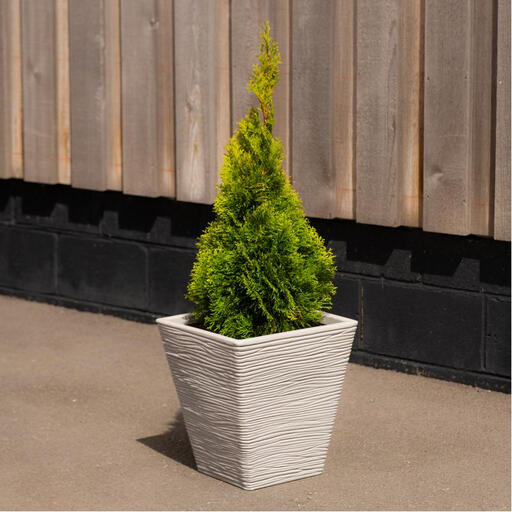
Why This Fits Their Persona: A clean stone-effect design for contemporary entrances, slate patios, balconies and grouped structural planting.
The square tapered shape gives clear external measurements, while recycled plastic avoids the weight associated with natural stone and concrete.
36cm width and 39cm height; stone-effect recycled plastic described as UV-resistant and frost-resistant.
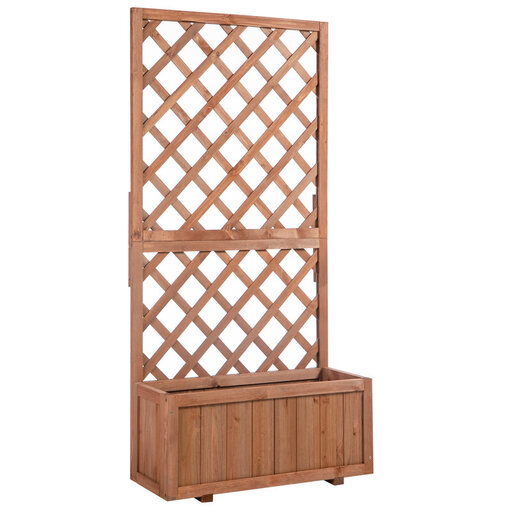
Why This Fits Their Persona: Designed for gardeners wanting a substantial planting bed for herbs, flowers or climbing plants beside a wall, fence, patio or greenhouse.
The stated 45-litre capacity and full dimensions make the scale clear. It also identifies assembly and regular timber treatment requirements rather than presenting wood as maintenance-free.
Solid wood construction; integrated decorative trellis; 72.5cm length and 149.5cm overall height.
We have compiled a complete, real-time list of products that fully satisfy these strict selection criteria and UK safety regulations.
Many recycled plastic planters are designed for outdoor use and may be described as weather-resistant, UV-stable or frost-resistant. Always check the individual product information, provide adequate drainage and consider wind exposure. These features do not replace sensible positioning and seasonal care.
Lifespan depends on timber quality, drainage, exposure and maintenance. Inspect a wooden trough planter regularly and apply a suitable preservative or sealant as recommended. Keeping the base away from standing water can also help reduce moisture-related deterioration.
The planter itself does not usually create a significant running cost, but larger containers require more compost and water. Plants may also need additional feeding and pruning. Lightweight planters can reduce the effort of seasonal repositioning, while heavier filled pots may be more stable in exposed areas.