
24/7 Customer Support

Free returns

Same-day & Next-day Delivery

Quality Guaranteed

Unlock Your Welcome Offers: FREE Delivery | Up to 80% OFF | Free 30-day JoyPlus trial
Download the APP
A pair of garden pruning shears may look simple, but choosing the wrong design can make routine maintenance harder, less comfortable and potentially damaging to plants. UK gardens often require several types of cutting: fresh stems, dead wood, hedge growth, grass edges, fruit harvesting and thicker branches. One tool rarely handles every task well.
Before buying, look beyond blade sharpness claims and attractive handle colours. The practical questions are: What will you cut? How thick is it? How often will you use the tool? These answers help you avoid paying for features that do not suit your garden.
Small secateurs are designed for stems and branches within their stated capacity. Using them on thicker wood can strain the mechanism, damage the cutting edge and leave crushed stems. Conversely, using large hedge shears for delicate flowers or harvesting can be unnecessarily cumbersome.
Check the manufacturer’s maximum cutting diameter and match it to the material. A tool rated for 19–24mm is generally intended for smaller stems and fresh growth, not substantial tree limbs.
Terms such as SK5 steel, carbon steel and stainless steel describe the blade material, but they do not tell the whole story. Blade geometry, heat treatment, coating, pivot construction and maintenance all affect usability.
A coated blade may reduce friction or help resist sap and moisture, but it still needs cleaning and drying after use. Replaceable blades can also be useful for soft-material cutting tools, although they are not a substitute for using the shears within their intended capacity.
A tool that feels acceptable for five minutes may become uncomfortable during a long hedge-trimming session. Fixed-width handles can also be awkward for smaller or larger hands. Similarly, repeatedly stretching towards high branches can lead to poor control.
Look for an adjustable hand sizer, soft or non-slip grip and a suitable handle length. For high branches, long-handle loppers may provide more leverage and reach than ordinary garden secateurs.
Bypass secateurs use two blades that pass each other, similar to scissors. They are suited to green, living stems, flowers, shrubs and fresh wood because the cutting action can produce a cleaner finish when used correctly.
An anvil pruner closes a blade against a flat surface. This design is more appropriate for dry or dead stems and branches. It may not be the right choice for delicate live growth, where crushing can be more noticeable.
For routine pruning, bypass designs are often the more versatile option. For dead wood, anvil pruners and larger branch cutters can be more suitable.
Capacity should be treated as a working limit, not a target to exceed. Common garden secateurs in this selection cover capacities from 19mm to 24mm, while loppers extend to approximately 30mm or 50mm depending on the model.
Do not cut metal, wire or hard materials unless the product specifically permits it. For soft wood, PVC, rubber seals and mouldings, multi-angle mitre shears are a more suitable category than gardening secateurs.
Lightweight aluminium, reinforced polymer and rubberised grips can reduce fatigue, but weight and balance still matter. A locking mechanism is valuable when carrying or storing sharp tools. Telescopic handles can extend reach, while a rotating grass-shear head can help with awkward edging positions.
For hedge shaping, hedge shears with wavy blades may help grip foliage and reduce slipping. A powered hedge trimmer is a separate category and should not be confused with manual hedge trimmer shears.
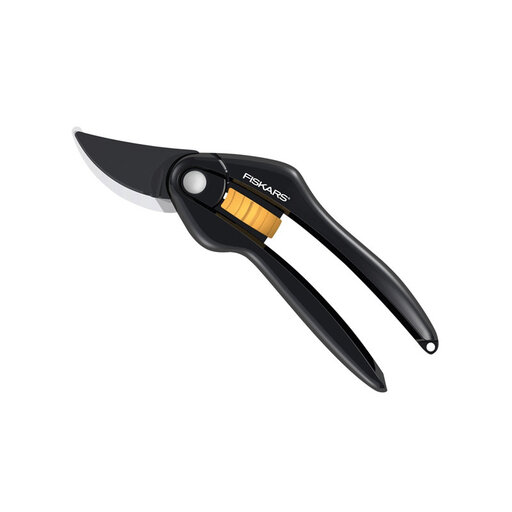
Why This Fits Their Persona: A straightforward option for UK gardeners starting with flowers, shrubs and fresh wood pruning.
Its stated bypass action and 22mm capacity make its intended use clear, helping avoid overloading a small pruner.
Carbon steel blades, PTFE coating and a comfortable, balanced handle.
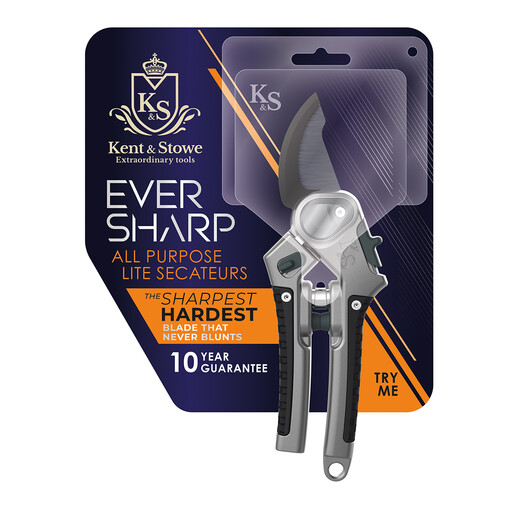
Why This Fits Their Persona: Suitable for frequent gardeners who value adjustability, ambidextrous handling and a lighter aluminium body.
The adjustable hand-size mechanism addresses poor fit, while the bypass design identifies it for live growth rather than dead wood.
SK5 high-carbon steel blade with Eversharp coating, wire and string cutter and a 10-year guarantee.
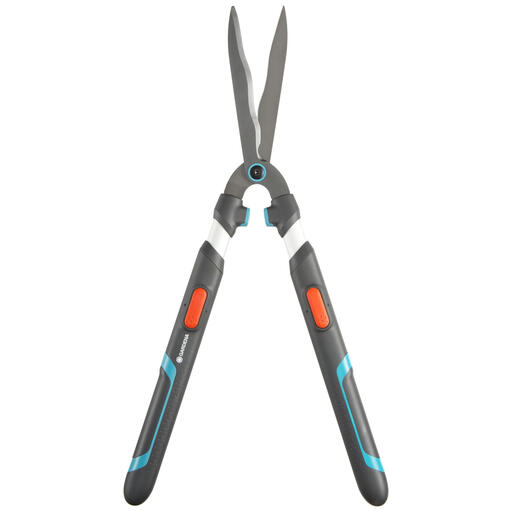
Why This Fits Their Persona: A practical match for allotment holders and gardeners managing fruit trees, shrubs or higher branches.
Its 65–90cm telescopic range and stated 50mm capacity make it more appropriate for larger branches than hand secateurs.
Gear transmission, non-stick coated blades and extended reach without relying on a ladder.
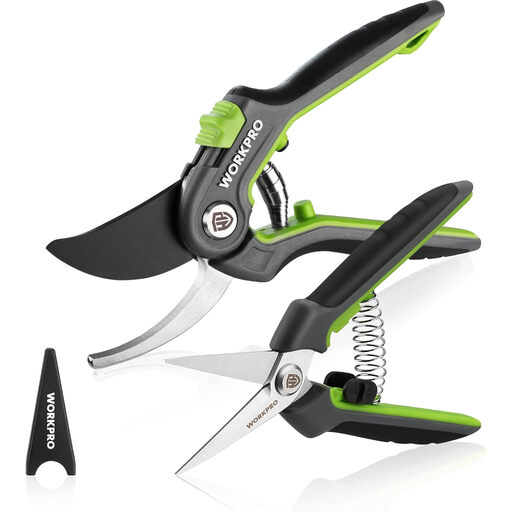
Why This Fits Their Persona: Useful for new gardeners who need one tool for small branches and another for flowers, fruit or delicate harvesting.
The separate 19mm bypass pruner and 5mm harvest shears reduce the temptation to force one blade through unsuitable material.
Two-tool set, non-slip grips, spring opening and safety locks.
We have compiled a complete, real-time list of products that fully satisfy these strict selection criteria and UK safety regulations.
Good maintenance can help preserve cutting performance, but no blade lasts indefinitely. After each session:
Use controlled pressure and cut within the stated capacity. If a branch requires excessive force, change to garden loppers or a suitable branch cutter rather than forcing the secateurs.
No. Bypass secateurs are generally intended for green, living growth and fresh wood within their capacity. Dry, dead branches may be more suitable for an anvil pruner, while thicker branches require loppers.
There is no fixed replacement period. Frequency depends on material, cleaning, storage and usage. Replace or service them when blades remain damaged or misaligned after maintenance, the lock no longer works securely or the tool cannot cut within its stated capacity.
They can provide extra reach, but they do not make ladder use automatically safe. Keep both feet on stable ground, avoid overreaching and follow the product’s instructions. For very high or hazardous branches, consider using a qualified tree-care service rather than attempting the cut yourself.