A well-maintained garden is a source of pride, but keeping shrubs shaped, trees healthy and borders tidy requires the right equipment. With so many different types of garden pruning tools on the market, it can be difficult to know which ones you truly need. Using the wrong tool not only makes the job harder but can also damage your plants. This guide is designed to help you understand the key types of manual cutting tools and identify which ones are suited to your specific gardening tasks, from delicate topiary to managing thick branches.
As the Joybuy Product Recommendation Officer, my role is to provide clear, practical advice to help you select tools that offer reliability, comfort and effective performance for your UK garden.
What to Look for in Garden Cutting Tools
Before diving into specific products, here are a few key considerations to guide your purchase. Focusing on these aspects will help you find ergonomic garden tools that last for years and make your gardening tasks more enjoyable.
1. Match the Tool to the Task
Different tools are designed for different jobs. Using a pair of secateurs on a branch that requires loppers can damage both the tool and the tree.
- Secateurs: Ideal for cutting live stems and small branches up to about 2cm in diameter. Perfect for deadheading roses, pruning perennials and general tidying.
- Hedge Shears: With their long blades, these are designed for shaping and trimming hedges and shrubs. They provide a clean, uniform finish on leafy growth. Precision hedge clippers are a variation for detailed work like topiary.
- Loppers: These are essentially long-handled secateurs, providing the extra leverage needed for thicker branches (typically 2cm to 5cm). Long handle loppers and telescopic loppers help you reach higher branches safely from the ground.
2. Understand Blade Types: Bypass vs. Anvil
The cutting mechanism is a crucial factor in plant health.
- Bypass Pruners: These work like scissors, with two curved blades that pass by each other to make a clean cut. This is the preferred choice for cutting live wood, as it minimises crushing and allows the plant to heal quickly.
- Anvil Pruners: These feature a single straight blade that closes onto a flat surface (the anvil). This action can crush stems, so they are best reserved for cutting dead or woody material.
3. Prioritise Comfort and Build Quality
Gardening should be a pleasure, not a pain. Look for tools with ergonomic handles that fit comfortably in your hand. Features like soft grips, lightweight materials and shock absorbers can significantly reduce strain on your hands and wrists. For those with less grip strength, secateurs for small hands or models with geared mechanisms can make cutting much easier. High-carbon steel blades with non-stick coatings tend to stay sharper for longer and resist rust and sap build-up.
Our Top Product Recommendations
Here are our recommendations for high-performing garden pruning tools that cater to a range of common tasks faced by UK gardeners.
1. Gardena Hedge Clipper Shears PrecisionCut
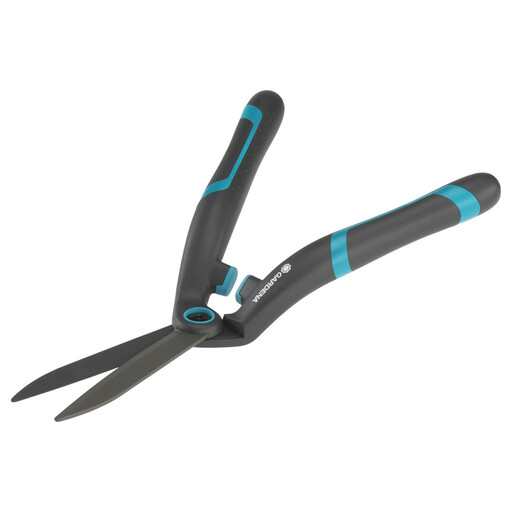
- Why It Stands Out: These shears are specifically designed for detailed shaping. The unique Z-shaped handles make them excellent topiary shears, allowing you to create precise spherical or spiral shapes without your knuckles getting in the way. The straight, non-stick coated steel blades ensure a clean, sharp cut every time.
- Pros:
- Lightweight design with glass-fibre reinforced plastic handles reduces fatigue.
- ErgoTec handles provide a comfortable and secure grip.
- Integrated soft buffer absorbs shock, protecting your wrists.
- Durable, non-stick coated blades for reduced friction and easy cleaning.
- Who is it for? Creative gardeners who enjoy shaping box trees, yew or other shrubs into formal designs. If you need precision hedge clippers for more than just flat-topped hedges, these are an excellent choice.
2. Gardena TeleCut Long Handle Lopper
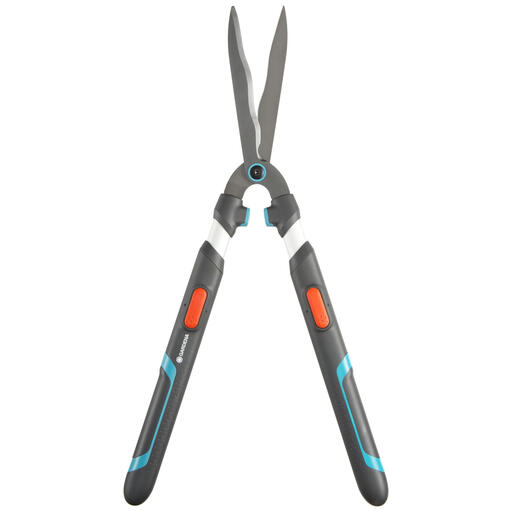
- Why It Stands Out: These telescopic loppers solve the problem of out-of-reach branches. The handles extend from 65cm to 90cm, providing the leverage and reach needed for pruning fruit trees or tall shrubs without a ladder. The internal gear mechanism multiplies your cutting force, making it easier to tackle substantial branches.
- Pros:
- Adjustable length for versatile reach and improved leverage.
- Impressive cutting capacity of up to 50 mm in diameter.
- Geared mechanism makes them effective heavy duty branch cutters.
- Non-stick coated blades reduce sap build-up and ensure a smooth cut.
- Who is it for? Gardeners with mature trees and shrubs that need regular maintenance. If you need to prune branches that are too thick for secateurs or too high to reach comfortably, these tree pruners are an invaluable tool.
3. Kent and Stowe Eversharp Lite All Purpose Secateurs
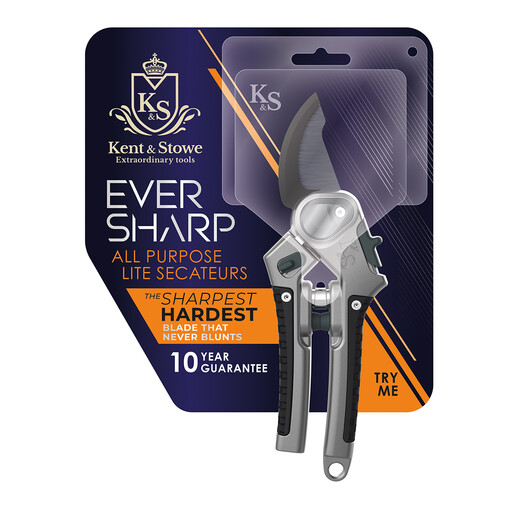
- Why It Stands Out: These secateurs combine durability with user-friendly features. The SK5 high carbon steel blades feature an "Eversharp" coating, which the manufacturer states makes them significantly harder than standard blades for long-lasting sharpness. Their lightweight aluminium body and adjustable hand size make them particularly comfortable.
- Pros:
- Extremely durable and sharp blades with an anti-rust coating.
- Lightweight construction reduces hand fatigue.
- Adjustable hand size and ambidextrous lock make them suitable for many users, including those looking for secateurs for small hands.
- Integrated wire and string cutter adds versatility.
- Who is it for? Any gardener needing a reliable, all-purpose pair of secateurs for daily tasks like deadheading, pruning roses and cutting back herbaceous perennials. Their comfort and adjustability make them a great option for long pruning sessions.
Looking for Other Options?
The tools highlighted here cover some of the most common gardening needs. However, if you are looking for a different style or a more specialised tool, there are many other excellent options available.
To explore a wider variety of cutting tools, browse our full collection of garden secateurs.
Frequently Asked Questions
What is the difference between bypass and anvil pruners?
Bypass pruners have two sharpened blades that glide past each other like scissors, creating a clean cut that is ideal for living stems and branches. Anvil pruners have one sharp blade that closes onto a flat metal block (the anvil), which can crush soft tissue. For this reason, anvil pruners are best used only for removing hard, dead wood.
How often should I sharpen my garden pruning tools?
This depends on usage. For the average UK gardener, sharpening your tools once at the beginning of the growing season and once at the end should be sufficient. However, if you notice that your tools are tearing stems rather than cutting them cleanly, or if you have been cutting particularly tough or sappy wood, it is a good idea to sharpen them. Always clean and dry your tools after each use to maintain their performance.
Can I use hedge shears to prune tree branches?
It is not recommended. Hedge shears are designed for cutting the soft, leafy growth of hedges. Their long, thin blades are not built to handle the thickness and density of tree branches. Attempting to do so can damage the shears and result in a messy, unhealthy cut for the tree. For branches, it is much better to use a pair of bypass secateurs, loppers or a pruning saw.


