
24/7 Customer Support

Free returns

Same-day & Next-day Delivery

Quality Guaranteed

Unlock Your Welcome Offers: FREE Delivery | Up to 80% OFF | Free 30-day JoyPlus trial
Download the APP
Choosing garden pruning tools is less straightforward than selecting a pair of scissors. UK gardens contain everything from soft herb stems and fresh shoots to dense hedges, dry branches and awkward grass edges. The right tool should match the plant material, branch thickness and amount of reach required.
Buying based only on a low price or an impressive cutting claim can lead to blunt blades, uncomfortable handles and tools that are unsuitable for the job. This guide explains the key specifications to check before choosing garden shears, bypass secateurs, hedge shears or garden loppers.
A stated maximum cutting diameter is not a recommendation for every type of wood. A tool rated for 24 mm may handle green stems effectively but be unsuitable for dry, dense branches. Forcing a small pruner beyond its intended capacity can damage the blade, pivot and handles.
Check both the diameter and material type. Bypass secateurs and pruning shears are generally suited to live growth, while an anvil pruner is more appropriate for some dry or dead stems.
PTFE, Teflon or other low-friction coatings may help reduce sap sticking and cutting resistance, but they do not remove the need for cleaning. Moisture, plant residue and garden chemicals can still contribute to corrosion or poor movement.
After use, wipe the blades dry, remove sap and apply a small amount of suitable oil to the pivot where recommended. Store cutting tools indoors rather than leaving them in a damp shed or outdoors.
A heavy tool may feel solid in the hand but become tiring during prolonged hedge trimming. Conversely, very short handles may require excessive force for thicker branches. Gardeners with smaller hands should also check whether the handle opening is adjustable or whether the grip allows secure control.
For high branches, long-handled loppers can reduce the need for stretching or using a ladder. However, extra length also increases leverage and tool weight, so balance remains important.
Bypass blades use a passing or scissor-like action. They are commonly used for green, living stems because they can produce a close cut when correctly positioned. The cutting blade should face the part of the branch you intend to retain.
Anvil blades cut against a flat surface and can be useful for some dead or tougher stems. They are not automatically suitable for every branch, so follow the product’s stated capacity.
For hedge trimming, wavy or profiled blades can help grip foliage and reduce slipping. Serrated garden shears may be useful for herbs, bonsai and flower arranging, but they are not a substitute for branch cutters.
Compare the listed capacity with the tasks you regularly perform:
Treat these figures as product specifications rather than a guarantee for every species of wood. Hardness, dryness and branch position all affect the force required.
Look for non-slip grips, a secure locking mechanism and a handle shape that allows controlled pressure. Adjustable hand sizers can help accommodate different hand sizes, while spring-opening mechanisms may reduce repeated squeezing.
Long-handled loppers can extend reach and leverage. For example, telescopic handles extending from 65 cm to 90 cm provide more working distance, while powered cordless shrub shears can reduce manual effort for grass and light shrub shaping.
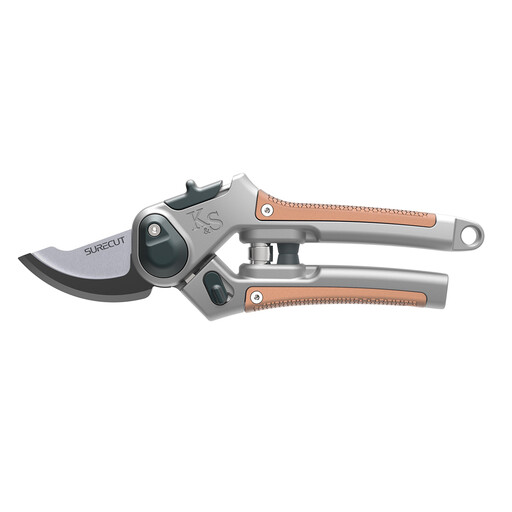
Why This Fits Their Persona: A practical everyday option for new gardeners, allotment owners and routine pruning of flowers, shrubs and live wood.
The stated 24 mm capacity helps distinguish it from small flower snips, while the adjustable hand sizer avoids relying on a one-size-fits-all grip.
SK5 carbon steel blades, die-cast aluminium handles, ambidextrous use and a stated 5-year guarantee.
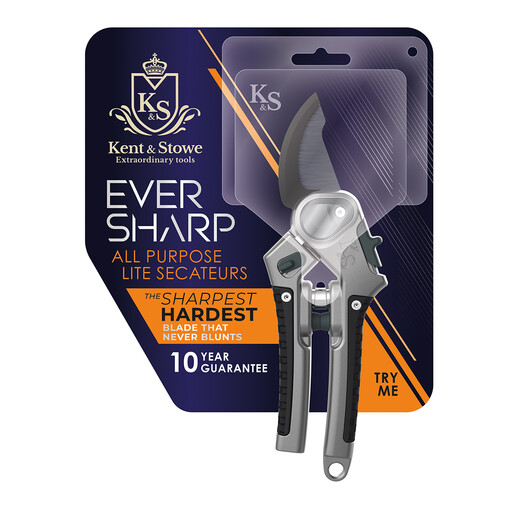
Why This Fits Their Persona: Suited to gardeners who prune frequently and want a lightweight tool with added features for longer sessions.
The product specification identifies the blade material, aluminium body, adjustable hand size and maintenance requirements rather than relying on vague durability language.
SK5 high-carbon steel blade with Eversharp coating, integrated wire and string cutter, ambidextrous design and a stated 10-year guarantee.
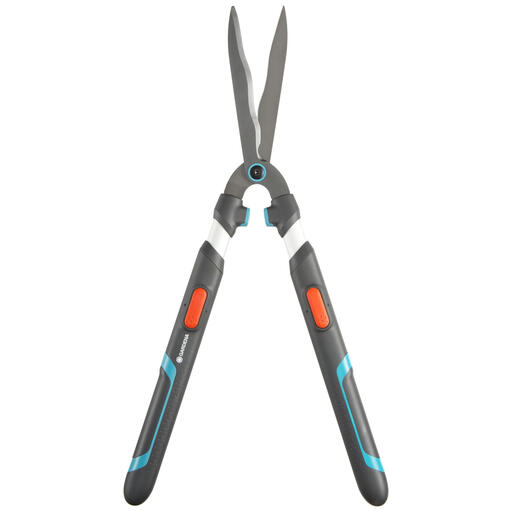
Why This Fits Their Persona: Designed for orchard, shrub and larger branch work where additional reach and leverage are more useful than compact secateurs.
Its 65–90 cm telescopic handle range and stated 50 mm cutting capacity make the intended reach and branch size clear.
Gear transmission, non-stick coated blades and extended handles for higher branches without immediately reaching for a ladder.
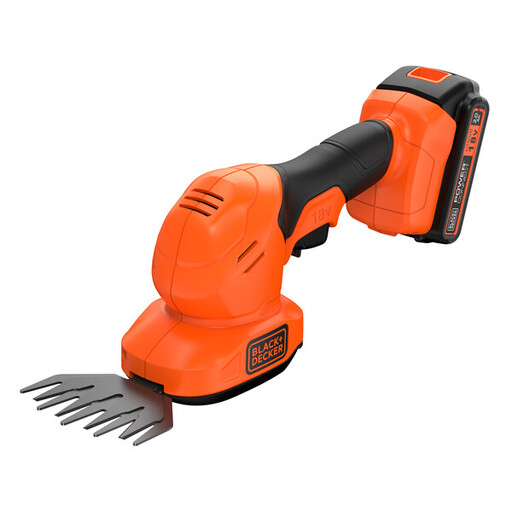
Why This Fits Their Persona: A practical choice for shaping shrubs and tidying grass edges across a garden where cord-free movement is useful.
The included 2 Ah battery and 1 A charger provide clearer information than an unspecified “long-lasting” cordless claim.
Tool-free blade changes, 18V cordless operation and compatibility with the brand’s 18V POWERCONNECT range.
We have compiled a complete, real-time list of products that fully satisfy these strict selection criteria and UK safety regulations.
A clean, sharp blade usually requires less force than a neglected one. If a branch does not fit comfortably within the jaws, switch to garden loppers or branch cutters instead of forcing the handles.
A useful starting set is a pair of bypass secateurs for live stems, hedge shears for foliage shaping and loppers for thicker branches. Grass shears are useful for lawn edges and areas a mower cannot reach. Add an anvil pruner if you regularly remove dry or dead growth.
Manual shears have no charging cost, while cordless shrub shears require electricity to recharge the battery. Running cost depends on charging frequency and electricity rates. Cordless models may save time and reduce repeated hand movement, but battery capacity, charging time and replacement battery pricing should be considered before purchase.
Lifespan depends on blade steel, frequency of use, branch size, storage and maintenance. Cleaning, drying and occasional lubrication can help preserve cutting performance. A stated guarantee, such as five or ten years on selected products, indicates the manufacturer’s listed cover, but it does not mean the blades will remain sharp without care.