
24/7 Customer Support

Free returns

Same-day & Next-day Delivery

Quality Guaranteed

Unlock Your Welcome Offers: FREE Delivery | Up to 80% OFF | Free 30-day JoyPlus trial
Download the APP
A tidy garden often needs more than one tool. Fallen leaves, moss, thatch, compacted soil, lawn weeds and damaged grout each require a different approach. Choosing a tool based only on price or a product photo can lead to bent tines, uncomfortable handles or a blade that is unsuitable for the job.
This guide explains what to check before buying garden rakes and weed removal tools, then matches practical options to common UK gardening and DIY needs.
A leaf rake is designed for lightweight debris, while a soil rake needs stronger teeth for levelling beds and spreading mulch. Using a stiff soil rake on delicate grass may disturb the lawn, while using a flexible leaf rake on compacted soil can bend or damage the tines.
A lawn rake sits between these uses. It is intended to collect dead grass, moss and surface debris while making light contact with the thatch layer.
A higher number of tines does not automatically mean faster or more effective leaf sweeping. The spacing, shape and flexibility matter just as much. Wide, flat plastic tines can gather recently fallen leaves efficiently, whereas rounded metal tines may offer more controlled contact when removing moss and thatch.
Check whether the rake is intended for light debris, scarification, soil preparation or general garden clearance before ordering.
A tool may appear inexpensive but become awkward during a long session if the handle is too short, slippery or heavy. Adjustable garden rake designs can help users change the working length for different areas, while coated handles and shaped grips may make repeated strokes more comfortable.
For hand tools such as a daisy grubber, weed remover or grout scraper, grip quality and leverage are particularly important because the tool is used with concentrated pressure.
For lawn maintenance, flexible rounded metal tines can move across grass while lifting moss, leaves and dead material. The Faithfull Lawn Rake, for example, uses 16 flexible round metal tines and a tubular steel handle with a polypropylene coating.
Plastic tines are generally suited to gathering light, recently deposited leaves. They can be useful where a lighter touch is preferred, particularly around lawns and planted areas.
For soil preparation, look for hardened carbon steel blades or tines. These are intended for smoothing beds, moving mulch and loosening or levelling soil rather than simply collecting leaves.
A wider head can cover more ground with each stroke, which is useful for larger lawns and open garden areas. However, a narrower head may be easier to control around borders, shrubs and raised beds.
The MADLAND adjustable garden rake extends to 160 cm and has a maximum working width of 67 cm. Its 15 metal tines are designed for leaves, dead grass and general garden debris. An adjustable shaft can also make storage easier and allow the user to select a more comfortable reach.
Weed removal tools should match the weed and its location. A long, narrow, two-pronged daisy grubber is designed for short-rooted weeds in lawns. A crevice tool or grout rake is more appropriate for moss and weeds growing between paving slabs.
For tile renovation, a tungsten carbide grit-edged blade can help remove old grout. Always check the blade condition before use and wear suitable gloves and eye protection where fragments or sharp edges may be produced.
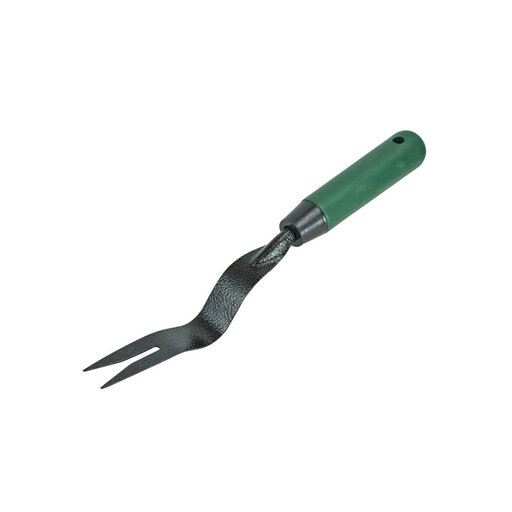
Why This Fits Their Persona: A straightforward hand tool for UK homeowners dealing with daisies and short-rooted weeds in a domestic lawn.
Its narrow two-pronged blade is designed for targeted root cutting rather than disturbing a wide patch of lawn.
Heat-treated carbon steel head; comfortable plastic handle; manual, chemical-free weed removal.
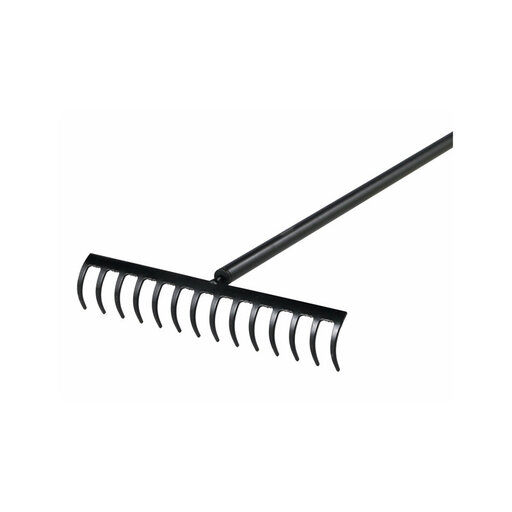
Why This Fits Their Persona: Suitable for allotment holders and gardeners who want one durable tool for beds, borders and mulch.
Hardened carbon steel blades are specified for soil work, avoiding the mismatch of using a lightweight leaf rake on planting beds.
Carbon steel blades; lightweight rounded aluminium shaft; integrated hanging holes.
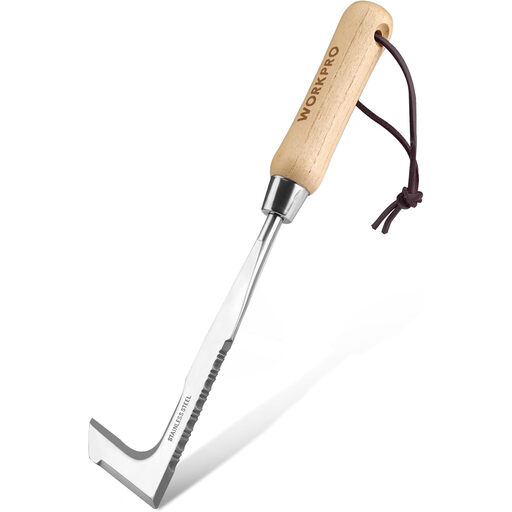
Why This Fits Their Persona: A practical choice for repeated clearing of paving joints, moss, weeds and small outdoor renovation tasks.
The 7-shaped head is intended for crevices, while the serrated edge provides a separate cutting function instead of relying on one blunt edge.
Stainless steel construction; wooden handle; protective cover and hanging strap.
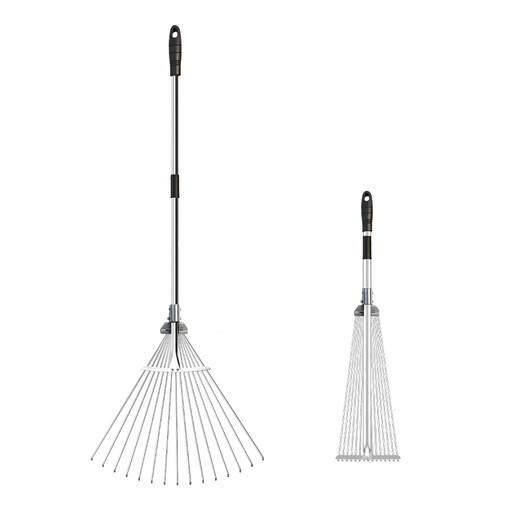
Why This Fits Their Persona: Designed for homeowners managing larger lawns, paths and landscaped areas where coverage and reach matter.
The adjustable length and stated 67 cm maximum width make its working reach clear before purchase.
15 metal tines; extends to 160 cm; suitable for leaf sweeping and general garden maintenance.
Garden rakes are not suitable for tile joints or narrow paving gaps. For grout removal, the Vitrex Grout Rake uses a tungsten carbide grit-edged blade and a nylon handle designed for grip. It is intended for old or discoloured grout rather than lawn work.
Work along the joint with controlled pressure instead of forcing the blade. Wear protective eyewear and gloves, particularly where brittle grout may fragment. Clean and dry the tool after use, then store it safely away from children.
We have compiled a complete, real-time list of products that fully meet these strict selection criteria and UK safety regulations.
A lawn rake is generally intended to collect moss, thatch and dead grass from turf, often using flexible metal tines. A leaf rake usually has wider, lighter tines for gathering loose leaves and surface debris without heavily disturbing grass.
A grout scraper, grout rake or narrow moss remover is suited to weeds and moss in paving joints. A daisy grubber is designed for individual short-rooted weeds in lawns and is less suitable for narrow gaps.
Basic maintenance is usually limited to cleaning, drying and safe storage. Metal parts should be checked for rust or damage, while wooden or coated handles should be kept away from prolonged damp. Proper storage also reduces the chance of accidental contact with sharp blades.