
24/7 Customer Support

Free returns

Same-day & Next-day Delivery

Quality Guaranteed

Unlock Your Welcome Offers: FREE Delivery | Up to 80% OFF | Free 30-day JoyPlus trial
Download the APP
Choosing garden shears is not simply a matter of picking the sharpest-looking pair. The right tool depends on what you are cutting, how often you work and whether comfort and storage matter as much as cutting capacity. A compact pair of garden scissors may suit herbs and flower arranging, while bypass secateurs are more appropriate for fresh branches.
Marketing descriptions can make every product sound suitable for every task. Before buying, check the specifications that affect real-world use.
Bypass secateurs use two blades that pass one another, making them suitable for many fresh stems and branches. They are not designed for thick, dry timber or hard materials. Micro-tip pruning snips, by contrast, are intended for small, detailed cuts around foliage, buds and tight spaces.
Using the wrong tool can lead to crushed stems, excessive hand pressure or damaged blades. Always match the cutting action to the material.
A stated cutting capacity is usually a limit rather than a target for repeated work. For example, a pair rated for branches up to 19mm should not be forced through larger or harder wood. Check whether the specification refers to fresh branches, soft material or delicate stems.
For heavier pruning, a longer handle may offer more leverage, but it can also be less precise in confined spaces. For bonsai, indoor plants and flower arranging, compact pruning snips are generally easier to control.
Even corrosion-resistant or coated blades require care in the damp UK climate. Sap, moisture and plant residue can affect cutting performance over time. Look for a safety lock, wipe the blades after use and store the tool somewhere dry.
Replaceable blades can also be useful for DIY cutting tools, particularly when working with soft PVC, rubber seals or moulding. However, multi-angle mitre shears should not be used on metal or materials beyond their specified capacity.
Stainless steel is common for garden scissors, flower scissors and pruning snips because it is relatively easy to clean and offers corrosion resistance. SK5 steel is also widely used in pruning secateurs and bypass secateurs. The grade alone does not determine suitability, so check the intended material and cutting capacity as well.
For live branches, a bypass design is a practical choice. For intricate trimming, look for micro-tip or straight blades that cut accurately near the tip. Curved blades can be useful for bonsai pruning shears and shaping tasks.
A spring-opening mechanism can reduce the need to reopen the handles manually between cuts. Non-slip grips help with control, particularly when wearing gardening gloves. An adjustable hand-size mechanism may be helpful for households where more than one person uses the same tool.
Weight is also important. Lightweight garden shears are easier to manoeuvre around pots and hanging baskets, while larger tools may provide greater leverage for routine branch pruning.
Multi-angle mitre shears are designed for soft materials such as PVC, rubber seals, cable ducts, trim and some soft wood. Their adjustable scales commonly cover angles from 45° to 135°, allowing angled cuts for moulding and DIY projects.
Do not confuse a trim cutter or moulding cutter with general-purpose garden shears. These tools serve different jobs and may not be suitable for live plants. Check the stated maximum diameter and material list before use.
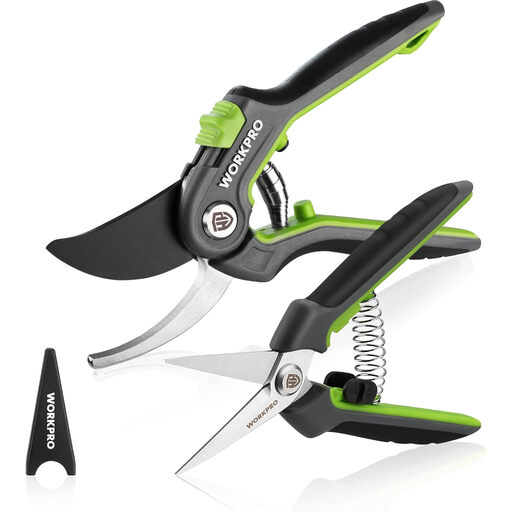
Why This Fits Their Persona: A practical starting point for UK households that need one tool for fresh branches and another for flowers, fruit or light harvesting.
The two-tool format avoids forcing a large pruner to perform delicate work. The stated capacities are 19mm for the bypass secateurs and 5mm for the harvest shears.
Includes SK5 and stainless-steel blades, spring-opening handles and safety locks on both tools.
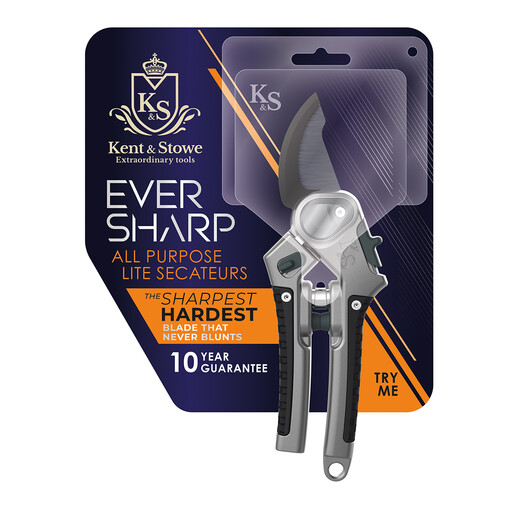
Why This Fits Their Persona: Suits gardeners who value balanced handling and want one adaptable tool for regular deadheading, live wood and general garden maintenance.
The product specifies an adjustable hand-size mechanism and ambidextrous design, helping buyers assess fit rather than relying on vague comfort claims.
Features an SK5 blade with Eversharp coating, aluminium body, rubber grip, wire and string cutter and a stated 10-year guarantee.
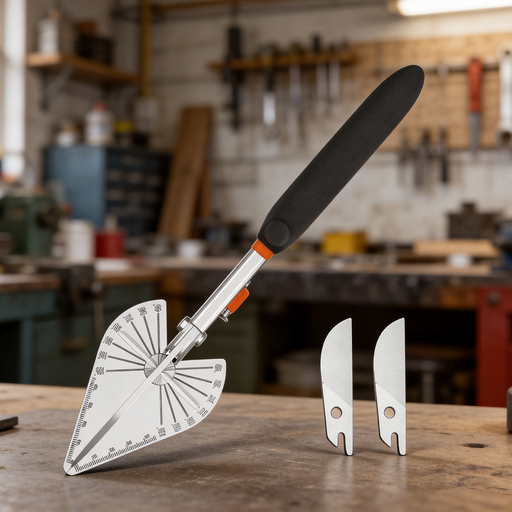
Why This Fits Their Persona: Designed for DIYers and tradespeople cutting PVC strips, rubber seals, cable ducts, weatherstripping and other soft materials.
The specification clearly identifies a 45°–135° angle range and a maximum cutting diameter of 6.8cm, helping prevent unsuitable material choices.
Includes an engraved angle scale, non-slip PPC coating and rotating safety lock.
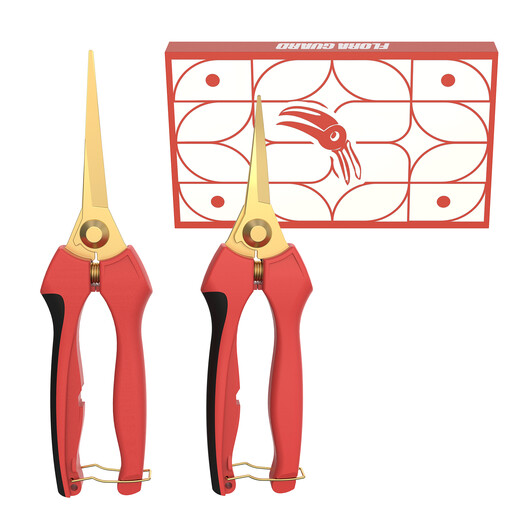
Why This Fits Their Persona: The two blade shapes give plant collectors and flower arrangers more control for detailed shaping, thinning and delicate trimming.
Instead of promising a universal tool, it separates delicate and heavier tasks between curved and straight blades.
Includes 5cm curved and 7cm straight blades, stainless steel construction and composite TPR and nylon handles.
We have compiled a complete, real-time list of products that fully satisfy these strict selection criteria and UK safety regulations.
Keep garden shears separate from general household scissors. Cutting wire, packaging or hard plastic can damage plant-pruning blades. For trim work, choose dedicated PVC cutting shears or multi-angle mitre shears.
If your household also needs basic mending equipment, a travel sewing kit can cover buttons, hems and small repairs. The Trimits kit includes threads, needles, scissors, tape and accessories in a compact case, while the Hobby Gift set provides black and white polyester thread with matching bobbins. These are more suitable as a sewing kit with needles and thread or sewing repair kit than as substitutes for garden scissors.
No. They are generally intended for fresh, live growth within the stated diameter limit. Dry, thick or woody branches may require a different saw or lopper. Check the product specification before cutting.
Lifespan depends on frequency of use, material quality, cleaning and storage. Regularly removing sap, drying the blades and lubricating the pivot can help maintain smooth operation. Replaceable blades may extend the useful life of some DIY cutting tools.
They may eventually need sharpening, depending on the blade design and use. Micro-tip pruning snips and fine flower scissors should be handled carefully, as an unsuitable sharpening method can alter the cutting edges. If the blades are replaceable, fitting the specified replacement is often more straightforward.