
24/7 Customer Support

Free returns

Same-day & Next-day Delivery

Quality Guaranteed

Unlock Your Welcome Offers: FREE Delivery | Up to 80% OFF | Free 30-day JoyPlus trial
Download the APP
Buying garden shears can look straightforward until a tool struggles with a branch it was not designed for, becomes uncomfortable after a short session or needs frequent cleaning because sap sticks to the blade. UK gardeners also face a wide range of names, including bypass secateurs, pruning shears, hedge shears, garden loppers and cordless shrub trimmers.
The right choice depends less on marketing language and more on cutting capacity, blade design, handle comfort and the type of plant material you plan to cut.
A compact pair of pruning shears may look suitable for general garden maintenance, but many are intended for stems or fresh branches below 20–25 mm. Forcing thicker wood through small blades can damage the tool and produce an uneven cut.
Check the stated capacity before buying. For example:
Terms such as “sharp steel” do not explain the complete specification. Look for the actual blade material and finish. SK5 steel garden shears, for instance, are commonly selected for cutting tools because the material is used in sharp, durable blades. Coatings such as PTFE, Teflon or chrome may help reduce friction or resist corrosion, but they do not remove the need for cleaning and drying.
Avoid cutting wire, metal, hard plastic or other materials unless the product specifically states that it is designed for them.
A tool can have a suitable blade yet remain awkward to use. Fixed handles may suit short jobs, while telescopic loppers can provide additional reach for higher branches. However, extended handles may also add leverage and weight, so check the tool’s mass and locking mechanism.
For regular pruning, look for non-slip grips, a spring-opening mechanism, an adjustable hand size or ambidextrous operation. These details are particularly useful for allotment holders and gardeners working through several shrubs in one session.
Bypass secateurs use two blades that pass one another, similar to scissors. They are generally suited to fresh, green stems, roses, flowers and live wood where a controlled cut is required.
Anvil loppers use a blade that closes against a flat surface. This design can provide support when cutting tougher or drier material, but it is not automatically suitable for every plant. Always follow the product’s stated use and capacity.
For everyday gardening, compare:
After use, remove soil and sap, dry the blades thoroughly and apply a small amount of suitable oil to the pivot where recommended. Store garden shears in a dry place with the safety lock engaged.
Do not treat the maximum cutting diameter as a target for every cut. A tool rated for 25 mm should not routinely be forced through material at that limit, especially if the branch is dry or unusually hard.
For higher branches, telescopic loppers can extend from roughly 630 mm to over 900 mm on some models. They can reduce the need to reach from a ladder, but make sure the handles are securely locked before cutting. For hedges, long-bladed hedge trimming tools can cover more foliage per stroke, while cordless shrub trimmers are useful for shaping larger areas without a power cable.
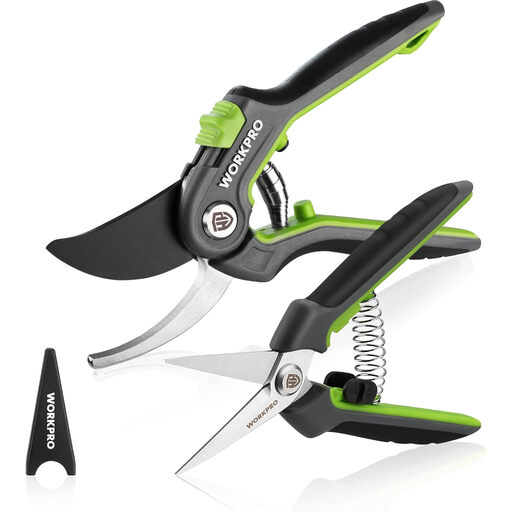
Why This Fits Their Persona: A practical starting set for UK gardeners who want one tool for pruning and another for delicate flower or fruit work.
The stated capacities are separated by task: up to 19 mm for the bypass pruning shears and up to 5 mm for the harvest shears.
Two tools, SK5 and stainless steel blades, non-slip grips, spring opening and safety locks.
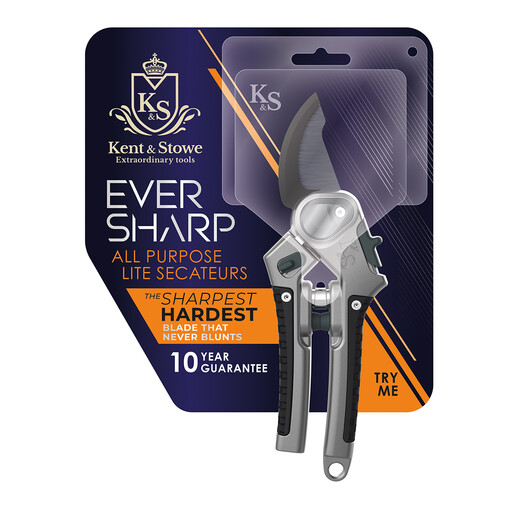
Why This Fits Their Persona: Suitable for gardeners prioritising adjustable comfort and a tool for repeated deadheading, flower cutting and live-wood pruning.
The specification gives a 380 g weight, adjustable hand size and ambidextrous design instead of relying only on appearance.
SK5 high-carbon steel blades, aluminium body, bi-material grip and integrated wire and string cutter.
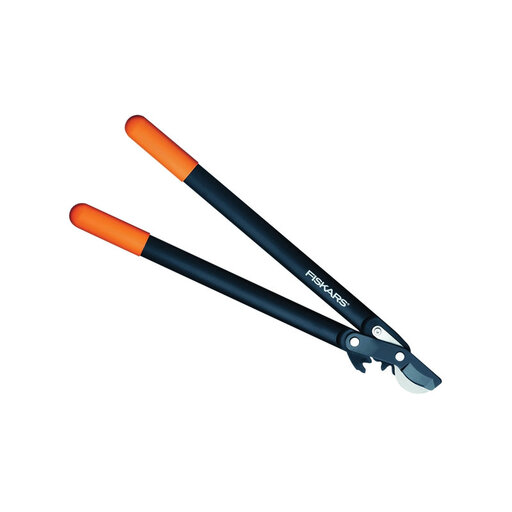
Why This Fits Their Persona: A branch-cutting option for gardeners maintaining mature shrubs, young trees and thicker fresh wood.
Its stated 38 mm capacity clarifies that it is a lopper rather than a substitute for small pruning shears.
PTFE-coated bypass blades, 545 mm length, 550 g weight and reinforced polyamide handles.
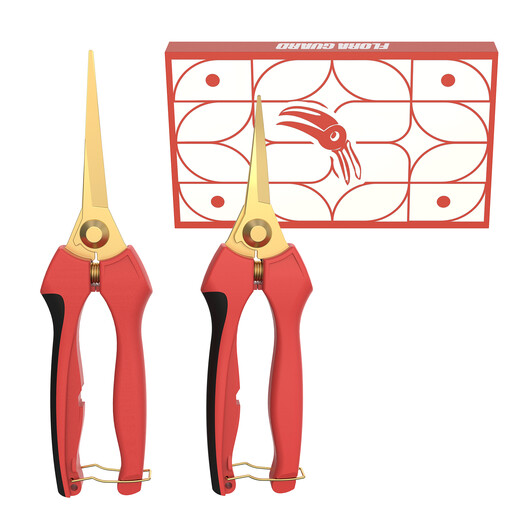
Why This Fits Their Persona: Designed for bonsai growers, flower arranging and detailed plant shaping where smaller blades offer more control.
The set identifies separate straight and curved blades and states a cutting capacity of up to 1.25 cm.
Two stainless steel shears, 5 cm and 7 cm blade lengths, composite handles and titanium-coated components.
We have compiled a complete, real-time list of products that fully satisfy these strict selection criteria and UK safety regulations.
Usually, yes, provided the stems are within the tool’s stated capacity. Bypass secateurs are commonly used for roses, flowers, green stems and live wood. Position the branch deep inside the cutting area and avoid forcing material that exceeds the specification.
Lifespan depends on frequency of use, cutting material, storage and maintenance. Regular cleaning, drying, pivot lubrication and correct use can help preserve the blade and mechanism. Replace or service a tool if the blade is chipped, the lock fails or the handles become loose.
Running cost depends mainly on battery charging frequency, battery capacity and electricity use. A cordless shrub trimmer can be convenient for hedge shaping and grass edging because it avoids a mains cable, but it is not a replacement for bypass secateurs or loppers when cutting individual branches. Check whether the battery and charger are included and whether the battery is compatible with other tools in the same range.