
24/7 Customer Support

Free returns

Same-day & Next-day Delivery

Quality Guaranteed

Unlock Your Welcome Offers: FREE Delivery | Up to 80% OFF | Free 30-day JoyPlus trial
Download the APP
A suitable spade or shovel can make heavy clay, compacted ground and wet borders more manageable. The wrong one can leave you with a bent blade, a loose handle or a tool that is simply too large for the job. For UK gardeners, allotment holders and landscaping enthusiasts, choosing among garden spades and shovels is less about marketing language and more about matching the blade, shaft and handle to the work.
A sharp point helps a digging spade enter soil, but blade shape alone does not indicate strength. Check the head material, construction and tread. A lightweight planting spade may be practical in a flower bed but unsuitable for breaking through compacted ground or lifting heavy soil.
A stainless steel spade can resist corrosion and may shed soil more easily when polished. However, stainless steel does not automatically mean the tool is suitable for high-force work. Look for details such as one-piece construction, a reinforced shoulder and a strong shaft. Carbon steel is also a practical option when it is heat-treated and protected with an appropriate finish.
A long handle can provide useful leverage when moving loose materials, but it may be awkward in raised beds, narrow borders or confined spaces. Conversely, a compact shovel can offer control but require more bending during larger jobs. Consider your height, the depth of the work and whether you need reach or manoeuvrability.
A carbon steel spade with heat treatment can provide a strong working head for regular digging. Powder coating or another protective finish can help reduce exposure to moisture, scratches and soil residues. Stainless steel is useful where easy cleaning and corrosion resistance are priorities, particularly when the blade is polished.
After use, remove soil, dry the head and store the tool in a dry location. These simple steps help reduce rust and protect wooden handles from prolonged damp.
Inspect how the head connects to the shaft. A welded steel shaft, forged one-piece construction or a properly secured socket each has different characteristics, so the product specification should be read rather than inferred from photographs.
A treaded top gives your footwear a more stable platform and helps protect the sole when pushing into hard soil. D-shaped and T-shaped handles can improve grip, while ash handles offer a traditional combination of strength and shock absorption. Always use sturdy footwear and gloves where appropriate, and inspect the tool for damage before use.
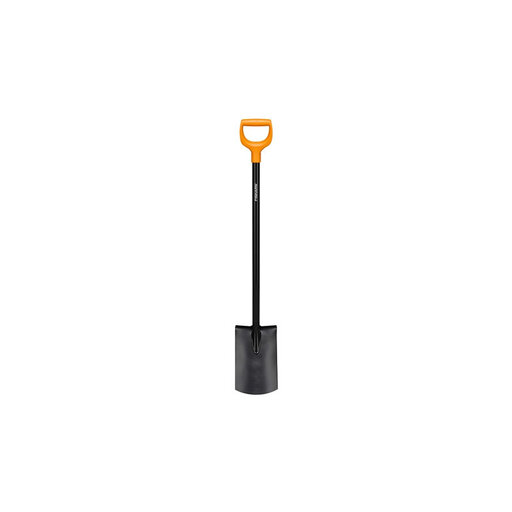
Why This Fits Their Persona: A practical general-purpose choice for new gardeners maintaining lawns, borders and standard topsoil in a UK garden.
Its boron steel head, welded metal shaft and stepping board provide more useful detail than a vague claim of durability alone.
Pointed blade for digging, edging and planting; 116.6cm length and D-shaped handle for reach and grip.
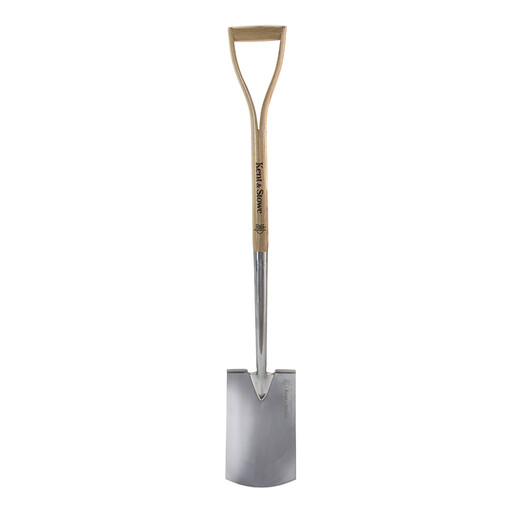
Why This Fits Their Persona: Suitable for frequent gardeners and landscapers who want a substantial digging spade for demanding ground and regular maintenance.
The stated one-piece, hot-forged stainless steel construction avoids a separate weak weld between blade and shoulder.
Polished stainless steel blade; ash handle, ground cutting edge and reinforced foot tread.
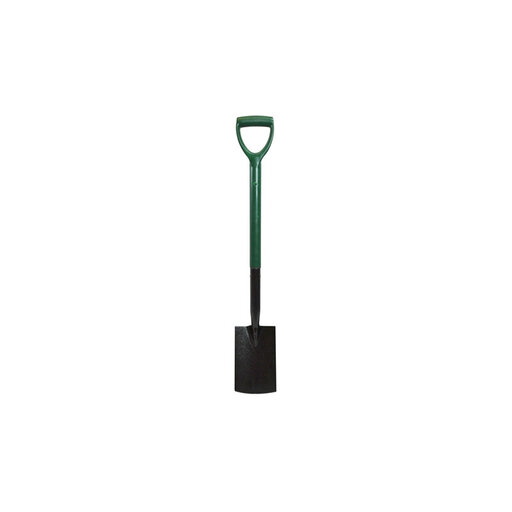
Why This Fits Their Persona: A compact option for established borders, raised beds and vegetable patches where a full-size blade may disturb nearby plants.
Its compact format is specified for confined spaces, rather than relying on a generic all-purpose description.
Heat-treated carbon steel head; polypropylene and powder-coated finish; tubular steel handle.
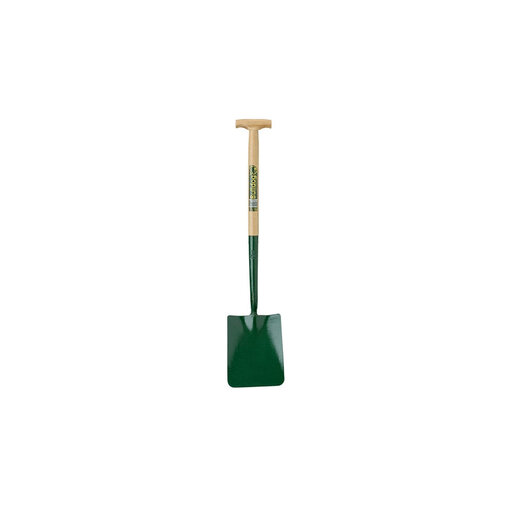
Why This Fits Their Persona: Designed for landscaping, trench backfilling and moving loose materials rather than delicate planting or deep root work.
The square mouth and stated 8-inch width clarify its material-moving role, helping prevent an unsuitable digging-spade purchase.
28-inch hardwood shaft; T handle; suitable for sand, cement, tarmac, chippings and trench work.
A spade and shovel will not cover every garden task. For shallow weeding around young plants, the Faithfull Dutch Hoe has a small heat-treated carbon steel head and is designed to cut weed roots with forward and backward movements. Its compact head can be easier to control around tender shoots.
For moving loose materials over a longer distance, the BULLDOG West Country Shovel has a 54-inch ash handle and a hardened, tempered open socket blade. The longer shaft provides reach and leverage, while the round-mouthed pattern is intended for light digging and materials such as shingle, sand and gravel.
Compare the blade style, working dimensions and construction against the task before adding a tool to your shed. A targeted selection is usually more useful than buying a large set with pieces you rarely use.
We have compiled a complete, real-time list of products that fully satisfy these strict selection criteria and UK safety regulations.
A spade generally has a sharper, flatter blade for cutting, digging, edging and turning soil. A garden shovel usually has a deeper or broader scoop for lifting and moving loose materials. There is some overlap in everyday UK usage, so check the actual blade shape and stated purpose.
It can be suitable when it has a strong construction, a sharp edge and a supportive tread. Polished stainless steel may help soil release more easily, but blade strength and the connection to the handle remain important when working in heavy clay. Avoid forcing any tool beyond its stated use.
Clean soil from the head after each use, dry metal surfaces, inspect sockets and handles, and store tools under cover. Keep wooden shafts away from persistent damp and do not use a damaged spade or shovel. For regular landscaping work, choose the blade shape and shaft length specifically for the materials being moved.