
24/7 全天候客户支持

免费退货

当日/次日达

品质保障

开启新人专享福利: 全场免邮 | 低至 2 折 | 免费试用 30 天 JoyPlus 会员
下载 Joybuy
A spade that bends at the socket, a shovel that is too wide for a narrow trench, or a handle that leaves your back doing all the work can turn a straightforward garden job into an expensive replacement cycle. For UK gardeners, allotment holders, landscapers and DIY users, choosing between garden spades and shovels is less about appearance and more about matching the blade, shaft and handle to the task.
Marketing descriptions often focus on words such as “heavy duty” or “professional”, but these labels do not always explain how a tool will perform in clay, wet ground, borders or loose aggregates. Before buying, look for the construction details that affect penetration, leverage, comfort and service life.
A broad digging spade can turn open ground, but it is not the most practical choice for laying cables. Similarly, a narrow cable-laying shovel will remove less soil efficiently, but it is unsuitable for preparing a large vegetable bed.
Match the blade profile to the work:
Two tools can both be described as steel, yet differ significantly in how the head is formed and attached. A welded head and shaft can offer useful durability, while a forged one-piece construction reduces the number of joining points. Neither description replaces checking the actual design, intended use and handle connection.
For tougher ground, look for a heat-treated carbon steel spade, boron steel head or forged steel construction. Stainless steel can resist rust and soil adhesion, but the quality, thickness and shaping of the blade still matter.
A long handle can provide useful leverage and reduce the need to bend, but it may feel less manoeuvrable in confined spaces. A shorter shaft offers control for trenching and detailed work. Also check whether the blade has a treaded or reinforced top: this gives your footwear a more stable platform when pushing into compacted soil.
For spades for digging tough soil, a pointed or sharply edged blade can help cut through compacted earth, turf and smaller roots. A semi-flat blade is useful when edging or turning over larger areas. Narrow blades are more precise, while wider blades move more soil per lift but may require greater effort in heavy ground.
A border spade generally has a smaller head than a standard digging spade. This makes it easier to work around plants, raised beds and vegetable patches without disturbing nearby roots.
Consider these practical differences:
The handle material also deserves attention. Ash can provide a traditional feel and some shock absorption, while coated tubular steel offers a firm, low-maintenance grip. Check the handle shape, grip size and total length rather than selecting by material alone.
A long-handle shovel can suit taller users and open-ground work, particularly when moving loose materials. A D-shaped grip accommodates different hand positions and can be practical when wearing gloves. YD grips and cross dowels provide control for shorter, more forceful movements.
For frequent digging, a broad tread can distribute pressure across the sole and help protect footwear. Always wear sturdy footwear and gloves, inspect the tool before use and keep sharp blades away from children.
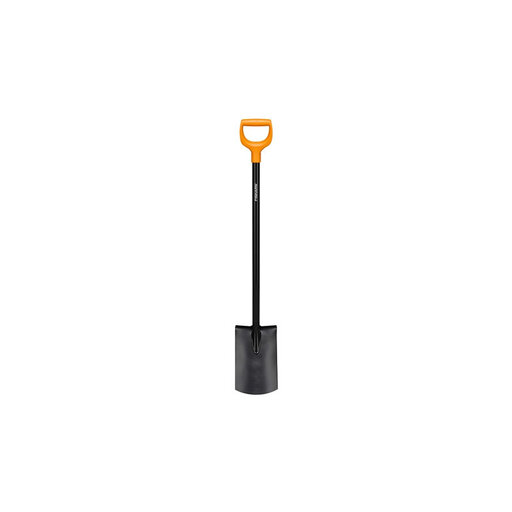
Why This Fits Their Persona: A practical option for new gardeners, smaller gardens and general planting, edging and digging in standard or grassy topsoil.
Its boron steel head, stepping board and welded metal shaft provide specific construction details instead of relying only on general durability language.
Pointed blade edge, D-shaped handle and 116.6cm length support everyday digging and leverage.
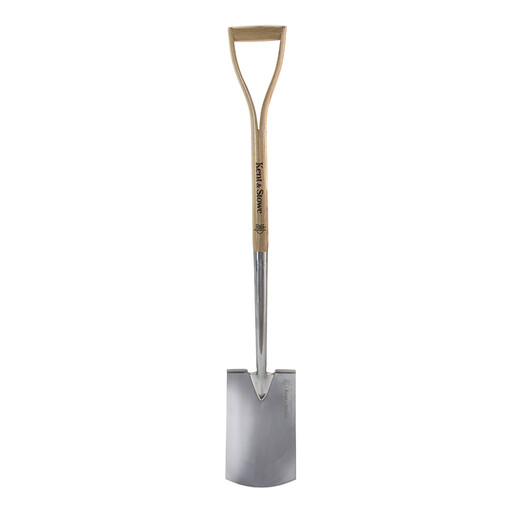
Why This Fits Their Persona: Suits frequent gardeners and landscapers who want a stainless steel digging spade with a traditional ash handle and substantial foot support.
The listed one-piece, hot-forged construction makes the head-to-shoulder design clear, while the polished blade is intended to resist soil adhesion and rust.
Sharp ground edge, smooth ash handle and reinforced tread are suited to leverage in compacted ground.
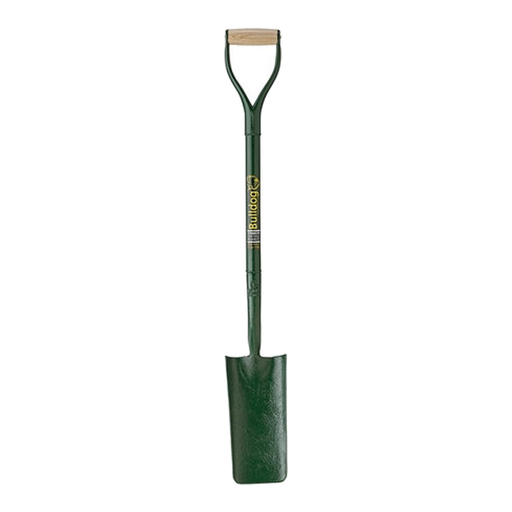
Why This Fits Their Persona: Designed for tradespeople, DIY users and groundskeepers who need a narrow tool for cable trenches in clay or similar materials.
The 280 x 125mm narrow blade is specified for controlled trenching, avoiding the waste and awkward handling of an oversized garden shovel.
One-piece steel construction, YD grip and 711mm handle provide control for narrow excavations.
For open ground, the Faithfull Digging Spade combines a heat-treated carbon steel head with a treaded blade top. It is suited to turning beds, double digging and edging. For borders and vegetable patches, the Faithfull Border Spade has a compact head and coated tubular steel handle for more controlled planting between established plants.
When moving shingle, sand or gravel, the BULLDOG West Country Shovel offers a 1372mm straight ash handle and hardened, tempered open socket blade. Its longer format is more appropriate for loose-material handling than detailed planting.
We have compiled a complete, real-time list of products that fully satisfy these strict selection criteria and UK safety regulations.
A spade normally has a relatively flat or pointed blade for cutting, digging and turning soil. A shovel often has a broader or dished blade for lifting and moving loose material. The terms overlap, so check the blade dimensions and stated use before purchasing.
Choose a digging spade with a sharp edge, strong head and a treaded shoulder. A stainless steel spade, carbon steel spade or forged steel model may suit regular heavy use, provided the blade profile and handle length match your strength and working space.
Remove soil after each use, dry the blade before storage and keep the tool in a dry, ventilated place. Inspect handles, sockets, welds and cutting edges regularly. Do not use a garden tool for prying materials beyond its intended purpose, as this can damage the head or handle.