
24/7 Customer Support

Free returns

Same-day & Next-day Delivery

Quality Guaranteed

Unlock Your Welcome Offers: FREE Delivery | Up to 80% OFF | Free 30-day JoyPlus trial
Download the APP
A well-chosen set of garden tools can make pruning, hedge shaping, weeding and lawn care more manageable. However, product descriptions often focus on blade coatings, cutting capacity or battery performance without explaining where a tool is actually suitable.
For UK gardens, allotments and small outdoor spaces, three purchasing traps appear frequently:
The practical approach is to match the tool to the material, cutting diameter and frequency of use.
Bypass pruning secateurs have two blades that pass one another, making them suitable for fresh stems, flowers and live branches. The WORKPRO Garden Shears Set includes 210 mm bypass pruning shears rated for branches up to 19 mm, plus 160 mm harvest shears for delicate material up to 5 mm.
Anvil loppers use a blade that closes against a flat surface. They are designed for tougher, often older or dry wood, and provide leverage through their longer handles. The GARTOL anvil lopper has a stated cutting capacity of up to 5 cm, but users should still consider branch condition and their own strength before cutting at the upper limit.
For hedge maintenance, hedge shears are intended for light trimming and shaping rather than thick woody branches. The Kent and Stowe Surecut Hedge Shear has a maximum cutting diameter of 10 mm, making it more appropriate for foliage and soft stems than heavy branch work.
Blade material affects edge retention and maintenance requirements. SK5 carbon steel is used in several pruning and hedge-cutting tools because it is suited to sharp cutting edges. Stainless steel, as used on the WORKPRO harvest shears and grout scraper, offers practical resistance to corrosion, though it still benefits from drying.
A coating may help reduce rust or friction, but it does not remove the need for care. Wipe blades after use, remove sap and apply a light oil to pivots where recommended. Avoid cutting wire, plastic or other hard materials with tools intended for plant material.
Handles also matter. Non-slip rubber grips can improve control in damp conditions, while lightweight aluminium may be more comfortable during repeated pruning. Check the handle shape and overall weight if you have smaller hands or expect longer sessions.
Long-handled tools can reduce bending and provide leverage, but they may be less convenient in narrow borders. A patio weeder with a compatible handle system can be useful for paving joints, wall edges and awkward gaps.
For lawns, compare cutting width, battery runtime and charging time rather than focusing only on motor speed. The Gtech SLM50 cordless lawn mower weighs 3.5 kg, has a 25 cm cutting width, and offers up to 30 minutes’ runtime after a stated four-hour charge. Its compact format is aimed at small lawns and narrow areas, rather than large expanses of grass.
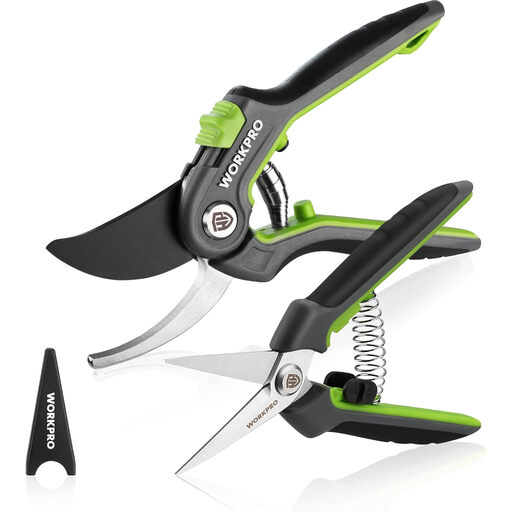
Why This Fits Their Persona: A practical two-tool starting point for UK homeowners who need to prune flowers, fresh branches and fruit plants without buying separate tools immediately.
The two cutting capacities make the intended uses clearer: up to 19 mm for the bypass shears and up to 5 mm for delicate harvesting work.
SK5 and stainless steel blades; non-slip grips, spring-open mechanism and safety lock.
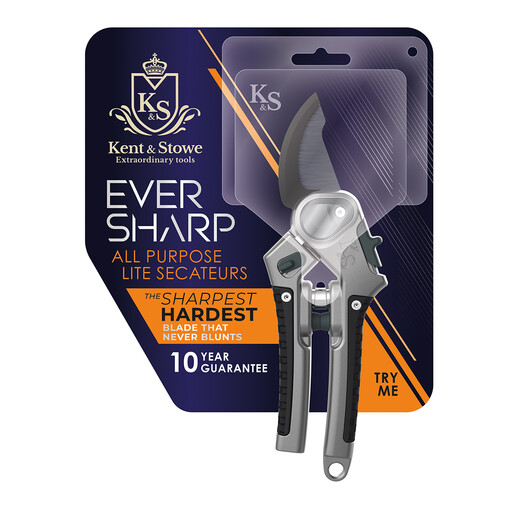
Why This Fits Their Persona: Suitable for gardeners who value a lighter, adaptable tool for repeated deadheading, live-wood pruning and general garden maintenance.
Its adjustable hand-size mechanism and ambidextrous design address the common issue of buying secateurs that feel awkward during extended use.
380 g aluminium body; wire and string cutter; stated 10-year guarantee.
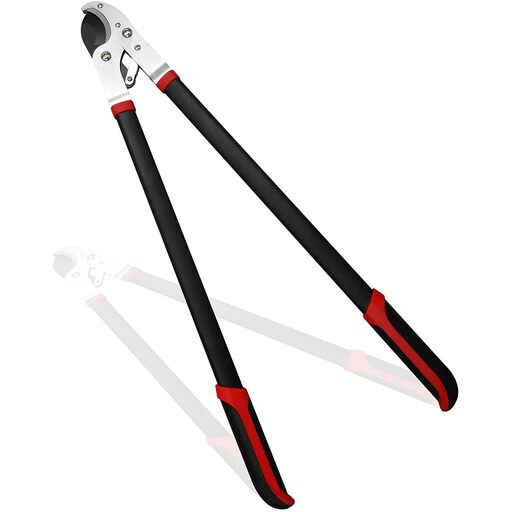
Why This Fits Their Persona: A practical match for allotment holders and gardeners dealing with thicker shrubs, mature growth and branches beyond the range of hand secateurs.
The 73 cm overall length and anvil design provide a clearly stated leverage advantage, rather than relying only on vague strength claims.
High-carbon steel blade with Ilaflon coating; non-slip 56 cm handles; stated capacity up to 5 cm.
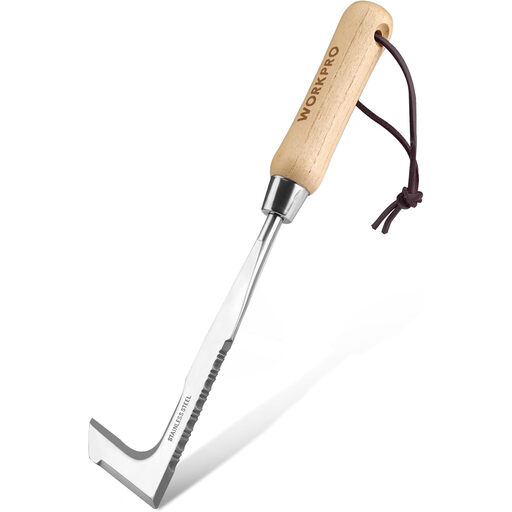
Why This Fits Their Persona: Designed for homeowners clearing moss and weeds from paving joints, wall edges and narrow gaps where a lawn weeder is unsuitable.
Its purpose-built 7-shaped head targets joints, while the serrated edge has a separate use for vines and rope.
Stainless steel construction; 31.5 cm length; wooden handle, protective cover and hanging strap.
For daisies and short-rooted weeds in grass, a dedicated lawn weeder such as the Faithfull Daisy Grubber uses a narrow two-pronged carbon steel head to reach the root with limited soil disturbance.
For paving and wall edges, the Gardena CombiSystem Patio Weeder has a double-sided, tempered steel blade and can be paired with compatible handles. This may be more suitable where reducing bending is important.
When choosing between manual weed removers and a cordless lawn mower, consider the area involved. Manual tools are quiet and require no charging, whereas a small cordless mower can simplify repeated cutting across a compact lawn. Always follow the manufacturer’s instructions, wear suitable gloves and eye protection where appropriate, and keep cutting tools away from children.
We have compiled a complete, real-time list of products that fully satisfy these strict selection criteria and UK safety regulations.
A useful starter selection is a pair of bypass secateurs, gardening gloves, a hand weeder and a small trowel. Add hedge shears if you regularly shape hedges, or loppers if your garden contains branches above the secateurs’ stated capacity.
Clean soil and plant residue after each use, dry metal parts thoroughly and apply light oil to moving joints when required. Store tools in a dry place, engage safety locks and inspect blades, handles and fasteners before use.
It can be suitable when the cutting width and stated runtime match the lawn area. A compact model is easier to manoeuvre in narrow spaces, but check charging time, battery availability and whether the mower includes the accessories you need before purchasing.