
24/7 Customer Support

Free returns

Same-day & Next-day Delivery

Quality Guaranteed

Unlock Your Welcome Offers: FREE Delivery | Up to 80% OFF | Free 30-day JoyPlus trial
Download the APP
Removing weeds by hand can be effective, but the wrong tool may make the job slower, disturb more soil than necessary or become uncomfortable after a short session. UK gardeners also have to contend with damp soil, moss between paving slabs, compacted beds and fast-growing weeds during spring and summer.
This guide compares useful garden weeding tools by task, material and user profile, helping you avoid common purchasing mistakes before choosing a suitable manual tool.
A three-pronged cultivator is useful for loosening surface soil, but it is not designed to extract daisies from a lawn or scrape moss from paving joints. Similarly, a narrow patio blade may clear a crack but will not prepare a vegetable bed efficiently.
Match the tool head to the work:
Garden tools are regularly exposed to wet soil, rain and humidity. A coating can help protect a carbon steel head from scratches and moisture, but it does not remove the need for cleaning and drying. Stainless steel offers useful corrosion resistance, particularly for a stainless steel garden weeder, although the handle and joint still need care.
Check the listed material, finish and storage instructions rather than relying on phrases such as “heavy duty” without supporting detail.
A short hand tool gives control around plants but requires kneeling or bending. A longer handle may improve reach across paving or borders, but it can be less convenient in dense planting. Look for a comfortable grip, a secure head-to-handle connection and a length suited to the area being maintained.
For cultivating soil, pointed tines should penetrate the surface without requiring excessive force. The Faithfull Hand Cultivator has three narrow pointed tines, making it suitable for loosening compacted soil around shrubs, flower beds and vegetable patches.
A mini prong cultivator may be easier to manoeuvre in smaller spaces. Three prongs set at different angles can help break up the top layer as the tool is moved backwards and forwards.
For lawn weeds, a narrow two-pronged blade is more appropriate. It can be inserted beside a short-rooted weed and used with leverage to cut below the root, helping to limit disruption to nearby turf.
Heat-treated carbon steel is used in several hand tools because it provides a firm working head for soil penetration. A powder-coated finish can add resistance to rust, scratches, humidity and contact with soil.
For paving joints, stainless steel is a practical material to consider. It is resistant to corrosion and can be wiped clean after removing damp moss and soil. However, even stainless steel tools should be cleaned after use and stored in dry conditions.
A 31.5 cm grout scraper can provide more reach than a compact hand weeder while remaining easy to store. If you maintain a large patio, a handle-compatible system may reduce bending. The GARDENA combisystem Patio Weeder can be used with compatible CombiSystem handles, allowing the working height to be adjusted through the handle selection.
A blade cover, hanging hole or storage strap is also useful. These features help protect the blade and reduce the chance of accidental contact when tools are kept in a shed or utility area.
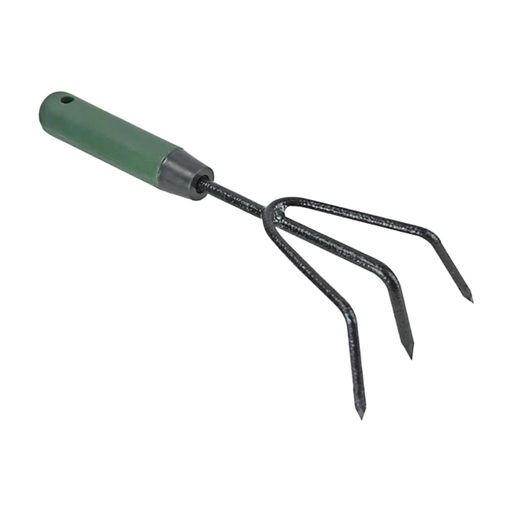
Why This Fits Their Persona: A compact option for new gardeners, small borders and allotment users who need one straightforward tool for loosening surface soil.
Its three narrow pointed tines are intended for soil cultivation rather than being presented as a one-tool solution for every weeding task.
Heat-treated carbon steel head; powder-coated finish; compact plastic handle for close work around plants.
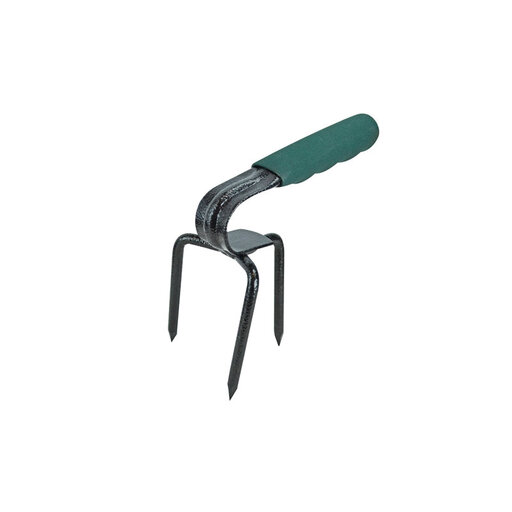
Why This Fits Their Persona: Suitable for compact flower beds, containers and vegetable patches where a small garden claw is easier to control.
The three prongs are set at different angles for breaking up topsoil, so its intended use is clear rather than overly broad.
Heat-treated carbon steel head; tubular steel handle with polypropylene coating; powder-coated protective finish.
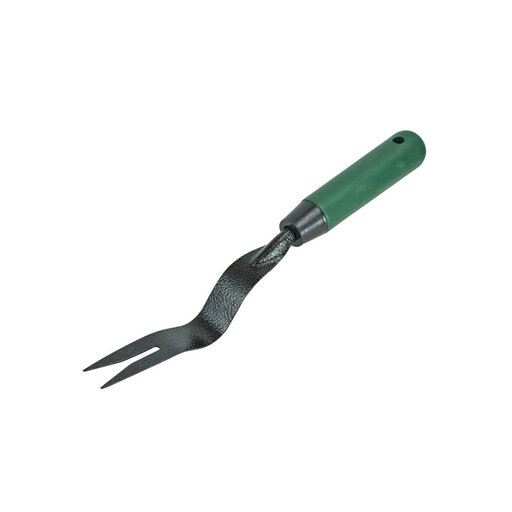
Why This Fits Their Persona: Designed for household lawns and gardeners removing daisies or other short-rooted weeds individually.
Its long, narrow two-pronged blade is made for root access, not for scraping paving or cultivating a whole bed.
Heat-treated carbon steel head; plastic handle; narrow blade intended to minimise disturbance around the weed.
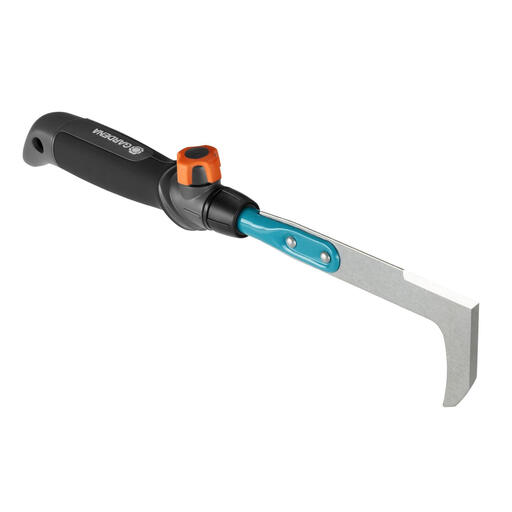
Why This Fits Their Persona: A practical choice for users who already own compatible handles or want adaptable reach when clearing patio joints and wall edges.
The double-sided blade is specifically intended for moss and weeds in narrow joints, while the handle system addresses reach separately.
Stainless steel blade; angled working head; blade protection for storage; compatible with GARDENA CombiSystem handles.
For tougher paving gaps, the WORKPRO Grout Scraper combines a 7-shaped stainless steel weeder with a serrated edge. The hooked section is intended for weeds and moss in joints, while the serrated section can cut vines and rope. Its 31.5 cm length, wooden handle, protective cover and hanging strap make it suitable for repeated patio and garden-gap maintenance.
Use protective gloves, avoid applying excessive force and clean the blade after use. For a wider range of options, compare the available cultivator hand tool products by task and construction.
We have compiled a complete, real-time list of products that fully satisfy these strict selection criteria and UK safety regulations.
A patio weeder, grout scraper or paving joint weeder with a narrow hooked or sharpened blade is suitable for narrow gaps. Choose a longer handle or compatible extension system if frequent bending is uncomfortable.
Yes, but use a lawn-specific design for individual weeds. A daisy grubber can target short-rooted weeds, while a broad cultivator may disturb surrounding grass and soil unnecessarily.
Service life depends on frequency of use, force applied and storage conditions. Stainless steel resists corrosion, but the tool should still be cleaned, dried and checked after use. A sound handle connection and careful storage are as important as the blade material.