
24/7 Customer Support

Free returns

Same-day & Next-day Delivery

Quality Guaranteed

Unlock Your Welcome Offers: FREE Delivery | Up to 80% OFF | Free 30-day JoyPlus trial
Download the APP
A patchy lawn, moss-covered patio or overgrown allotment can make weed control feel like a constant job. Yet choosing the wrong garden weedkiller often creates more problems than it solves. A non-selective formula can damage grass and ornamental plants, while a small ready-to-use bottle may become expensive when treating a large driveway or garden.
Before buying, focus on where the product can be used, how much area it covers and which active ingredient it contains. Marketing phrases such as “rapid action”, “root-killing” and “natural breakdown” are only useful when they match your application area and the instructions on the label.
A lawn weedkiller is designed to target broadleaf weeds while leaving established grass relatively unaffected when used as directed. A path, patio or driveway weedkiller is usually intended for hard surfaces and may damage grass, flowers, vegetables and shrubs if spray drifts onto them.
Do not use a product labelled for paths as a weed killer for lawns, and do not assume a lawn product will control weeds growing between paving slabs.
A rapid weedkiller may show visible changes within a few hours, but speed can depend on active growth, temperature, coverage and dry weather. Fast visible browning does not always mean deep-rooted weeds have been controlled.
Check whether the label specifies a replanting period, rainfast period or need for repeat treatment. These details are more useful than a general “fast-acting weed control” claim.
A 500ml bottle may cover more ground than a 1-litre ready-to-use product if it is diluted according to the label. However, the final coverage depends on the mixing rate and application method. Compare coverage in square metres, not bottle size alone.
A concentrate also requires a suitable sprayer, accurate measuring and safe mixing. For small spot treatments, pre-measured tubes or a ready-to-use trigger may be more practical.
For lawns, look for a clearly labelled selective weedkiller. Products such as WEEDOL Lawn Weedkiller 1l and WEEDOL Lawn Weedkiller Concentrate 500ml are described for common lawn weeds including dandelions, daisies, clover and plantain.
For flower beds, vegetable patches and areas where all vegetation must be controlled, a general or total weedkiller may be more suitable. Avoid spraying desirable plants, young seedlings or edible crops unless the product label specifically permits that use.
The active ingredient affects how the product behaves:
Always check the current packaging for the authorised use, active ingredients and restrictions. In the UK, only use plant protection products according to their label and keep them away from watercourses, children, pets and food.
A concentrated weedkiller can be economical for large gardens, allotments and grounds maintenance, but it requires correct dilution. WEEDOL Tough Weedkiller Concentrate 500ml is listed with coverage of up to 250m² and is intended for stubborn weeds such as thistle, nettle and bramble.
Apply during calm, dry conditions to reduce spray drift and allow foliage to absorb the product. Avoid treatment before rain unless the label confirms the required rainfast period. Wear the protective clothing, gloves and eye or face protection specified on the product label.
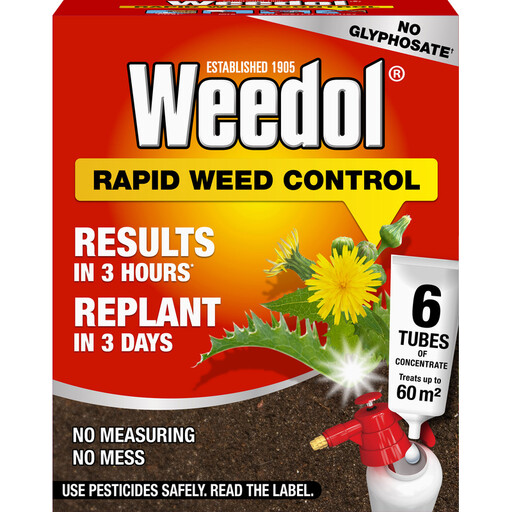
Why This Fits Their Persona: Pre-measured tubes are practical for smaller gardens, occasional spot treatments and shoppers who do not want to calculate dilution ratios.
It avoids buying a large bottle based only on volume, while the listed formulation is suitable for paths, driveways, flower beds and vegetable patches when used as directed.
Pre-measured format; listed as rainproof in 10 minutes and suitable for common garden weeds.
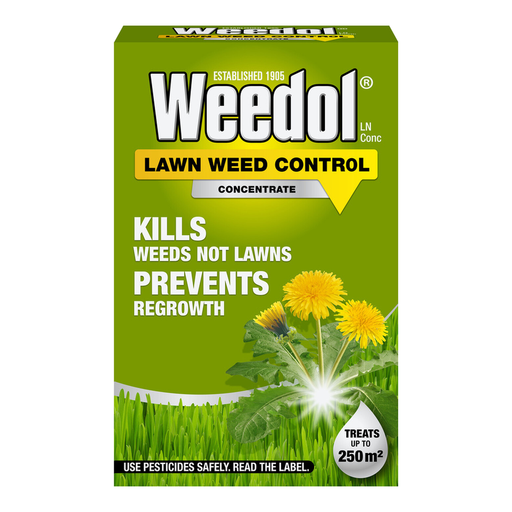
Why This Fits Their Persona: A measured concentrate suits householders who want a lawn-specific solution and are prepared to use a sprayer correctly.
Its stated selective use separates lawn treatment from total weed control, helping reduce the risk of choosing a non-selective patio or path product.
Targets dandelion, clover, daisies and plantain; concentrated format supports measured coverage.
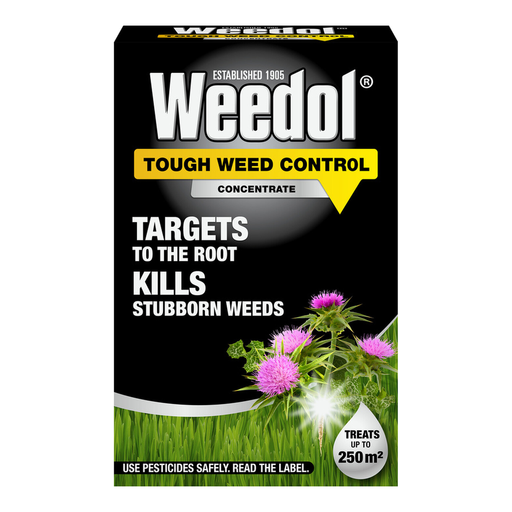
Why This Fits Their Persona: Suitable for larger gardens, allotments and overgrown areas where perennial weeds require targeted treatment.
The stated coverage of up to 250m² makes area comparison clearer than choosing solely by bottle size.
Designed for thistle, nettle and bramble; dilution provides coverage for extensive treatment areas.
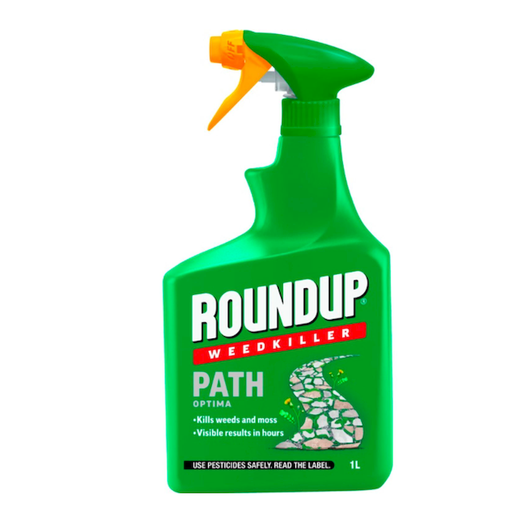
Why This Fits Their Persona: Householders maintaining patios, drives and paths may prefer a ready-to-use trigger spray without mixing.
The product is specifically listed for hard, impermeable surfaces and not lawns or planted areas, making the application boundary clear.
Glyphosate-free formulation; ready-to-use trigger format for paths, patios and driveways.
We have compiled a complete, real-time list of products that fully satisfy these strict selection criteria and UK safety regulations.
Choose a product explicitly labelled as a selective lawn weedkiller. It should identify the grass types and weeds covered, along with application rates and restrictions. Never use a path weedkiller or total weedkiller on grass unless the label specifically permits it.
There is no single lifespan for every product. Results and repeat-treatment intervals depend on the weed species, active ingredient, weather and label directions. Annual weeds may need different treatment from perennial weeds such as bramble or bindweed. Store unused product in its original container, securely closed and according to the label.
Some glyphosate-free weedkiller products are labelled for both hard surfaces and planted areas, while others are restricted to paths, patios or driveways. Check the exact label before use, particularly around edible crops and water. A ready-to-use formula can simplify small treatments, whereas a concentrate may offer more practical coverage for larger areas.