What matters when choosing?
Start with the distance and place you want to record, then decide whether after-dark capture or viewing footage remotely is important.
| Concern |
What to check |
Who this matters to |
| Day and night capture |
Look at the exact model’s daylight and night images or video, then check trigger response for the expected animal movement. |
If animals visit after dark, I want to recognise the visitor rather than collect an unhelpful triggered clip; about 33% of consumers would put dependable day-and-night capture first. |
| Close bird footage |
Check feeder mounting and whether the camera can focus and frame birds at the intended distance. |
When birds return to one feeder, I want a close view of those visits; about 27% of consumers would make feeder footage their main priority. |
| Route coverage |
Match detection area and framing to the route, and confirm that the camera can be mounted securely at the intended height. |
If animals cross a path rather than stop at a feeder, I need the camera pointed where they pass; covering that route would come first for about 20% of consumers. |
| Power, storage and access |
Check the power supply and recording storage; for remote viewing, test Wi-Fi at the mounting point. |
If I cannot visit the camera often, retrieving footage and keeping it running need to be manageable; about 20% of consumers would prioritise those practical arrangements. |
Joybuy feeder-camera selections
These camera-equipped feeders are options for watching birds at a known feeding point. For animals moving along a wider route, use the placement and detection checks above when considering a trail camera.
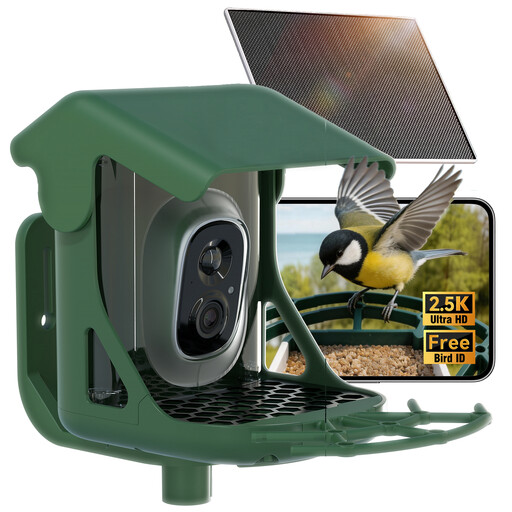 Image unavailable
CINMOORE 2.5K solar bird feeder with camera
Consider this feeder format if you want to watch birds returning to one feeding point. Its product name specifies a 2.5K camera, live viewing, 2.4G Wi-Fi, solar power and cloud storage. Test Wi-Fi at the feeder and check the capture modes, night footage and outdoor weather protection for this model before mounting it.
View on Joybuy
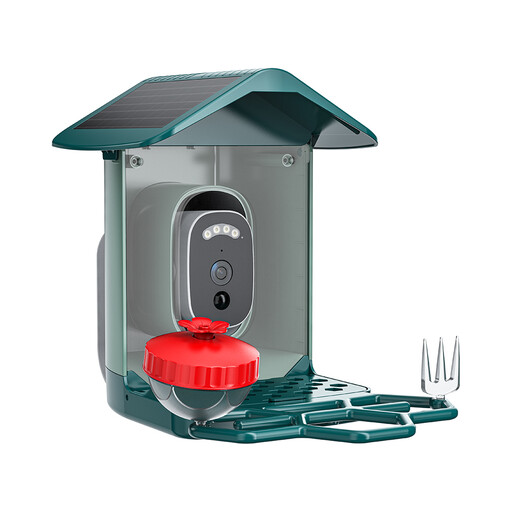 Image unavailable
JOOAN WiFi solar-powered 2K bird feeder with camera
This is another feeder-focused option if photos and videos of birds at one location are your priority. The product name specifies 2K photo and video capture, Wi-Fi and solar power. Check night capture if after-dark visitors matter to you, and confirm storage requirements, Wi-Fi signal and outdoor weather protection at the planned position.
View on Joybuy
Frequently asked questions
Where should I place a wildlife camera in my garden?
Place it where the animal is likely to appear, such as a feeder or regular route, and test the view before leaving it unattended. RSPB Shop advises attaching a wildlife camera to a stable object and aiming around the intended animal’s eye level; keep the lens and sensor unobstructed.
Do I need night capture for garden wildlife?
Choose night capture if the animals you want to observe visit after dark. Which? evaluates night images and video separately, so check footage from the exact model rather than relying on a “night vision” label.
Should I choose Wi-Fi or an SD-card trail camera?
Choose Wi-Fi if you want remote viewing and can get a reliable signal at the mounting point; otherwise, a trail camera with local card storage may suit you if retrieving recordings is practical. NatureSpy says its WiFi WildCam 3 needs a consistent router connection, and Green Feathers advises testing signal where the camera will be installed. Check the exact model’s card requirements and power supply either way.
What maintenance should I plan for?
Plan around the chosen camera’s power and storage arrangements: check whether it needs replaceable batteries, solar charging, an accessible power supply or a separately obtained memory card. Also check how you will retrieve recordings and what happens when storage fills.
Can a garden wildlife camera raise privacy concerns?
Yes, if it records beyond your property boundary. The UK Information Commissioner’s Office says this may make you a data controller. Frame the view within your own garden where possible, and consult current ICO guidance before using a position that may capture neighbours, shared areas or the street.


