For a seasonal glut of garden apples, consider a crusher and fruit press, matching the press capacity to the amount you want to process per session. A centrifugal juicer is a more straightforward route for modest fresh-juice batches; a slow juicer makes more sense if you also juice other produce regularly. Neither countertop option should be assumed to replace a crusher-and-press workflow for a large harvest.
Who is this for?
Gardeners with a seasonal apple glut
If you have more apples than you want to juice a few at a time, the decision centres on batch size, crushing the fruit before pressing and finding space for the equipment and clean-up. Vigo Presses describes crushing as an essential step in its press workflow.
Small-batch fresh-juice makers
If you make apple juice occasionally, preparation and clean-up may matter more to you than press capacity. Feed-chute size is worth checking on the exact appliance: Sage and Kenwood describe wide-feed features on particular centrifugal models.
Everyday mixed-produce juicers
If apples are only part of what you juice, compare how a machine handles the other produce you use and what its regular cleaning routine involves. Sage describes the Big Squeeze for apples and other produce, while Hurom presents the H300 as a self-feeding slow juicer.
What matters when choosing?
Choose the workflow around your main job: getting through a harvest, making a modest batch quickly or using one appliance for produce beyond apple season.
Crusher and fruit press
Consider it when: A seasonal surplus makes repeated pressing cycles the main concern.
Trade-off: Vigo Presses says apples need crushing before pressing, so allow for that step as well as the press itself.
Centrifugal juicer
Consider it when: You want fresh juice from smaller amounts of apples without setting up a press.
Trade-off: It remains a countertop, smaller-batch workflow rather than a dedicated way to press crushed apples.
Slow juicer
Consider it when: You expect to juice apples alongside other fruit or vegetables throughout the year.
Trade-off: Repeated loading and emptying can still matter when you have a large harvest.
| Concern |
What to check |
Who this matters to |
| Harvest throughput |
Estimate how much fruit you will process per session; for a press, compare batch capacity and plan how you will crush the apples. |
If my trees produce a seasonal glut, I need a manageable number of batches rather than a few glasses at a time. Around 50% of consumers put harvest throughput first. |
| Small-batch convenience |
Compare the exact model's feed chute, fruit-preparation instructions and cleaning steps. |
For occasional fresh juice, I want to get through a modest amount of fruit without setting up pressing equipment. Quick small-batch use comes first for around 30% of consumers. |
| Use beyond apple season |
Check the produce accepted by the exact model and how its loading and cleaning routine fits regular use. |
If I will also juice greens or other produce, I need the appliance to suit that wider routine. Year-round versatility is the primary concern for around 20% of consumers. |
Mistakes to avoid
-
Buying a press without a crushing plan
Vigo Presses says whole apples resist pressure and need to be crushed into pomace before pressing; slicing them is not the same preparation.
Plan the crushing method, press, straining bag and clean collection vessel as one workflow.
A separate crushing tool or manual crushing stage also takes time and working space.
-
Reading press capacity as finished-juice volume
A press's litre rating describes its batch capacity, not the amount of juice it will deliver. Vigo Presses notes that yield varies with apple variety and season.
Use its per-press juice figures as rough planning guides, then consider how many cycles your harvest could require.
-
Pressing mouldy or rotten apples
Vigo Presses advises against using mouldy or rotten fruit and recommends washing mud from windfalls. The British Soft Drinks Association's apple-juice production guidance also addresses practices intended to minimise patulin contamination.
Sort apples before processing, discard mouldy or rotten fruit, wash dirty windfalls and keep juice-contact equipment clean.
-
Overlooking electric-mill safety
Orchard Link's sample risk assessment identifies electrical and blade hazards in apple-milling work. An outdoor work area needs a safe power arrangement, not an improvised connection.
Follow the exact machine instructions, keep electrical connections dry and disconnect power before opening or cleaning equipment with blades.
Suitable electrical protection and cable management may need planning before an outdoor pressing session.
Brands for reference
These brands illustrate different equipment routes; the model-specific features below should not be taken as claims about every product in a brand's range.
Vigo Presses
Apple-crushing equipment and fruit presses for harvest-led juice making.
- Vigo Presses lists manual, hydraulic and hydropress options alongside separate crushing equipment.
- Its capacity and yield guidance is suitable for rough planning; actual juice yield varies with the apples and conditions.
Sage
Kitchen-appliance options spanning centrifugal and slow juicing.
- Sage lists an 88 mm feed chute for the Nutri Juicer Cold XL and describes the Big Squeeze for apples and other produce.
- Those details apply to particular models; check the dimensions and preparation instructions of the one you intend to buy.
Hurom
Slow juicers, including a self-feeding option for regular mixed-produce use.
- Hurom UK describes the H300 as self-feeding, with parts designed for convenient use and cleaning.
- Compare its loading capacity and cleaning steps for your routine rather than assuming harvest-scale apple throughput.
Kenwood
A centrifugal-juicer reference for comparing conventional kitchen-appliance features.
- Kenwood's JE720 support information lists an XXL feed tube and two speeds for soft and hard fruit.
- Check availability and the instructions for the exact model before treating those features as a purchase option.
Speidel
Apple-milling equipment for a larger crushing-and-pressing workflow.
- Vigo Presses lists a Speidel apple and fruit mill designed to turn whole apples into pomace.
- The mill crushes fruit; you still need a suitable press to extract juice.
Slow juicers for smaller batches
These Joybuy slow juicers are countertop options to consider for modest fresh-juice batches or use beyond apple season. If clearing a large garden harvest is the priority, assess a crusher-and-press workflow separately.
 No image available
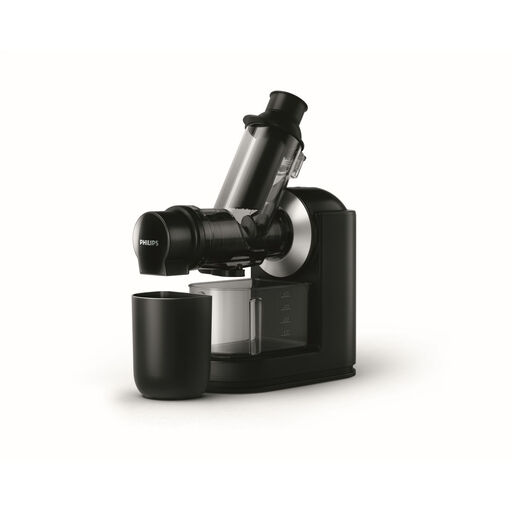
Philips Viva Collection HR1889/71 Masticating Juicer
Consider this slow-juicer format for smaller batches and regular use with fruit or vegetables. Check the HR1889/71 instructions for garden-apple preparation and continuous-use limits before planning repeated batches.
View on Joybuy
 No image available
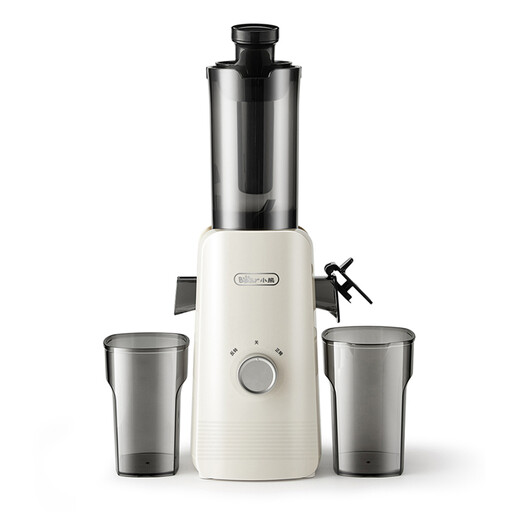
Bear YZJ-F01D6 80 mm Wide-Mouth Slow Juicer, 1 L
For modest apple batches where preparation matters, this model has an 80 mm feed chute and a 1 L juice cup. Check the YZJ-F01D6 instructions for permitted apple sizes, cleaning and continuous-use limits before processing repeated batches.
View on Joybuy
Common questions
Can whole garden apples go straight into a fruit press?
No: apples need crushing into pomace before pressing. Vigo Presses says whole apples resist pressure and that slicing alone is not enough for efficient pressing.
How should I choose an apple press size?
Start with the amount of apples you want to process per session and the number of pressing cycles you can manage. Vigo Presses gives roughly 10 litres of juice from 20 kg of apples as a planning guide, but yield varies with apple variety and season; press capacity itself is not a finished-juice volume.
Would a centrifugal juicer be simpler for a few apples?
It can be a simpler workflow for modest fresh-juice batches than setting up a crusher and press. Sage lists an 88 mm feed chute for its Nutri Juicer Cold XL, but check the preparation and cleaning instructions for whichever model you choose rather than assuming every juicer accepts whole apples.
Do I need to register if I sell or supply the juice?
Food-business registration may be required if you sell, prepare, handle or distribute apple juice. GOV.UK's guidance for England, Wales and Northern Ireland says food businesses must register with their local authority at least 28 days before trading; check the requirements for your location and activity before supplying juice.


