
24/7 Customer Support

Free returns

Same-day & Next-day Delivery

Quality Guaranteed

Unlock Your Welcome Offers: FREE Delivery | Up to 80% OFF | Free 30-day JoyPlus trial
Download the APP
A garment steamer can make daily clothing care quicker, particularly when you need to refresh a work shirt before commuting or smooth a dress without setting up an ironing board. However, choosing the right clothes steamer involves more than comparing wattage or selecting the lowest price.
Some models are designed for occasional touch-ups, while others are built for family laundry loads. Understanding the differences in steam output, tank capacity, handling and fabric suitability can help you avoid buying a product that is inconvenient after the first few uses.
Wattage indicates the electrical power used by the appliance, but it does not describe the complete steaming performance. A high-wattage model may heat quickly, yet steam output, measured in grams per minute, is also important.
For example, a 2000W standing garment steamer with steam output of up to 40g/min is designed for more demanding use than a compact travel model. Conversely, a portable clothes steamer with lower wattage may be more practical for quick touch-ups and easier storage.
A small tank keeps a handheld garment steamer lightweight, but it may need refilling during a large batch of clothes. A standing model with a tank of around 1.8 to 2.1 litres is more suitable for households steaming several garments at once.
Tank capacity also affects portability. A 100ml or 150ml tank can suit an office drawer or suitcase, whereas a large detachable tank is more appropriate for a permanent laundry or dressing-room setup.
Steam can be useful on many ironable fabrics, including some delicate materials, but garments still need to be checked individually. Always follow the care label and the manufacturer’s instructions. Avoid steaming clothing while it is being worn, and keep hands away from the hot steam plate and nozzle.
A brush attachment may help with thicker fabrics, but it does not replace correct temperature, distance and movement. Test an inconspicuous area first when the fabric or garment construction is unfamiliar.
Steam output is one of the more useful figures when comparing a fabric steamer or clothes steamer for removing wrinkles. Higher output can help loosen heavier creases, although the result also depends on how slowly you move the appliance over the fabric.
Heat-up time matters for busy mornings. Portable handheld models commonly heat in around 30 seconds, while some larger standing models take approximately 45 seconds. A ready indicator or light can make it clearer when the appliance is ready to use.
A handheld garment steamer is generally easier to store and carry. It can work well for travel, office use and occasional steaming, especially if it has a folding handle, storage pouch or a cord of practical length.
A standing garment steamer takes up more floor space but can provide a more comfortable setup for multiple garments. Adjustable poles, a hanger and a support board help keep clothing stable while you work. This format is often more suitable for families or anyone who regularly steams shirts, trousers, jackets and dresses.
Look for a detachable tank that is easy to fill and empty. A clear capacity specification is more useful than vague wording such as “large tank”. Limescale management is also worth checking in areas with hard water. Follow the instructions for rinsing and storage, and empty leftover water after use where recommended.
For UK homes, confirm that the appliance is compatible with a 220–240V electrical supply and uses a suitable UK plug or approved arrangement. Never use a damaged cord, and unplug the appliance before filling, emptying or cleaning.
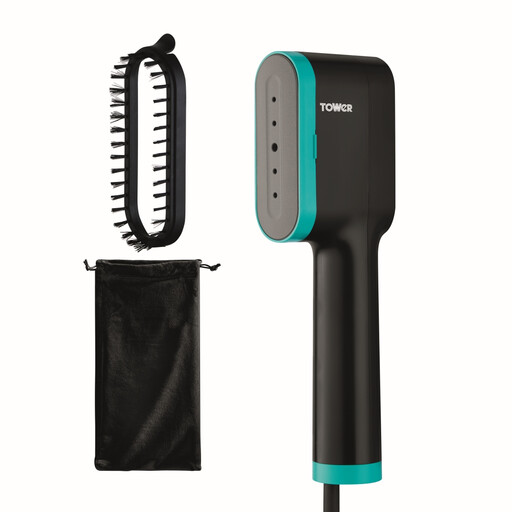
Why This Fits Their Persona: A practical option for occasional home steaming, rented accommodation or quick weekday outfit preparation without the footprint of a standing appliance.
Its listed 260ml tank gives more capacity than many compact touch-up models, while the ready light indicates when heating is complete.
1400W power, continuous steam, ceramic soleplate, anti-drip system and automatic shut-off.
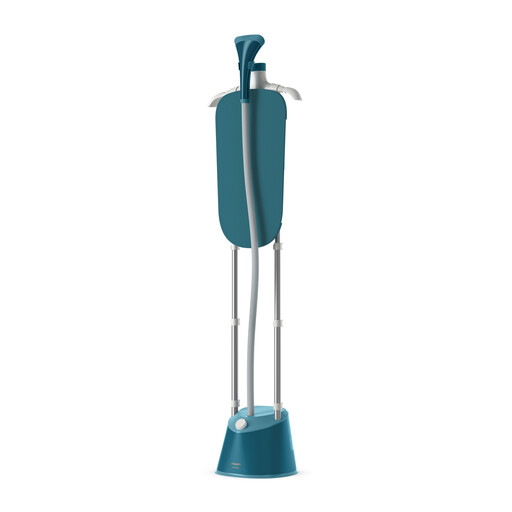
Why This Fits Their Persona: This standing garment steamer suits users who want a dedicated clothing-care station for regular steaming at home.
The 1.8L detachable tank reduces interruptions during larger sessions, while adjustable double poles provide a stable hanging setup.
1800W power, steam output up to 36g/min, three steam settings, integrated StyleBoard and approximately 45-second heat-up.
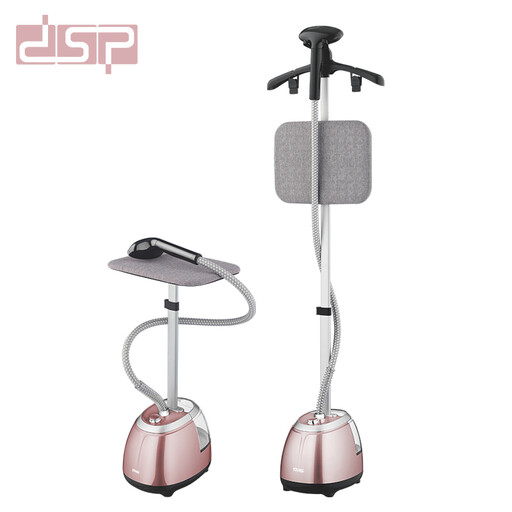
Why This Fits Their Persona: Its larger tank and broad adjustment range are suited to households handling frequent laundry, thicker fabrics or varied garment types.
The 2.1L tank addresses frequent-refill frustration, while ten steam settings allow more control than a single-output appliance.
2000W power, steam output up to 40g/min, 30-second heating, stainless steel nozzle, brush and trouser clip.
A garment steamer works vertically and is convenient for hanging clothes, curtains and some upholstery. It can reduce the need for an ironing board and is useful for garments that are awkward to lay flat.
A steam iron remains more suitable when you need sharp trouser creases, pressed collars or a flat, structured finish. Some handheld models support horizontal use, but buyers should check the manufacturer’s instructions rather than assume every model can be used this way.
For frequent travel, compare folded dimensions, weight, tank size, cord length and voltage compatibility. A compact travel clothes steamer may be convenient, but a small tank can limit the number of garments handled per filling.
We have compiled a complete, real-time list of products that fully satisfy these strict selection criteria and UK safety regulations.
Running cost depends on the appliance’s wattage, heating time and how long it is used. A lower-wattage handheld model may use less electricity per minute, while a higher-output standing model may complete a larger batch more quickly. Compare the rated wattage and your expected steaming time rather than relying on the product type alone.
Lifespan depends on frequency of use, water quality, storage and maintenance. Empty the tank when instructed, rinse or descale the appliance according to its manual, and avoid operating it without sufficient water. Limescale build-up can affect steam performance over time, particularly in hard-water areas.
Some models are listed as suitable for ironable delicate fabrics, but always check the garment label first. Keep the appliance moving, use the appropriate steam setting and test a hidden area. Never direct hot steam towards skin, children, animals or electrical equipment.