
24/7 Customer Support

Free returns

Same-day & Next-day Delivery

Quality Guaranteed

Unlock Your Welcome Offers: FREE Delivery | Up to 80% OFF | Free 30-day JoyPlus trial
Download the APP
A garment steamer can remove everyday creases without setting up an ironing board, making it useful for workwear, school uniforms, delicate fabrics and last-minute outfit preparation. However, product listings often focus on wattage, “professional” language or dramatic steam claims without explaining how a model will perform in a real UK home.
The main challenge is matching the appliance to your routine. A compact handheld garment steamer may suit quick touch-ups, while a standing garment steamer with a large tank is more practical for several outfits. Before buying, watch for these common pitfalls.
A higher wattage can support quicker heating and stronger steam generation, but it does not automatically mean better crease removal. Steam output, measured in grams per minute, nozzle design and temperature control also matter.
For example, a 900W model producing up to 18g/min may be suitable for occasional touch-ups, while a 1,800W or 2,000W standing appliance with a higher steam output is more appropriate for heavier fabrics and larger laundry loads.
A portable clothes steamer is convenient, but a compact tank may require repeated refilling. This is not necessarily a fault: smaller tanks help keep handheld appliances lightweight. The issue arises when a buyer expects one fill to handle a full basket of shirts.
Check both tank capacity and the intended session length. An 85ml tank is designed for short jobs, whereas a 1.8L or 2.1L tank is more suitable for family laundry or several garments at once.
A fast heat-up steamer still needs time to reach operating temperature. Product descriptions commonly quote around 20–45 seconds, but steam may also need a moment to stabilise. Look for a ready indicator, clear operating instructions and safeguards against overheating or dry running.
Also check whether the appliance supports only vertical steaming or both vertical and horizontal use. A steam iron for clothes with a suitable soleplate can be more flexible for collars and hems, while a vertical garment steamer is generally easier for hanging garments.
Steam output is usually shown in g/min. A higher figure can help with dense fabrics such as denim or linen, but delicate materials still require care-label checks and an appropriate setting.
Adjustable steam levels are useful if the household contains a mixture of shirts, wool, synthetics and delicate garments. A brush attachment may help separate fibres on thicker fabrics, but it should be used only as instructed.
For travel or office use, consider the appliance’s weight, folded dimensions and whether the tank is detachable. A travel garment steamer should fit securely in luggage and be easy to empty after use.
For regular home use, a standing model may be more comfortable because it can include adjustable poles, a hanger or a support board. These features take up more storage space but reduce the need to hold a garment in one hand while steaming.
Hot steam can cause burns. Select a model with clear instructions, a stable base or stand where applicable, and useful safeguards such as automatic shut-off, overheat protection, a ready light or an insulated glove.
Before purchase, confirm that the product is suitable for UK electrical use, including the stated voltage and plug type. Always follow the garment’s care label, keep the nozzle away from skin and never steam clothing while it is being worn. Empty the tank after use and follow the manufacturer’s guidance on limescale management, particularly in hard-water areas.
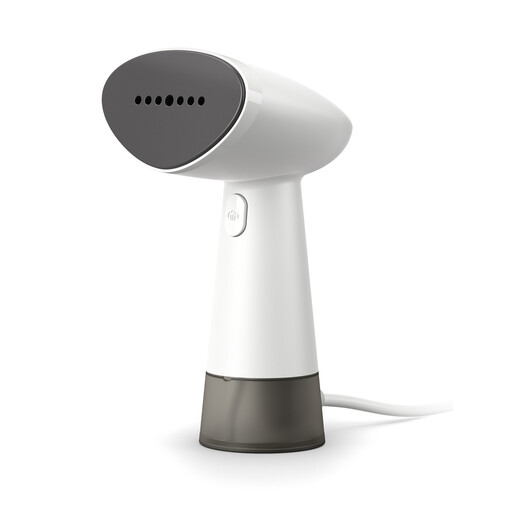
Why This Fits Their Persona: A compact option for students, smaller flats and occasional outfit touch-ups without an ironing board.
Its 85ml detachable tank makes its short-session purpose clear, while the stated approximately 35-second heat-up time avoids implying instant operation.
900W power, up to 18g/min continuous steam, ready indicator and included heat-resistant glove.
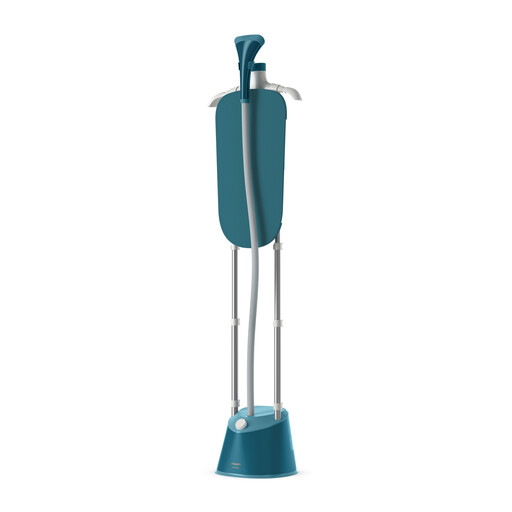
Why This Fits Their Persona: Suitable for households wanting a structured garment-care station for workwear and several outfits.
The 1.8L detachable tank addresses frequent-refill concerns, while three steam settings provide more control than a single-output appliance.
1,800W power, up to 36g/min steam, adjustable double poles and integrated StyleBoard.
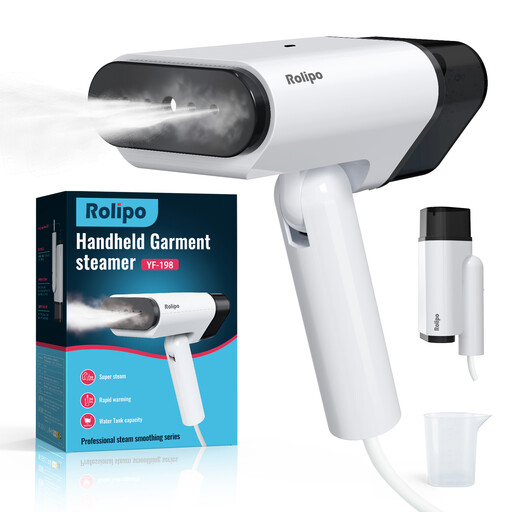
Why This Fits Their Persona: Its foldable handheld format is intended for suitcases, office storage and compact living spaces.
The foldable design directly addresses storage and luggage limitations, while the integrated tank is described as leak-resistant.
Foldable construction, one-button operation and suitability for home, office or travel use.
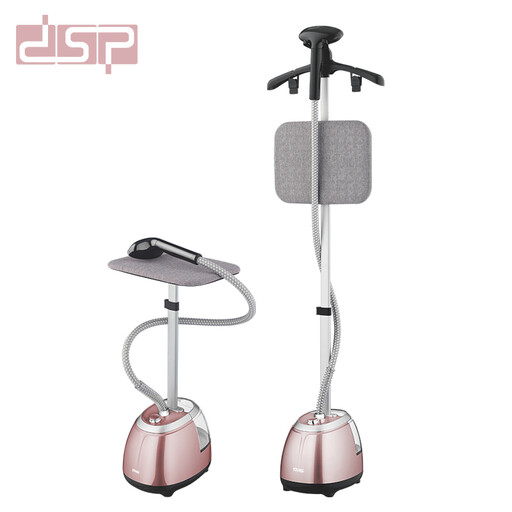
Why This Fits Their Persona: Designed for larger laundry sessions, shared homes and users handling varied fabrics regularly.
Its 2.1L tank is clearly aimed at extended sessions, and 10 steam settings offer more adjustment than a fixed-output model.
2,000W power, stated steam output up to 40g/min, stainless steel nozzle and trouser clip.
We have compiled a complete, real-time list of products that fully satisfy these strict selection criteria and UK safety regulations.
Running cost depends on the appliance’s wattage, heating time and electricity tariff. A handheld model used for a few minutes may consume less electricity per session than a high-power standing garment steamer, but the comparison changes with the number of garments. Multiply the appliance’s kilowatt rating by its operating time in hours, then apply your tariff to estimate the cost.
Hang the garment securely, check its care label and keep the steam head moving rather than holding it against one area for too long. Do not aim steam at people, pets or electrical equipment. Unplug the appliance before filling, emptying or cleaning it, and allow it to cool fully before storage.
Lifespan depends on frequency of use, water quality, cleaning and storage. Emptying the tank after each session can reduce mineral build-up. Follow the manufacturer’s descaling instructions and stop using the appliance if the cord, plug, tank or housing becomes damaged. A model with a suitable tank, accessible maintenance instructions and a warranty that matches your usage can offer more practical long-term value.