
24/7 Customer Support

Free returns

Same-day & Next-day Delivery

Quality Guaranteed

Unlock Your Welcome Offers: FREE Delivery | Up to 80% OFF | Free 30-day JoyPlus trial
Download the APP
By Joybuy Product Recommendation Officer
A garment steamer can remove everyday creases without an ironing board, making it useful for work shirts, school uniforms, dresses and travel clothing. However, product listings often emphasise wattage or dramatic “professional finish” language without explaining what those figures mean in practice.
Before choosing a clothes steamer, watch for three common buying pitfalls:
The right choice depends on how often you steam, how much clothing you handle and whether you need a handheld garment steamer or a standing garment steamer.
Power is measured in watts, while steam output is usually shown in grams per minute (g/min). Wattage indicates the appliance’s electrical input; steam rate gives a more practical indication of the amount of steam produced during operation.
For occasional touch-ups, a handheld fabric steamer offering around 20 g/min may be suitable. For heavier fabrics, multiple garments or family laundry, a vertical garment steamer with output of 36–40 g/min can provide a more continuous flow.
Adjustable steam settings are useful when switching between cotton, linen, wool, silk and synthetic fabrics. Always follow the garment care label, and use a lower setting where appropriate.
A garment steamer with water tank should be selected according to the expected session length:
A detachable tank is generally easier to fill and empty. Emptying leftover water after use can help reduce mineral build-up, particularly in areas with hard water.
A quick heat-up time is useful when preparing for work or leaving for a journey. Several models listed here reach operating temperature in approximately 30–45 seconds.
Also check the weight, cord length, grip, steam trigger and whether the appliance can be used vertically or horizontally. Features such as automatic shut-off, overheat protection, anti-drip construction and a ready indicator can improve convenience, but they do not replace careful handling.
Steam is hot enough to cause burns. Never steam clothing while it is being worn, keep the nozzle away from skin and children, and unplug the appliance before filling, emptying or cleaning it.
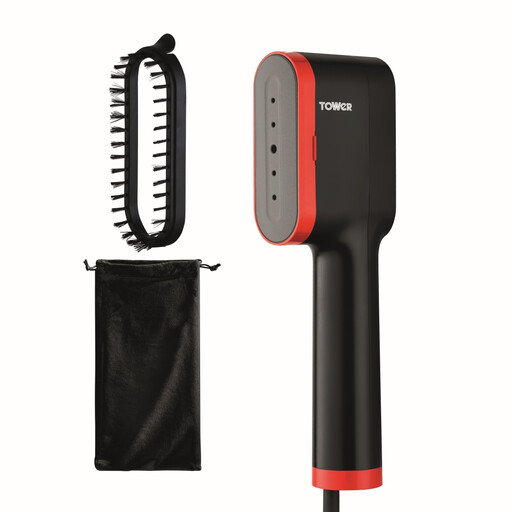
Why This Fits Their Persona: This compact handheld garment steamer suits students, renters and anyone who wants quick crease removal without storing a full ironing board.
Its 260 ml tank is larger than many compact handheld designs, while the 20 g/min stated steam rate gives buyers a clearer performance reference than wattage alone.
1400W output, ceramic soleplate, brush attachment, locking steam trigger, anti-drip design and automatic shut-off.
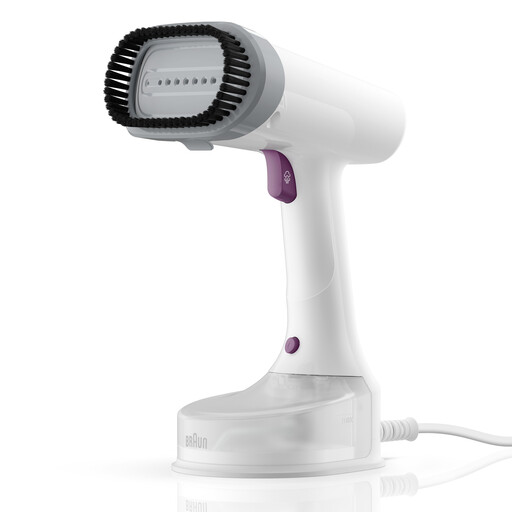
Why This Fits Their Persona: A useful option for professionals who want a handheld appliance that can work on garments hanging vertically or placed flat.
The 150 ml tank makes its capacity clear, while the 22 g/min steam rate and 45-second heat-up time allow a realistic comparison with other handheld models.
1200W power, FreeGlide 3D soleplate, vertical and horizontal use, and a stated 22 g/min continuous steam rate.
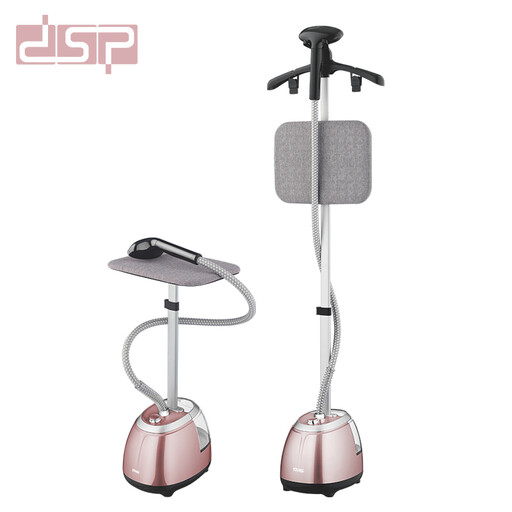
Why This Fits Their Persona: The larger format is intended for households, shared accommodation and users steaming several garments in one session.
The 2.1-litre tank is clearly specified, so it is less likely to be mistaken for a small portable clothes steamer. Ten steam settings also provide more control across different fabrics.
2000W power, stated 40 g/min steam output, stainless steel nozzle, trouser clip, brush and standing support.
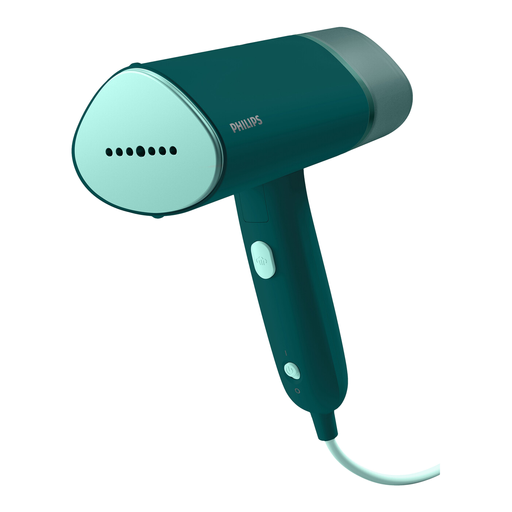
Why This Fits Their Persona: Its compact handheld format is suited to suitcases, office storage and quick outfit preparation away from home.
The compact design is matched with a stated travel-oriented format and a detachable 100 ml tank, making its limited capacity clear before purchase.
Foldable construction, storage pouch, 2 m cord and approximately 30-second heat-up time for short steaming sessions.
We have compiled a complete, real-time list of products that fully satisfy these strict selection criteria and UK safety regulations.
A steamer can soften creases and refresh the appearance of clothing, but it may not create the sharply pressed edges that a traditional steam iron for clothes can produce. For tailored trousers, collars or heavy linen, a steam iron and ironing board may remain more appropriate.
Running cost depends on wattage, usage time and your electricity tariff. A 1,000W handheld garment steamer used briefly may consume less electricity per session than a higher-powered appliance used for longer. Compare the wattage and expected steaming time rather than assuming one appliance is always cheaper.
Lifespan depends on construction, frequency of use, water quality, storage and maintenance. Empty the tank after use, follow the manufacturer’s cleaning instructions and avoid overfilling. A standing garment steamer generally has more components and occupies more space, while a handheld model may be simpler to store.
It can replace an iron for quick wrinkle removal on hanging clothes, office touch-ups and travel. It is less suitable when you need crisp creases, flat pressing or detailed shaping. Choose according to your regular clothing rather than buying solely for a faster heat-up time.