Check the pleated garment’s care instructions before choosing a steamer: if they prohibit steam, a gentler setting does not make steaming suitable. For garments that permit it, a compact handheld suits occasional touch-ups, while a larger-tank or supported setup is worth considering for repeated home sessions, with less portability or more storage space required.
Who needs which setup?
Shoppers protecting existing pleats
If a garment has permanent, heat-sensitive or unfamiliar pleats, establish whether its own instructions permit steam before comparing appliances. ISSEY MIYAKE UK, for example, says not to steam its pleated products because their pleats are not heat-resistant.
Occasional touch-up users
If you refresh a steam-permitted dress, skirt or blouse before an event or while travelling, a compact handheld format may matter more than a long session. Compare its stated tank capacity and running time with the amount you usually need to steam.
Frequent home users
If you work through several steam-permitted garments at once, compare larger tanks, selectable settings and ways to support the fabric. A board-based upright setup also needs a place to use and store it.
What should you check before buying?
Start with the garment’s care instructions, then match the tank and handling arrangement to the size of your usual steaming session.
| Concern |
What to check |
Who this matters to |
| Protecting pleats and fabric |
Read the garment’s care label and any product-specific handling instructions; do not treat a delicate-fabric setting as permission to steam. |
If my garment’s pleats are heat-sensitive, I need to rule out steaming rather than rely on a lower setting. Around 42% of consumers put protecting the pleats and fabric first. |
| Portable touch-ups |
Compare the format, stated heat-up time and running time for the exact model. |
When I only need to refresh one steam-permitted outfit away from home, I would accept a shorter session for something easier to carry; around 33% of consumers prioritise portability and quick readiness. |
| Repeated home sessions |
Compare tank capacity and whether selectable settings or a garment support are included. |
With several permitted garments to handle, I care more about refilling and keeping the fabric manageable than packing the appliance away quickly. Capacity and control come first for around 25% of consumers. |
Mistakes to avoid
-
Assuming every pleated garment can be steamed
Pleats do not all tolerate heat and moisture in the same way. ISSEY MIYAKE UK expressly prohibits steaming its heat-sensitive pleated products.
Use the garment’s own label and handling instructions to decide whether steaming is an option at all.
Steam may permanently alter the intended shape or finish of unsuitable pleats.
-
Choosing a travel steamer for a multi-garment routine
A small tank can interrupt a longer session. Morphy Richards states a 70 ml tank and 3–4 minutes of use for its Vibe travel model.
Compare the stated session length with the number and size of garments you typically handle, not just the heat-up time.
-
Judging suitability by wattage alone
Power rating does not tell you how the garment is supported, which settings are available or how much water the tank holds.
Check those features on the exact model, along with its permitted operating orientation, before deciding how you would handle a pleated garment.
-
Putting unsuitable water or additives in the tank
Tefal warns that unsuitable water sources or additives can cause spitting, staining or premature appliance wear; water instructions vary by model.
Follow your appliance’s manual and add fragrance or descaling products only if that manual expressly permits them.
Brands to consider
Tefal
Tefal lists handheld models with different settings and ways of positioning a garment.
- Tefal specifies four power modes, horizontal or vertical use and a 180 ml tank for Pure Force.
- These model features do not override a garment’s prohibition on steam; check the exact appliance and garment instructions.
Philips
Philips offers both compact handheld and upright-style models to compare for different session sizes.
- Philips lists a foldable 3000 Series handheld model with approximately 30-second readiness and up to 20 g/min; its 1000 Series upright listing specifies a 1.8 L tank, three settings and an integrated StyleBoard.
- The handheld model should not be assumed to have the upright model’s capacity or garment support.
Fridja
Fridja’s f10 is a handheld option to compare when stated session length matters alongside portability.
- Fridja states that the f10 has a 260 ml tank, two modes and up to 14 minutes of continuous steam.
- A handheld format does not provide a fixed board for supporting a garment; consider how you will hold or position it.
Morphy Richards
Morphy Richards lists handheld models ranging from a compact travel option to a larger-tank option.
- The company states that the Vibe has a 70 ml tank and 3–4 minutes of use, while its Express Steam listing specifies a 260 ml tank and a garment creaser accessory.
- Those figures describe different models, not how either will perform on a particular pleated fabric.
Joybuy products for home steaming
This upright-style garment steamer is a choice to consider for repeated home sessions with garments whose care instructions permit steaming.
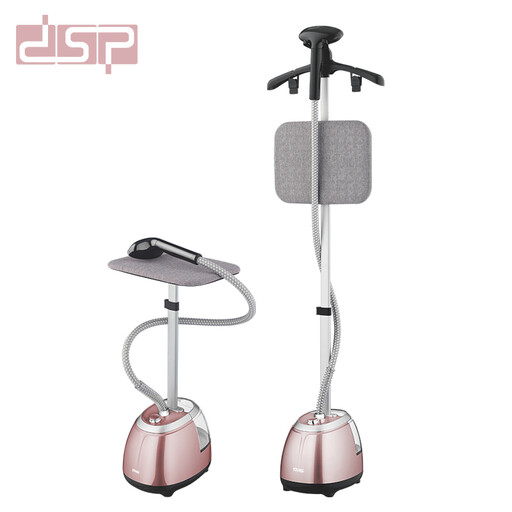 Image unavailable
DSP KD6019 Garment Steamer, 2000 W, 10-Speed, 2.1 L
For repeated home sessions with steam-permitted garments, consider whether its 2.1 L tank suits the amount you handle between refills.
The model name specifies 2000 W, 10-speed operation and a stainless-steel nozzle. Check its stated running time for your usual session; tank size alone does not establish it.
Follow each pleated garment’s care instructions before applying steam.
Joybuy
Frequently asked questions
Can I steam every pleated garment?
No. Check that garment’s label and handling instructions first: ISSEY MIYAKE UK specifically says not to steam its heat-sensitive pleated products. A steamer should not be used to try to restore pleats when the garment’s instructions prohibit steam.
Is a handheld or an upright steamer more suitable for pleated clothes?
For steam-permitted clothes, a compact handheld suits occasional touch-ups where carrying and storage matter; a larger tank or supported upright arrangement is worth considering for repeated home sessions. Neither format makes steam suitable for a garment whose care instructions prohibit it.
What water should I put in a garment steamer?
Use the water specified in the manual for your exact model. For its Access Steam First DT6131, Tefal permits untreated tap water and advises a 50/50 mix of untreated tap water and distilled water if your water is very hard; do not apply that instruction to another model without checking its manual.
Which product marking should I check in Great Britain?
Check the marking and product information against the requirements applicable to the appliance. In guidance dated 31 March 2026, GOV.UK says CE marking continues to be recognised alongside UKCA marking for products placed on the market in England, Scotland and Wales where the relevant conditions are met. For delivery to Northern Ireland, check the seller’s applicable compliance information rather than relying on that Great Britain guidance.


