Last-minute shirt refreshers
If you usually deal with one shirt before work, an event or travel, quick setup and compact storage matter more than a long steaming session.


For an occasional shirt touch-up, start with a compact handheld steamer specified for use on hanging garments. If you refresh several shirts regularly, consider a handheld model with more garment support and a tank suited to longer sessions; an upright steamer makes more sense for batches if you have space to store it. Whichever format you choose, check the plug, cord reach and garment-care instructions for the exact model.
If you usually deal with one shirt before work, an event or travel, quick setup and compact storage matter more than a long steaming session.
If you refresh several hanging shirts each week, consider how long you can steam between refills and whether the cord and accessories suit your hanging point.
If you work through batches of garments at home or in a retail or dressmaking setting, reservoir capacity may matter more than compact storage.
Start with the number of shirts you steam in one session, then check whether the appliance can be used at your hanging point. A faster heat-up is less useful if the tank or cord interrupts the job.
| Concern | What to check | Who this matters to |
|---|---|---|
| Quick single-shirt setup | Check stated heat-up time and whether the exact model is intended for steaming a garment on a hanger. | If I need to refresh one shirt before leaving, I want to start promptly without setting up an ironing board. Around 45% of consumers would put that quick single-shirt setup first. |
| Regular shirt touch-ups | Compare continuous steam output, tank capacity and cord reach; check what support is provided for the garment. | When several shirts need attention during the week, I care about working through them without frequent stops. Around 36% of consumers would prioritise that repeated-session need. |
| Longer garment sessions | Check reservoir size and stated run time alongside the steamer’s footprint and storage requirements. | For batches of garments, I would accept a larger appliance if it better suits a longer session. Around 19% of consumers would make capacity their primary concern. |
A compact tank may suit one outfit but interrupt a session involving several shirts.
Count the shirts you usually steam together, then compare tank capacity and stated continuous-use time before choosing on foldability alone.
Wattage does not describe the tank, cord, continuous steam output or accessories you will use while the shirt hangs.
Check those features together, and follow each shirt’s care label when deciding how to treat its fabric.
Electrical Safety First advises checking for a UK 3-pin plug. The UK Office for Product Safety and Standards has reported an electric-shock risk involving a handheld garment steamer supplied with a non-compliant two-pin plug and travel adapter.
Confirm the plug and UK suitability for the exact product before buying; do not plan to use a temporary travel adapter as a permanent solution.
Water and maintenance instructions differ by model. Philips advises that limescale can affect its garment steamers and warns against adding descaling chemicals to the models covered by its guidance.
Follow the exact model’s instructions for filling and descaling rather than applying another steamer’s routine.
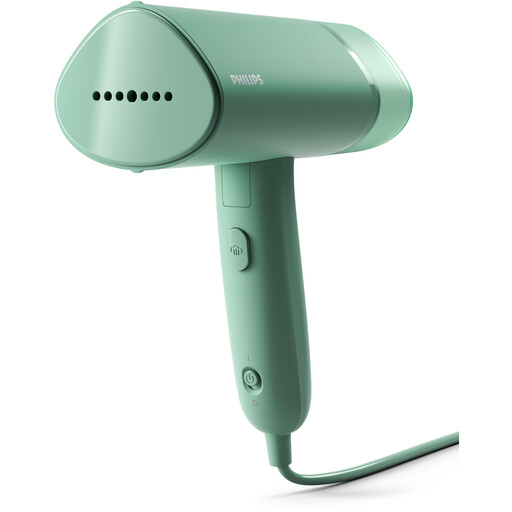
Its compact handheld 3000 Series is relevant when storage and occasional shirt touch-ups drive the choice.
Its handheld range includes models with garment-support accessories for people who refresh shirts frequently.
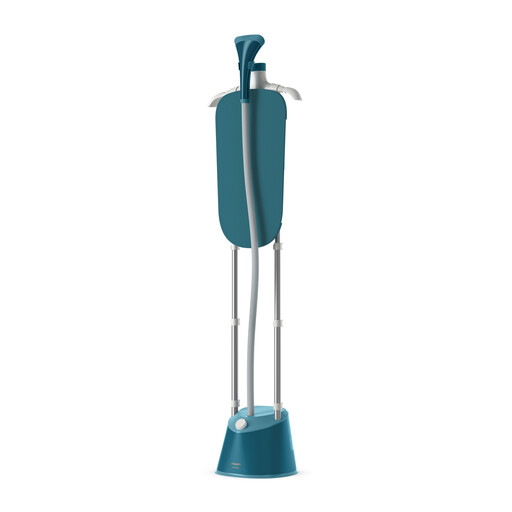
The K9 Express represents the upright format for repeated multi-garment sessions rather than a quick single-shirt touch-up.
These options include handheld steamers for shorter touch-ups and larger-tank models to consider for longer garment sessions. For shirts that must stay on hangers, confirm vertical-use instructions and where you can safely position the appliance before buying.
 No image available
Consider this compact handheld model for occasional shirt touch-ups on a hanger. Joybuy lists a detachable 100 ml tank, 1000 W and up to 20 g/min steam output for the STH3010/76. Check the plug supplied and your shirt’s care label before use.
 No image available
Consider this model if you want a standing setup for handling garments, rather than a steamer to put away after one shirt. Its product name specifies 1800 W. Check the space needed for the appliance, the exact plug and the operating instructions; do not leave it unattended while powered.
 No image available
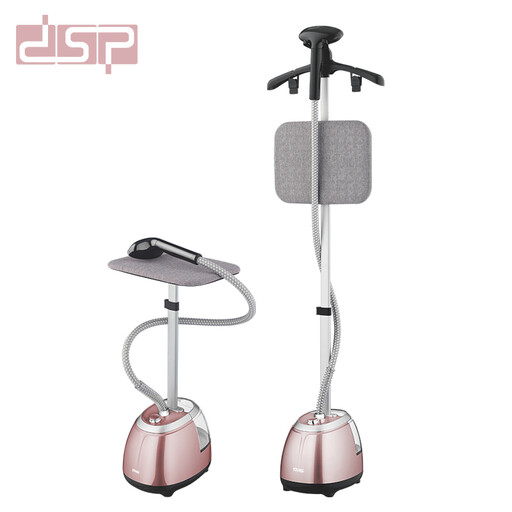
The 2.1 L tank makes this a model to consider when you plan longer sessions rather than a quick single-shirt refresh. Its product name also specifies 10 steam settings and a stainless-steel nozzle. Before choosing it for hanging shirts, check vertical-use instructions, UK electrical suitability and where it will fit.
 No image available
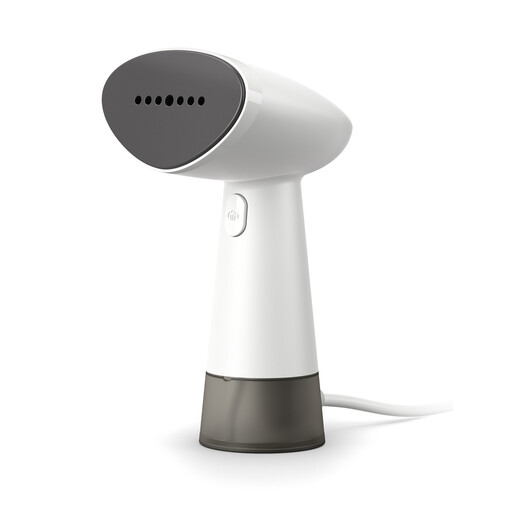
This handheld model is worth considering if you want short garment touch-ups without setting up an ironing board. Its product name specifies 900 W. If steaming shirts while they hang is essential, check the exact model’s vertical-use instructions and plug before buying.
A handheld steamer can suit quick shirt refreshes if the exact model is intended for vertical use and its tank covers your usual session. If you need a sharply pressed finish or regularly work on stubborn creases, check whether steaming alone will meet that expectation.
Check that the exact appliance is suitable for UK use and has a UK 3-pin plug. Electrical Safety First advises buying from a reputable retailer; inspect the plug and cord before use rather than relying on a product photo to identify the supplied plug.
Use the water specified in your exact steamer’s manual. For its Access Steam DR8085, Tefal advises a 50:50 mix of untreated tap water and distilled water when water is very hard; that instruction should not be applied automatically to other models.
Yes. Electrical Safety First advises unplugging the appliance when it is not in use and emptying the water chamber after each use. Let the steamer cool as directed in its manual before carrying out maintenance.