
24/7 Customer Support

Free returns

Same-day & Next-day Delivery

Quality Guaranteed

Unlock Your Welcome Offers: FREE Delivery | Up to 80% OFF | Free 30-day JoyPlus trial
Download the APP
A garment steamer can make creased shirts, dresses and jackets presentable without setting up an ironing board. However, the difference between a useful appliance and an inconvenient purchase often comes down to details hidden behind broad phrases such as “powerful steam” or “quick results”.
Before choosing from the many garment steamers available in the UK, check the steam output, tank size, heat-up time, handling comfort and intended use. A compact handheld clothes steamer may suit occasional touch-ups, while a vertical garment steamer with a larger tank is more practical for family laundry.
A higher wattage can indicate greater heating capacity, but it does not describe the complete steaming experience. Steam rate, measured in grams per minute, gives a more practical indication of how much steam the appliance produces. A model with adjustable settings may also be more useful than one with a high headline wattage but limited control.
For light creases, a portable garment steamer can be sufficient. Stubborn creases in cotton, denim or linen may require stronger and more continuous steam.
Compact tanks help reduce weight, but frequent refilling can make a handheld appliance frustrating during a full laundry session. Consider whether you need a wrinkle remover for clothes before work or a machine capable of handling several garments at once.
A garment steamer with water tank capacity of around 250–300 ml is generally more suitable for short sessions. Larger upright models can offer tanks measured in litres, reducing interruptions but requiring more storage space.
Steamers are suitable for many washable fabrics, but garments still need to be checked against their care labels. Delicate materials may require a lower steam setting, greater distance from the nozzle or a protective attachment. Avoid holding steam in one place for too long, particularly on printed, coated or heat-sensitive fabrics.
A brush attachment can help separate fibres on thicker materials, but it does not replace careful fabric handling.
Steam output is one of the most useful comparison points. For example, the Tower Ceraglide Handheld Garment Steamer produces 20 g/min, while the DSP KD6019 lists 40 g/min and 10 adjustable steam levels. These specifications provide a clearer comparison than wattage alone.
A powerful garment steamer can be helpful for heavier clothing, but adjustable output is valuable when your wardrobe includes silk, wool, synthetics and cotton. Look for a locking trigger if you prefer continuous steam without holding a button throughout the session.
A short heat-up time is convenient for last-minute outfit preparation. The DSP KD6019 lists a 30-second heating time, while the Tower model includes a ready light to indicate when it is prepared for use.
Tank capacity should match the task:
Always empty the tank after use where recommended, particularly in areas with harder water, as standing water and mineral deposits may affect maintenance.
For travel or office use, check the folded dimensions, weight, cord length and whether the water tank is secure during transport. A foldable clothes steamer can save suitcase space, but a smaller body may also mean a shorter operating time.
For home use, consider whether the appliance can steam garments vertically and whether it includes a stable stand, hanger system or trouser attachment. Useful safety features include automatic shut-off, overheat protection and anti-drip design. These features support safer operation but do not remove the need to follow the manufacturer’s instructions.
UK shoppers should also check the plug type, voltage compatibility, manufacturer information and supplied instructions before purchase. Never use a steamer with a damaged cable, immerse it in water or touch the hot soleplate or nozzle during operation.
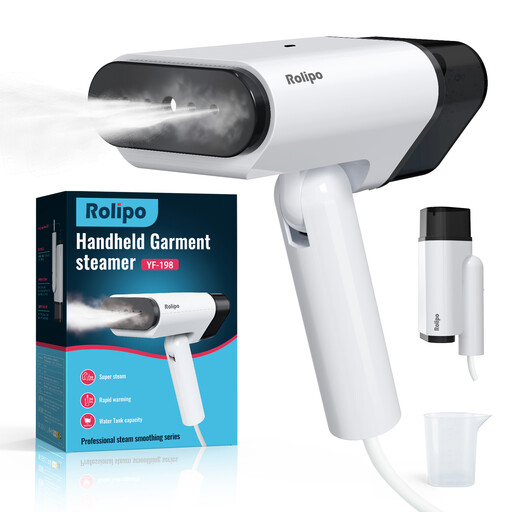
Why This Fits Their Persona: Its foldable, portable format is suited to students, renters and occasional users who want a straightforward appliance for home, office or short trips.
The foldable design addresses storage concerns, while the integrated anti-leak tank is intended to reduce spills during use and transport.
One-button operation; foldable handheld design for travel and compact storage.
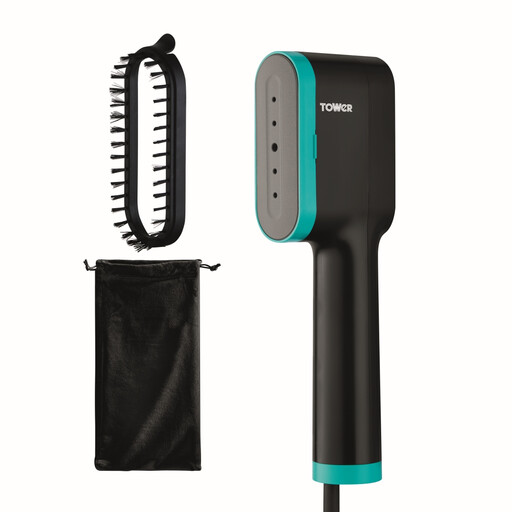
Why This Fits Their Persona: This balanced handheld model suits professionals and home users wanting convenience features for regular garment care without moving to a full upright system.
Its 260 ml tank, ready light, anti-drip system and automatic shut-off make the practical specifications clear rather than relying only on general performance wording.
1400W power; 20 g/min steam rate; ceramic soleplate, brush attachment and locking steam trigger.
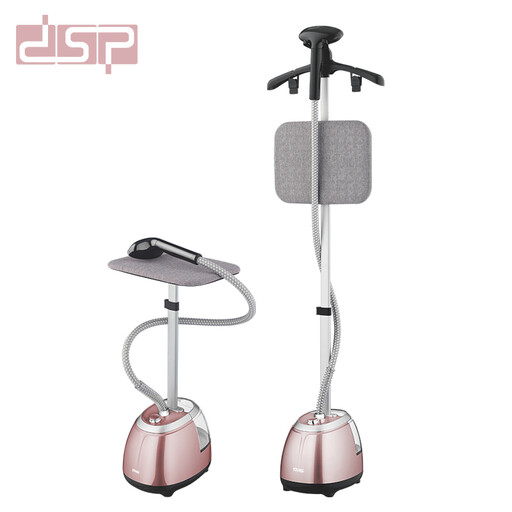
Why This Fits Their Persona: Its larger capacity and stand-based format are designed for households, families and users preparing multiple garments in one session.
The 2.1L tank is suited to longer sessions, helping avoid the repeated refilling problem associated with small handheld appliances.
2000W power; listed steam output of 40 g/min; 10 steam settings, trouser clip, brush and stable stand system.
We have compiled a complete, real-time list of products that fully satisfy these strict selection criteria and UK safety regulations.
A handheld garment steamer is convenient for hanging garments, curtains and upholstery, and it usually requires less preparation than an ironing board. It is particularly useful for dresses, jackets and delicate-shaped items where pressing a flat surface is inconvenient.
A steam iron for clothes may provide a sharper finish on shirt collars, cuffs, trouser creases and flat cotton fabrics. If you regularly need crisp edges, an iron may remain useful alongside a steamer. For fast de-wrinkling and garment refreshing, a handheld model is generally easier to reach for.
Running cost depends on the appliance’s wattage, operating time and electricity tariff. A steamer used for a short touch-up may consume less energy than running an iron for a longer session, but there is no universal saving. Compare the rated wattage and expected usage rather than assuming one appliance type always costs less.
Lifespan depends on construction, frequency of use, water quality, cleaning and storage. Emptying the tank after use, following descaling guidance and avoiding overfilling can help maintain performance. Check the manufacturer’s care instructions for the specific model.
It can replace an iron for many everyday creases, especially on hanging garments. It may not produce the same pressed finish on collars, cuffs, pleats or sharp trouser lines. Choose according to your wardrobe: a portable garment steamer suits convenience, while an iron is more suitable for structured pressing.