
24/7 Customer Support

Free returns

Same-day & Next-day Delivery

Quality Guaranteed

Unlock Your Welcome Offers: FREE Delivery | Up to 80% OFF | Free 30-day JoyPlus trial
Download the APP
A garment steamer can be more convenient than a traditional iron when you need to refresh a shirt before work, smooth a dress at the last minute or prepare several outfits in one session. However, product listings often focus on impressive wattage or vague “professional” language while leaving out details that affect everyday use.
Before choosing a clothes steamer, watch for three common buying traps:
The right choice depends on where you use it, how many garments you steam at once and whether you need a portable clothes steamer or a larger vertical model.
Steam output is commonly measured in grams per minute (g/min). A higher figure generally indicates a greater volume of steam being released, but the result also depends on how evenly the nozzle distributes it and whether the fabric is held correctly.
For occasional touch-ups, a fast-heating clothes steamer with a moderate output may be sufficient. For heavier cotton, linen, denim or multiple garments, look for a model with clearly stated steam performance. The DSP KD6019, for example, lists 40g/min steam output, 2000W power and 30-second heating. These are useful specifications for households that want to work through laundry without a long warm-up.
A steam iron for clothes can press a sharper crease, particularly on collars and cuffs. A fabric steamer is more convenient for hanging garments, delicate shapes and quick refreshment, but it should not be treated as a complete replacement for every ironing task.
Tank size affects how often you need to stop and refill. A 300ml tank is easier to carry and may be suitable for a few garments, while a large water tank garment steamer is more appropriate for family laundry or regular home use.
The DSP KD6019 has a stated 2.1L water tank, which is considerably more suitable for longer sessions than a compact handheld unit. By contrast, the BUFFi5 JOY handheld model lists a 300ml tank, making its smaller format more relevant to quick touch-ups, office use or travel.
Use clean water according to the manufacturer’s instructions, empty the tank after use where advised and check whether the appliance requires descaling. Limescale can affect steam performance over time, particularly in hard-water areas.
A garment steamer combines hot water, pressurised steam and mains electricity, so practical safety features matter more than decorative accessories. Before purchasing, check the listing and manual for:
A stainless steel nozzle, such as the one listed for the DSP KD6019, may support even contact and direct garment shaping. It does not remove the need to follow the clothing label. Always keep the steam head away from skin, unplug the appliance before cleaning and use a suitable hanging position so garments cannot fall onto the hot nozzle.
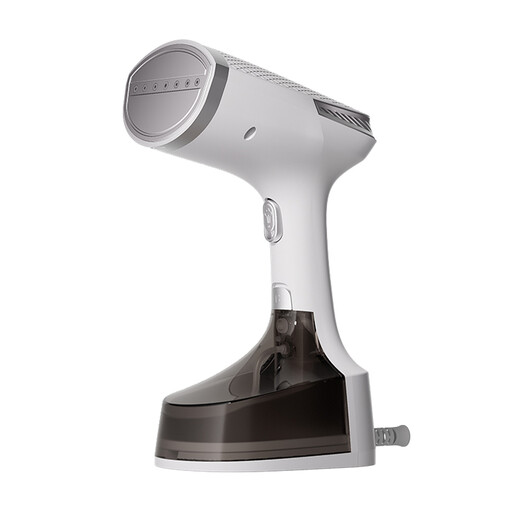
Why This Fits Their Persona: Its handheld format and 300ml tank suit students, tenants and occasional users who want a straightforward appliance for a small number of garments.
The listing states both its tank capacity and UK plug type, helping buyers assess refill frequency and connection compatibility before purchase.
1600W handheld design; 300ml water tank; UK plug specified in the product name.
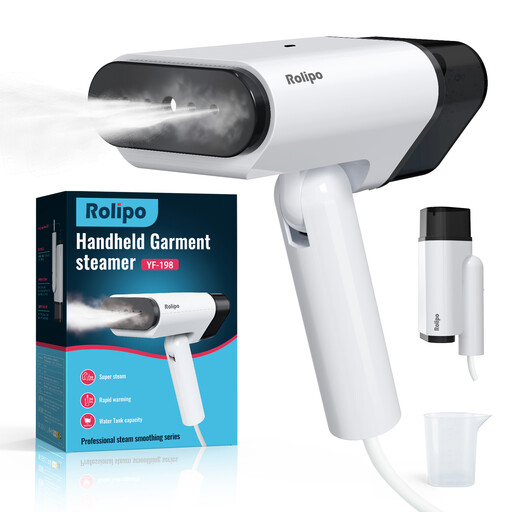
Why This Fits Their Persona: The foldable design is useful for commuters, business travellers and households with limited storage space.
Its stated foldable format and integrated anti-leak water tank address two common portability concerns: awkward packing and water spills.
Foldable handheld construction; one-button operation; anti-leak water tank listed.
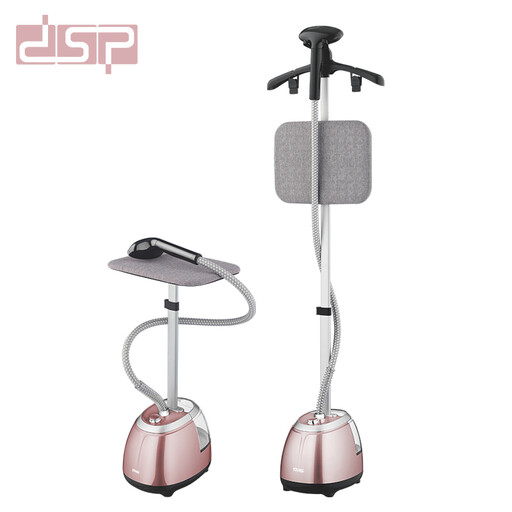
Why This Fits Their Persona: Its larger tank, adjustable settings and stand system are suited to family laundry, frequent garment care and longer home steaming sessions.
The stated 2.1L capacity reduces repeated refilling, while 10 steam settings provide more control than a single-output appliance.
2000W power and stated 40g/min output; 30-second heating; stainless steel nozzle; steam brush and trouser clip included.
We have compiled a complete, real-time list of products that fully satisfy these strict selection criteria and UK safety regulations.
Steam is particularly useful for hanging dresses, jackets and shirts. For trousers, cuffs and sharp pleats, use the supplied trouser clip where available or consider a conventional iron for more defined pressing.
Running cost depends on wattage, usage time and your electricity tariff. A 2000W garment steamer uses more power per hour than a lower-wattage model, but a short steaming session may use less electricity overall than prolonged ironing. To estimate the cost, multiply the appliance’s kilowatt rating by operating hours and your unit price.
Lifespan varies with construction, frequency of use, water quality and maintenance. Emptying the tank, following descaling instructions and avoiding overfilling can help preserve performance. Check the warranty, replacement-part availability and manufacturer information before buying.
A portable clothes steamer may fit in checked luggage, but airline baggage rules differ. Confirm the carrier’s requirements, protect the water tank from damage and empty it completely before packing. Also check destination plug compatibility if travelling outside the UK.