
24/7 全天候客户支持

免费退货

当日/次日达

品质保障

开启新人专享福利: 全场免邮 | 低至 2 折 | 免费试用 30 天 JoyPlus 会员
下载 Joybuy
A new hob is the centrepiece of any kitchen, and for many UK home cooks, the instant control and visual feedback of a flame are non-negotiable. A quality gas hob offers precision, power and reliability, whether you're gently melting chocolate or searing a steak. But with so many options available, choosing the right one for your kitchen renovation or appliance upgrade can feel overwhelming.
This guide is designed to cut through the clutter. We'll walk you through the key considerations when selecting a new built-in gas hob and highlight a few standout models that balance performance, style and safety.
Before you start browsing, focusing on a few key factors will help narrow down your search and ensure you find a hob that fits your space and cooking style perfectly.
The most common size for a hob in the UK is 60cm. A 60cm gas hob typically features four burners and fits comfortably into standard kitchen cabinetry, making it a straightforward replacement. Most households find a 4 burner gas hob provides ample space for daily cooking.
However, if you have a larger kitchen or frequently cook for a crowd, you might consider a 75cm or 90cm model. These often feature a 5 burner gas hob configuration, which can include a specialised high-power gas hob with wok burner. This central, powerful burner is ideal for stir-frying and rapid boiling, offering a significant performance upgrade for keen cooks.
The hob's surface material defines its look and how easy it is to maintain.
When choosing any gas appliance, safety is paramount. In the UK, all new gas hobs must be fitted with a Flame Failure Device (FFD). This essential feature automatically cuts off the gas supply to a burner if the flame is accidentally extinguished, preventing dangerous gas leaks.
Also, look for hobs with automatic, one-handed ignition. This is usually integrated into the control knobs, allowing you to light the burner simply by pushing and turning the dial, freeing up your other hand to hold a pan. Finally, consider the pan supports. Cast iron supports are heavy, robust and provide a very stable base for your cookware. They also retain heat well, contributing to even cooking.
We've selected a few models that demonstrate great functionality and design for different types of users and kitchens.
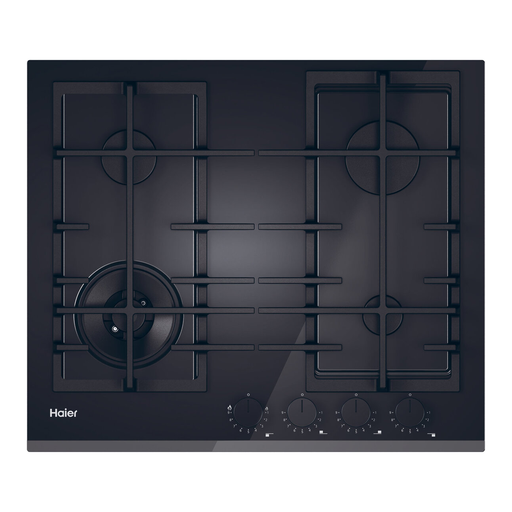
Why It Stands Out: This Haier model brings a level of precision not always seen in standard gas hobs. Its Preci Flame technology offers nine distinct power levels, allowing you to move from a delicate simmer to a rolling boil with predictable, repeatable results. This is all housed in a sleek, minimalist black gas hob design that is easy to clean.
Pros:
Who is it for? This is an excellent choice for home cooks in modern kitchens who appreciate both a minimalist aesthetic and the ability to fine-tune heat with precision.
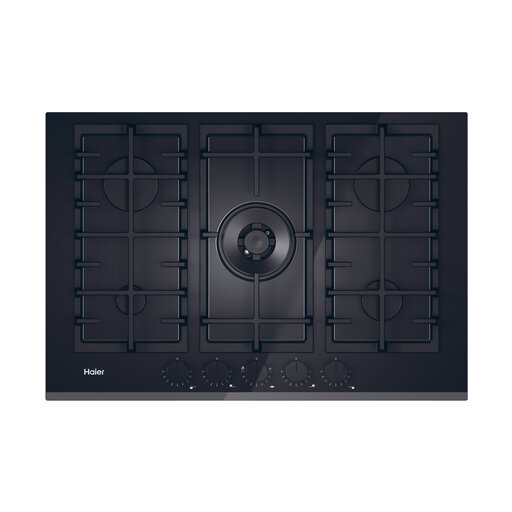
Why It Stands Out: For those who need more power and space, this 75cm Haier hob is a significant step up. The 5 burner gas hob layout is anchored by a powerful 5kW double-ring wok burner in the centre, delivering the intense heat needed for authentic stir-fries. It combines this high performance with the same sleek gas-on-glass design and Preci Flame control as its smaller sibling.
Pros:
Who is it for? Ideal for passionate home cooks, large families and anyone who loves to entertain. If you find a four-burner hob restrictive, this model offers the flexibility and power you need.
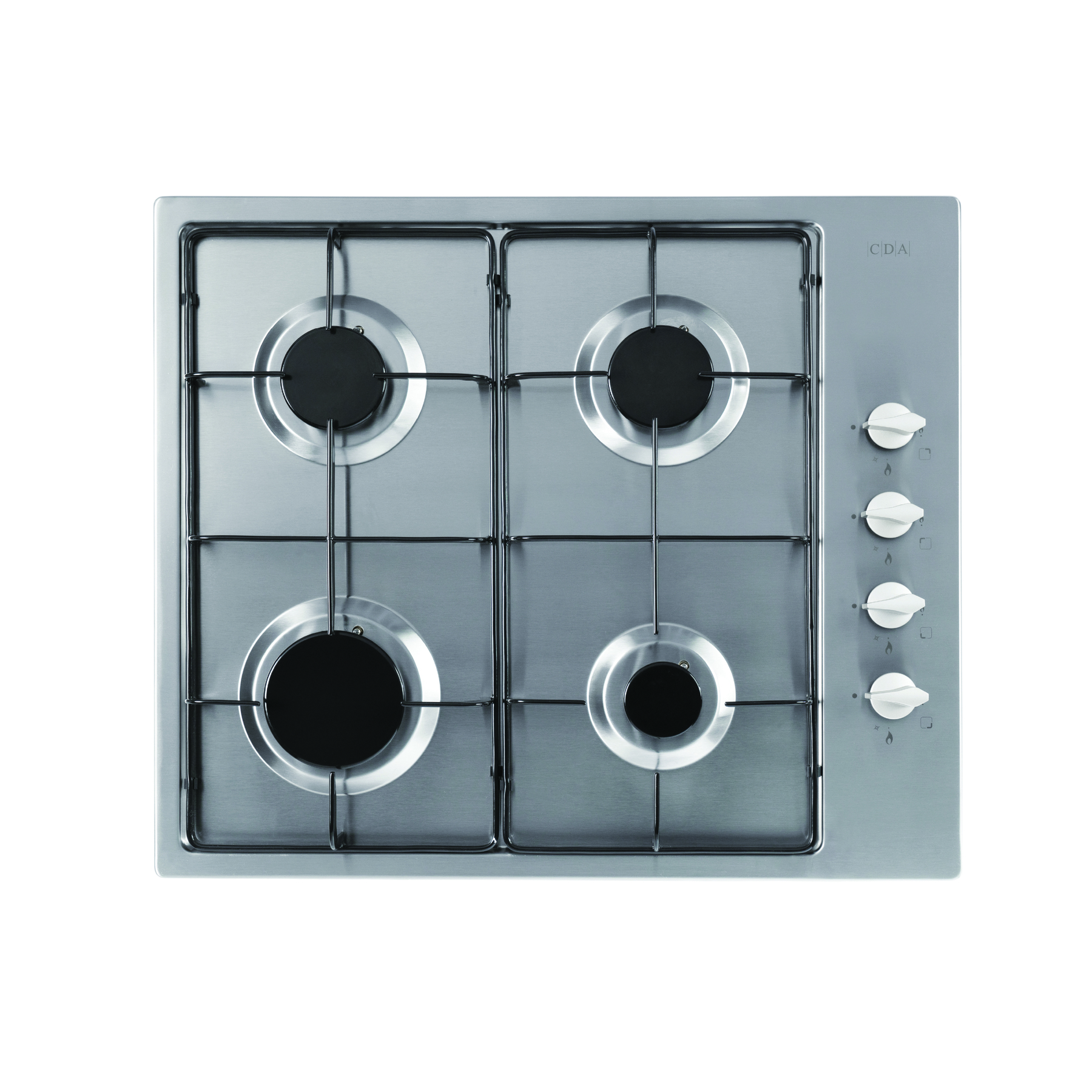
Why It Stands Out: This CDA hob is a testament to classic, functional design. Built with a durable brushed stainless steel gas hob surface, it offers a timeless look that is built to last. It provides straightforward, reliable performance with four burners, including a powerful triple-ring burner for rapid heating, making it a dependable workhorse for any kitchen.
Pros:
Who is it for? A great option for those who prefer the traditional look and feel of stainless steel or need a reliable, no-fuss hob that delivers consistent results day in and day out.
Our recommendations cover some of the most popular needs, but every kitchen is unique. If you're looking for a different size, finish or burner layout, you can explore our full collection of gas hob burners to find the perfect match for your home.
1. Do I need a special engineer to install a built-in gas hob? Yes, absolutely. For your safety and to comply with UK law, any built-in gas hob must be installed and connected by a Gas Safe registered engineer. Attempting to do this yourself is extremely dangerous and will invalidate your appliance's warranty.
2. Is a gas hob better than an induction hob? This depends on your personal preference. Gas hobs provide instant, visual heat control and are compatible with all types of cookware. Many chefs and keen cooks prefer the responsiveness of a real flame. Induction hobs, on the other hand, are generally more energy-efficient, heat up faster and have a surface that stays cooler to the touch, which can be a safety benefit. The choice comes down to your cooking style and priorities.
3. How do you clean a gas on glass hob effectively? First, ensure the hob is completely cool. Remove the cast iron pan supports (check the manual, as many are dishwasher-safe). Spray a non-abrasive cream cleaner suitable for ceramic or glass hobs onto the surface and wipe with a soft, damp cloth. For stubborn burnt-on food, you can use a specialised glass hob scraper. Finally, rinse with a clean, damp cloth and buff dry with a microfibre cloth to prevent streaks.