
24/7 Customer Support

Free returns

Same-day & Next-day Delivery

Quality Guaranteed

Unlock Your Welcome Offers: FREE Delivery | Up to 80% OFF | Free 30-day JoyPlus trial
Download the APP
Replacing a hob can look straightforward until the wrong cut-out size, unsuitable fuel connection or difficult-to-clean surface turns a kitchen upgrade into an expensive problem. UK shoppers comparing gas hobs should look beyond burner count and glossy product photography.
Three common buying traps are worth avoiding:
The most common choice is a 60cm gas hob, generally offering four burners and a worktop cut-out of approximately 560 × 480mm, although dimensions vary by model.
A 70cm gas hob or 75cm gas hob can provide five burners without taking up the full width of a 90cm appliance. This extra space is useful when cooking with several pans, but check that the available worktop area and overhead clearances are suitable. For larger kitchens and multi-pan cooking, a 90cm gas hob offers more room between cookware, although it needs a substantially wider worktop opening.
Measure:
Never assume a new hob will drop into an existing opening simply because both are described as 60cm or 75cm.
A 4 burner gas hob is suitable for most everyday meals, particularly in smaller kitchens or households that usually use one or two pans at a time. A five-burner model adds flexibility for family cooking, but the arrangement matters more than the number alone.
Useful configurations typically combine:
For example, the Haier HAVG75TBBP has a stated 5kW double-ring wok burner, while the CDA HG9351SS lists a 5kW wok burner. These outputs can support high-heat cooking, but pan size, flame distribution and cookware quality still affect results.
A model with graduated flame settings, such as Haier’s Preci Flame system with nine settings per burner, may be easier to adjust for tasks ranging from simmering sauces to bringing water to the boil. Treat this as a control feature rather than a guarantee of cooking results.
The two common finishes are stainless steel gas hob and black glass gas hob.
Stainless steel is familiar, durable and generally forgiving of everyday use, although spills can show around burner bases. Gas-on-glass hob designs offer a smooth tempered glass surface that can be wiped down easily, but glass still needs careful handling. Do not drag heavy pans across it, and avoid using a hob with cracked or chipped glass.
Look for:
A flame failure device is designed to stop the gas supply if a flame goes out. It is an important safety backup, but it does not replace supervision. If you smell gas, turn off the supply if safe to do so, ventilate the room and contact the gas supplier or a qualified engineer. Gas appliances should not be installed or serviced as a DIY project.
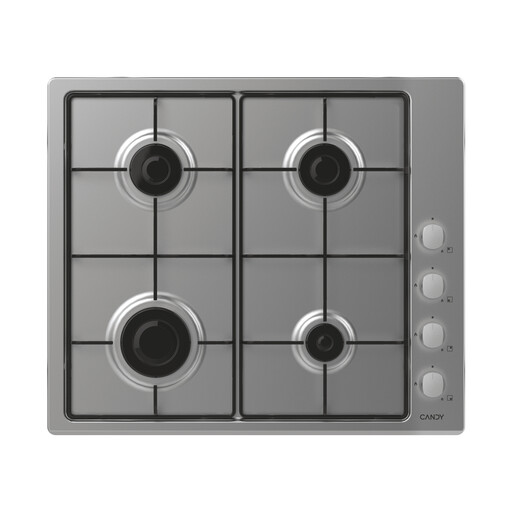
Why This Fits Their Persona: A practical standard-width option for renters, first-time renovators and households replacing a basic hob without adding unnecessary features.
The supplied specifications identify an approximately 560 × 480mm cut-out, four burners and flame-failure protection, helping buyers check compatibility before ordering.
Stainless steel surface, removable supports, automatic ignition and four burner sizes for everyday cooking.

Why This Fits Their Persona: Suitable for homeowners wanting a five-burner layout, black glass styling and detailed flame adjustment for varied cooking.
Its listed 745mm width and 560 × 480mm recess dimensions make the distinction between external size and cut-out particularly clear. The specification also lists automatic ignition and flame failure protection.
Five burners, a stated 5kW double-ring wok burner, nine flame settings and dishwasher-safe cast iron supports.
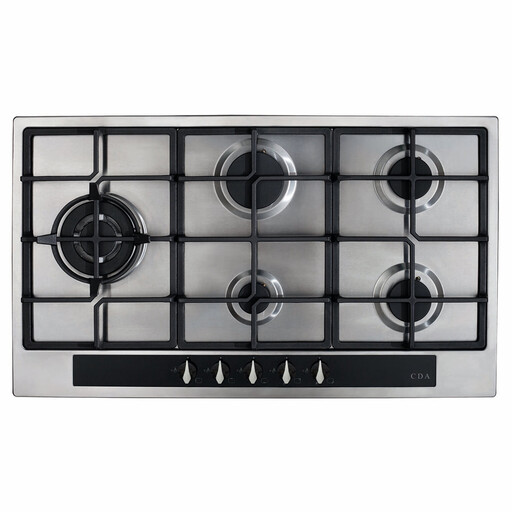
Why This Fits Their Persona: A spacious choice for large households and keen home cooks who regularly use several large pans or a wok at the same time.
The specification states a 90cm width, 86 × 48cm cut-out and five varied burners, allowing buyers to assess space and pan capacity rather than relying on marketing imagery.
A listed 5kW wok burner, two 3kW rapid burners, electronic ignition, removable components and flame failure devices on all burners.
We have compiled a complete, real-time list of products that fully satisfy these strict selection criteria and UK safety regulations.
Gas hobs require an appropriate gas connection and adequate kitchen ventilation. Many models also need a mains electrical connection for ignition and flame safety systems. Check whether the product is supplied for natural gas and whether an LPG convertible gas hob option requires separately purchased jets or a conversion kit.
Running cost depends on your tariff, burner output, cooking time, pan size and flame setting. A higher kW rating can deliver more heat, but it may also use more gas when operated at full power. Matching the pan to the burner and avoiding flames extending beyond the pan base can help reduce wasted heat.
For cleaning, allow the hob to cool fully before wiping. A genuinely easy-clean gas hob should have removable supports and burner parts, but stainless steel and glass still require non-abrasive cleaning products. Check manufacturer guidance before placing supports in a dishwasher.
Yes. Gas connection and commissioning should be completed by a suitably qualified Gas Safe registered engineer in the UK. The installer should also check the cut-out, ventilation and required clearances.
They can be useful if you regularly prepare multi-pan meals, use a wok or cook for a family. However, a five-burner hob needs sufficient worktop width and sensible spacing between burners. For smaller kitchens, a well-arranged four-burner model may be more practical.
Service life depends on installation, cleaning, burner maintenance and general use. Before purchasing, check the warranty, availability of replacement parts and the condition of seals, pan supports, ignition components and burner caps over time.