
24/7 Customer Support

Free returns

Same-day & Next-day Delivery

Quality Guaranteed

Unlock Your Welcome Offers: FREE Delivery | Up to 80% OFF | Free 30-day JoyPlus trial
Download the APP
Buying gas hobs and cookware together can make a kitchen more practical, but the wrong combination may lead to unstable pans, difficult cleaning and poor use of available space. UK kitchens also need careful attention to gas type, installation clearances and appliance compatibility.
Marketing often focuses on burner numbers or glossy finishes. However, three common traps are worth checking before you buy:
A 60cm gas hob is a common choice for standard kitchen runs and compact worktops. The CDA HVG621BL, for example, measures 595mm wide and has a stated cut-out size of 557 × 477mm. Always compare the appliance dimensions and installation diagram with your existing worktop rather than relying on the nominal width alone.
A 75cm gas hob gives more room between burners and is useful for households that regularly use a wok, saucepan and frying pan together. The Belling GTG753RI BLK and Belling GHU753RI STA both use a five-burner layout with a wok burner, rapid burner, two semi-rapid burners and an auxiliary burner.
Measure:
Gas hob installation should be carried out by a suitably qualified gas engineer. If converting from natural gas to LPG, check that the correct jets and instructions are supplied and use an installer who is competent for the fuel type.
Burner variety is more useful than simply counting burners. A rapid burner can help bring larger pans to the boil, while a smaller auxiliary burner is more suitable for gentle heating or a mini frying pan.
For stir-frying, look for a dedicated wok burner and cookware with a stable base. A flat-bottom wok is generally easier to position on a domestic gas hob than a round-bottom model. Cast iron pan supports are heavier and tend to provide a firm platform for saucepans, carbon steel woks and a cast iron skillet, but they may need lifting out for cleaning.
A black glass gas hob offers a smooth, contemporary appearance and can be wiped clean once cool. Toughened glass still requires sensible care: avoid dropping cookware on it and follow the cleaning instructions. A stainless steel gas hob can suit high-use kitchens and does not show every mark in the same way, although grease and water spots should still be removed promptly.
Two practical features deserve priority:
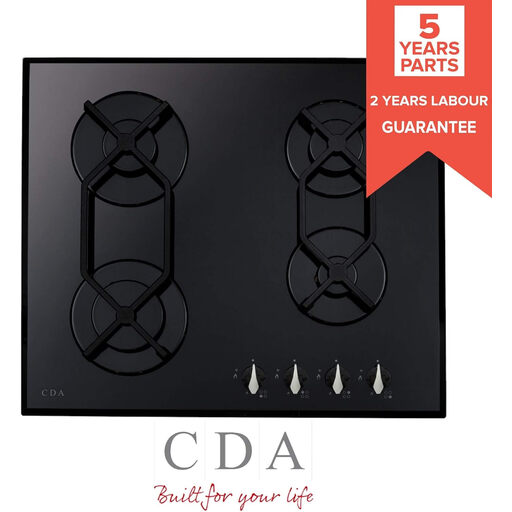
Why This Fits Their Persona: A practical choice for a standard-sized kitchen, rental upgrade or first home where a 60cm footprint is easier to accommodate.
The four-burner layout avoids paying for a larger hob when the available worktop or cooking routine does not require five zones.
Toughened black glass, cast iron supports, automatic ignition and flame-failure safety on all burners.
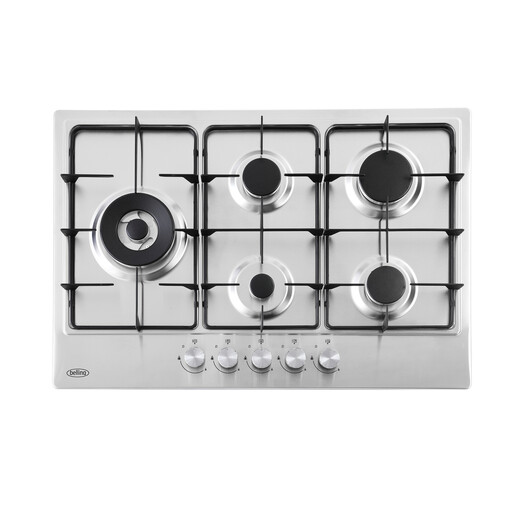
Why This Fits Their Persona: Suits homeowners renovating a larger kitchen and cooks who want five burners with a stainless steel work surface.
The 75cm layout provides additional spacing, while removable supports make it easier to deal with cooking residue around the burners.
Five burner zones, high-intensity wok burner, cast iron supports, automatic ignition and flame-failure devices.
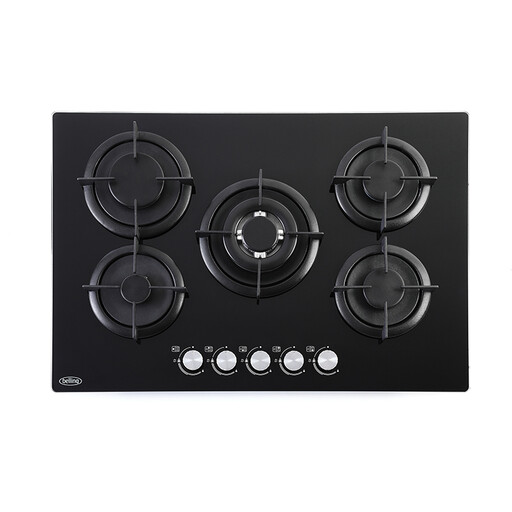
Why This Fits Their Persona: A suitable match for households that often prepare several dishes at once and use a wok burner for high-heat cooking.
It combines a five-zone layout with cast iron supports, reducing the need to balance large cookware on small or widely spaced supports.
Toughened black glass, high-output wok burner, front rotary controls and LPG conversion capability where applicable.
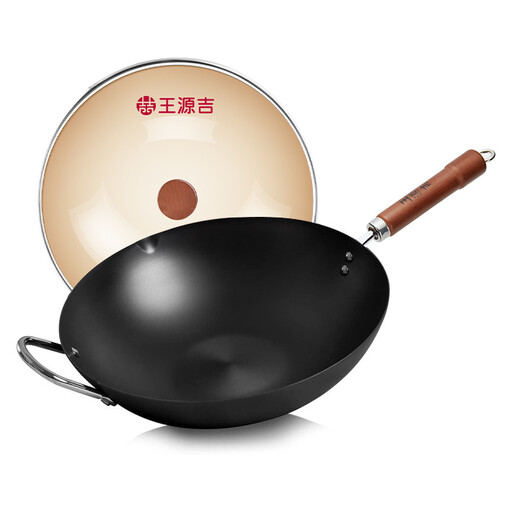
Why This Fits Their Persona: Designed for cooks preparing stir-fries, noodles and one-pan meals for approximately two to four servings on gas or other compatible hobs.
The flat bottom is intended for gas, induction, electric coil and ceramic hobs, avoiding the instability associated with an unsuitable round base.
Coating-free carbon steel construction, glass lid, wooden handle and compatibility with gas, induction and electric cookers.
We have compiled a complete, real-time list of products that fully satisfy these strict selection criteria and UK safety regulations.
A carbon steel wok heats quickly and can develop a seasoned cooking surface, but it needs hand washing, complete drying and a thin coating of oil after use. A non-stick wok is convenient for low- to medium-heat cooking, while a coating-free wok is more suitable for cooks who are prepared to maintain seasoning.
For smaller portions, a 10cm cast iron skillet can handle eggs, bacon, sauces or individual sides. Cast iron retains heat well but is heavy and should not be left wet. Check whether wooden handles are oven-safe before transferring cookware from hob to oven.
Useful kitchen cooking essentials include heat-resistant gloves, wooden or silicone utensils, a suitable lid and cleaning cloths that will not scratch glass surfaces.
Gas connections should be handled by a suitably qualified gas engineer. The installer should also check ventilation, clearances, gas type and the electrical connection for automatic ignition. Follow the specific appliance manual rather than relying on the old hob’s measurements.
Running cost depends mainly on the gas tariff, burner output, cooking time and flame setting. A larger hob does not automatically use more gas; consumption depends on which burners are operating and for how long. Use the smallest suitable flame and pan size for the task.
A flat-bottom wok can sit directly on many gas, electric and induction hobs, but compatibility should be confirmed in the product specification. For induction, the base must contain suitable magnetic material. Always check the wok diameter against the burner or heating zone so that it sits securely and heats appropriately.