Choose a laptop that runs the genealogy software and other tools you intend to use, then compare screen space, memory and storage against your records and photographs. Family Tree Maker 2024 has separate Windows and macOS requirements, while Ancestry research calls for a supported, up-to-date browser. A smaller laptop is easier to carry, but gives you less room to view a tree alongside records.
Who needs which setup?
Desktop genealogy-software users
If you maintain your tree in an installed program such as Family Tree Maker, check its operating-system requirements before comparing laptop configurations. Check your scanner and printer software too if they are part of the same workflow.
Record-and-photo researchers
If you move between archive pages, tree views, scanned documents and photographs, consider how much you need to see at once. Compare the exact display, memory and storage configuration rather than relying on a laptop range name.
Portable family-history researchers
If you take your research to relatives, libraries or archives, balance the weight you will carry against the screen space you want for reading and comparing records.
What matters when choosing?
Settle software and browser compatibility first; then decide how much workspace you need and how often you will carry the laptop.
| Concern | What to check | Who this matters to |
|---|
| Software compatibility |
Check the operating system against your genealogy program and any scanner or printer tools. For online research, check that the laptop can run an up-to-date browser supported by the service. |
If my tree lives in an installed program, I need that program and my related tools to run before other features matter. Around 36% of consumers put compatibility first. |
| Workspace for records |
Compare the exact screen size and resolution, particularly if you want a tree and source records open together. |
When I compare a tree with scanned records, I want enough room to read both without constantly switching views. For around 29% of consumers, workspace is the primary need. |
| Portability |
Check the exact model’s listed weight and screen size against how often you will take it away from your desk. |
I take my research to relatives or archives, so carrying the laptop matters more to me than having the largest screen. Portability comes first for around 21% of consumers. |
| Usable life |
Check the installed operating system, RAM and SSD capacity of the exact configuration, rather than an advertised maximum for its range. |
I want a laptop that suits my current files and applications without depending on an ageing operating system. Around 14% of consumers prioritise that longer-term fit. |
Buying pitfalls
-
Taking application minimums as a complete laptop specification
Software MacKiev’s Family Tree Maker 2024 requirements establish an application-compatibility baseline. They do not account for every browser tab, scanned record and photograph you may want open alongside it.
Check the publisher’s requirements first, then compare the exact laptop’s memory and storage with your wider workflow.
-
Overlooking Windows update support
Microsoft states that Windows 10 support ended on 14 October 2025. Meeting an older application’s Windows requirement alone is therefore not enough reason to choose a Windows 10 laptop now.
For a new Windows purchase, check that the exact model runs Windows 11 and can receive updates.
-
Assuming a range’s maximum specification is included
Memory, storage and displays can differ between configurations in the same laptop range. ASUS, for example, describes some Vivobook 14 X1404 capacities as “up to” figures.
Confirm the processor, RAM, SSD, display, operating system and connections on the specific product you intend to order.
Brands to consider for this workflow
Lenovo
The IdeaPad range is relevant if you want a conventional Windows laptop for installed genealogy software and browser research.
- Lenovo lists an IdeaPad Slim 5i 14 configuration with Windows 11 Home, 16 GB memory, a 512 GB SSD and a 14-inch 1920×1200 display.
- Those specifications describe that configuration, not every IdeaPad. Check the model and connections needed for your own peripherals.
ASUS
Vivobook models give Windows buyers configurations to compare for screen size, memory and storage.
- ASUS describes the Vivobook 14 X1404 range with a 14-inch display and options reaching 16 GB memory and 1 TB SSD storage.
- The stated capacities are range maximums. Confirm what the exact configuration includes.
Apple
MacBook Air is a macOS option if your genealogy program and other research tools support that platform.
- Apple lists 13.6-inch and 15.3-inch MacBook Air display sizes, with 16 GB unified memory and 512 GB SSD storage in its listed base configurations.
- Check macOS support for any scanner, printer or specialist archive software you rely on before choosing a Mac.
Joybuy laptop choices
These models offer different screen layouts and configurations for family-tree and record research. If you use installed genealogy software, check compatibility with the exact laptop before choosing; that is particularly important for the Snapdragon model below.
 No image available
ASUS Zenbook DUO UX8406CA-QL135W dual OLED touch laptop
Consider its dual-screen layout if you want a tree and research material visible together.
The named configuration has a 14-inch dual OLED touch design, Intel Core Ultra 7 255H, 16 GB LPDDR5X RAM and a 1 TB SSD. Confirm the exact display resolution before ordering.
View on Joybuy
 No image available
HP OmniBook Ultra Flip 14-fh0006na 2-in-1
Consider this 2-in-1 if switching between laptop and touch use matters to your research workflow.
The named configuration includes 16 GB RAM, a 1 TB SSD and Windows 11 Home. Confirm the exact display resolution before ordering.
View on Joybuy
 No image available
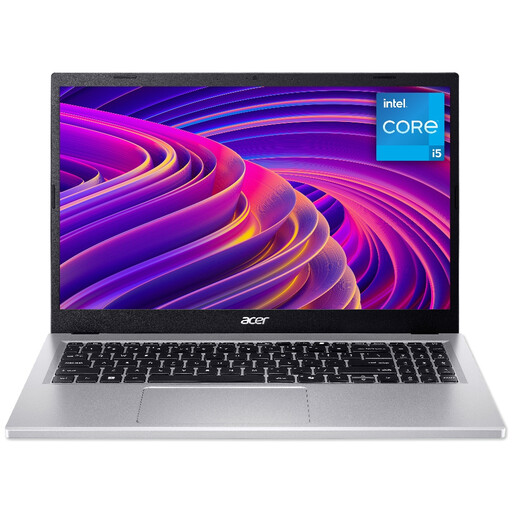
Acer Aspire Go AG15-71P 15.6-inch laptop
Its 15.6-inch screen is worth considering if you mainly work at a table and want room for records.
The named configuration has a 1920×1080 Full HD display, Intel Core i5-13420H, 8 GB RAM and a 512 GB SSD. If you expect to keep many applications open, check whether this configuration meets your memory needs.
View on Joybuy
 No image available
Lenovo IdeaPad Slim 3 83K7009MUK 15.3-inch laptop
Consider its larger display if viewing a family tree beside records is central to your work.
The named configuration has a 15.3-inch WUXGA display, AMD Ryzen 5 7535HS, 24 GB DDR5 RAM, a 512 GB PCIe SSD and Windows 11 Home. Check the connections required by your scanner or printer.
View on Joybuy
 No image available
ASUS Vivobook 14 X1407QA-LY003W Snapdragon X laptop
Consider this compact model for browser-based family-history research if it runs the browser and services you use.
The named configuration has a Snapdragon X processor, 16 GB RAM and a 512 GB SSD. Family Tree Maker 2024’s Windows x64 requirement does not establish compatibility with this Snapdragon configuration; confirm that application’s compatibility before buying it for desktop genealogy work.
View on Joybuy
Common questions
Do I need Windows for Family Tree Maker 2024?
No. Software MacKiev lists Family Tree Maker 2024 requirements for Windows 10 (x64) or later and macOS Big Sur (11) or later. Choose between them after checking the other genealogy and peripheral software you need; on Windows, also check the laptop’s processor compatibility with your applications.
Can I research on Ancestry using an older laptop?
Yes, if it can run an up-to-date browser that Ancestry supports. Ancestry warns that devices which no longer receive manufacturer updates may not work reliably, so check browser and device update support before choosing an older model.
Are Family Tree Maker’s minimum memory and storage figures enough?
They are application requirements, not a complete allowance for your research files and other open applications. Software MacKiev lists a Windows minimum of 2 GB RAM and 900 MB free disk space, and a Mac minimum of 4 GB RAM and 950 MB free disk space for Family Tree Maker 2024. Compare the laptop’s capacity with your operating system, browser use, records and photographs as well.
What if an online laptop is faulty, misdescribed or simply unsuitable?
A change of mind and a fault are different reasons for contacting the seller. GOV.UK says UK online buyers generally have 14 days after receiving goods to notify the seller that they wish to cancel, then another 14 days to return them; conditions and exceptions can apply. Faulty or misdescribed goods have separate statutory remedies, so describe the problem accurately when contacting the seller.


