
24/7 Customer Support

Free returns

Same-day & Next-day Delivery

Quality Guaranteed
Download the APP
Categories
Shaky, jarring video footage can instantly make your content look amateurish, no matter how compelling your story is. Whether you are documenting your travels, creating content for your social media channels or vlogging your daily life, smooth and stable video is essential. A gimbal stabiliser is a key piece of equipment designed to solve this exact problem, but with so many options on the market, choosing the right one can feel overwhelming.
As a Joybuy Product Recommendation Officer, my role is to help you navigate these choices. This guide will break down the essential features to look for in a gimbal, offer practical purchasing advice and highlight some recommended options to help you achieve that professional, cinematic look in your videos.
Before diving into specific products, it is helpful to understand the key factors that differentiate one gimbal from another. Considering these points will help you narrow down your search to the equipment that best suits your needs.
The first and most important decision is what you will be filming with.
Most modern gimbals offer 3-axis stabilisation. This means they have motors that actively counteract movement on three separate axes:
By correcting for shake on all three axes, a 3-axis stabiliser delivers exceptionally smooth video stabilisation, even when you are walking, running or panning the camera quickly.
If you plan to shoot on the go, the weight and size of your gimbal matter. A lightweight gimbal is easier to carry all day, whether you are navigating a bustling city or hiking a scenic trail. Many modern gimbals are also foldable, making them incredibly portable and easy to pack in a backpack, an essential feature for any vlogging gimbal.
Here are a few options that stand out for their features, performance and suitability for different types of content creators.
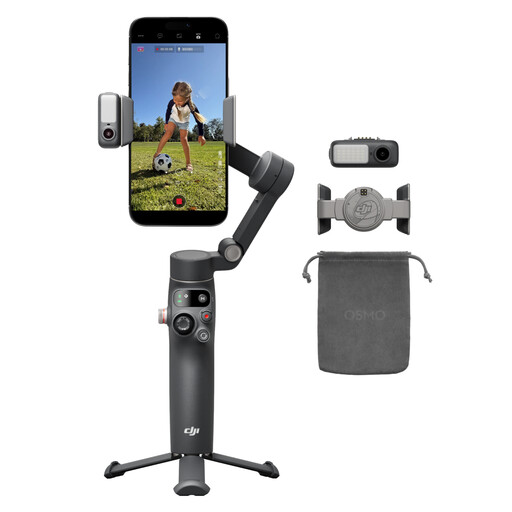
Why It Stands Out: The DJI Osmo Mobile 8 is an all-in-one solution for smartphone videographers. It simplifies the creative process by integrating intelligent tracking with built-in audio and lighting capabilities. The direct phone connection allows for a quick setup, so you can start shooting in moments. Its robust 3-axis gimbal stabilisation ensures your footage remains steady and professional.
Pros:
Who is it for? This phone gimbal is ideal for social media content creators, vloggers and anyone who wants to elevate their smartphone videos for travel, events or daily recording without a complex setup.
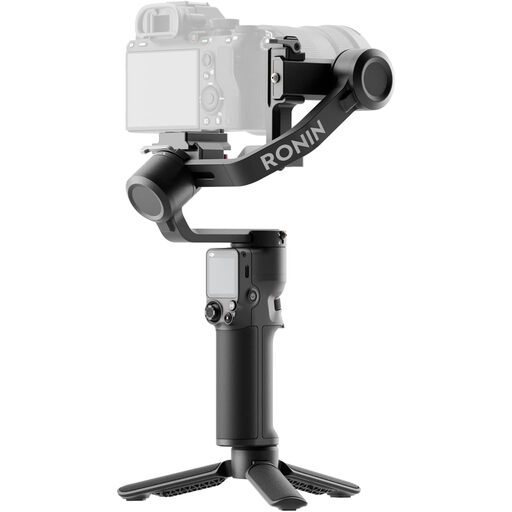
Why It Stands Out: The DJI RS 3 Mini proves that a powerful camera gimbal does not have to be bulky. Weighing just 795g, it is remarkably portable yet can handle a tested payload of up to 2 kg (4.4 lbs), making it compatible with a wide range of popular mirrorless cameras and lenses. Its native vertical shooting mode is a standout feature for creators focused on social media platforms.
Pros:
Who is it for? This is an excellent choice for semi-professional videographers, travel filmmakers and content creators who use a mirrorless camera and need a reliable, lightweight stabiliser that is easy to transport.
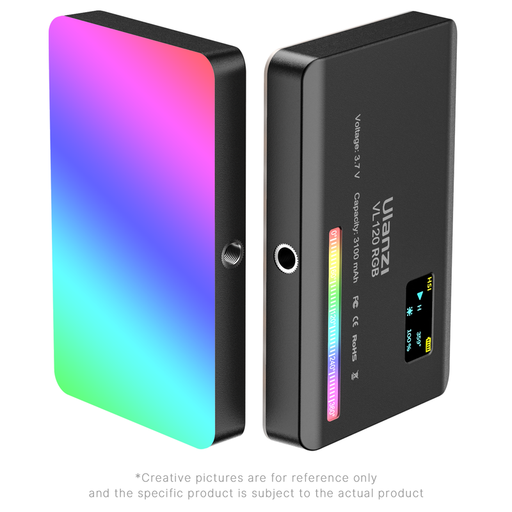
Why It Stands Out: Great video is about more than just stability; lighting is crucial. The ULANZI VL120 is a compact and versatile RGB video light that can dramatically improve the quality of your shots. It offers a full spectrum of 360° colours and 20 dynamic lighting effects, allowing for immense creative freedom. It is a vital addition to any content creator kit.
Pros:
Who is it for? Any vlogger, photographer or videographer looking for a portable and powerful lighting solution to enhance their visual storytelling, whether for interviews, product shots or creative effects.
A great gimbal is just one part of a complete content creator kit. Proper lighting can transform your footage from flat and dull to vibrant and professional. If you are looking to explore more ways to illuminate your scenes, browse our full selection of photo lights.
The primary purpose of a gimbal stabiliser is to keep your camera or smartphone level and steady by using motors and sensors to counteract unwanted movement. This process of video stabilisation removes shakes and jitters, resulting in smooth, fluid and cinematic-looking footage.
Yes, for most video applications, a 3-axis stabiliser is superior. While 1-axis or 2-axis gimbals can help, a 3-axis model provides the most comprehensive correction by stabilising movement across the pitch (tilt), roll and yaw (pan) axes. This ensures professional-grade smoothness, especially when the operator is moving.
It is generally not recommended. A phone gimbal is specifically calibrated for the weight, size and centre of gravity of a smartphone. Using it with even a small camera can strain the motors, lead to poor performance and potentially damage the gimbal. It is always better to use a dedicated camera gimbal designed to support the payload of your camera and lens combination.