A chocolate-coated ginger biscuit can be a small, countable snack, but choose by the portion you will eat and its carbohydrate and fat rather than by the coating or pack size. Waitrose No.1 Dark Chocolate & Ginger Thins list 6.1g carbohydrate and 2.6g fat per biscuit, while Tesco lists 10.2g and 4.1g respectively for a Border Dark Chocolate Ginger biscuit. If exercise fuelling is the main aim, the British Dietetic Association’s general guidance describes a low-fat, high-carbohydrate snack or light meal two to three hours beforehand; a different food may fit that aim better.
Who is this for?
Choosing a snack before exercise
If you fancy ginger and chocolate before a workout, compare the amount you plan to eat with your timing and reason for having a snack. A coated biscuit is not automatically a substitute for food chosen specifically for exercise fuelling.
Looking for a smaller portion
If you would rather have one countable biscuit, check its weight and per-biscuit nutrition. A thin biscuit and a larger cookie are different portions even when both are described as chocolate-coated ginger biscuits.
Checking ingredients and allergens
If you avoid particular ingredients, read the current packet for the exact variety. A gluten-free label does not mean a biscuit is free from milk, soya, oats or possible nut cross-contact.
What should you check?
Start with why and when you want the snack, then compare the portion and the exact recipe.
| Priority |
What to check |
Your needs |
| Exercise timing |
Check carbohydrate and fat for the amount you intend to eat. The British Dietetic Association’s general guidance describes a low-fat, high-carbohydrate snack or light meal two to three hours before exercise. |
If I am choosing food specifically for exercise fuelling, I need to consider my timing and usual eating pattern, not assume that ginger or chocolate improves a workout. |
| Portion size |
Compare biscuit weight as well as per-biscuit figures. Waitrose & Partners lists 6.1g carbohydrate and 2.6g fat per No.1 thin; Tesco lists 10.2g and 4.1g for a 17g Border biscuit. |
One smaller biscuit might be what I want, but I do not want to mistake it for the same-sized portion as a larger biscuit or cookie. |
| Biscuit type |
Check whether the product is a coated ginger biscuit, a coated cookie or a gingerbread-flavoured digestive. Read the description rather than relying on the words “ginger nuts”. |
I want the ginger-and-chocolate format I actually enjoy, rather than buying a plain ginger nut or a different biscuit by mistake. |
| Ingredients |
Read the current ingredients, allergen declaration and any may-contain statement. Asda’s Extra Special Free From Belgian Dark Chocolate Ginger Cookies are labelled gluten free but list milk, soya and oats and may contain nuts. |
If I avoid an ingredient, I need the exact variety’s packet to answer that question; the front-of-pack name alone is not enough. |
Common buying mistakes
-
Assuming every “ginger nut” has a chocolate coating
Tesco lists plain ginger nuts separately from chocolate-coated ginger biscuits. Their ingredients and nutrition should not be treated as interchangeable.
Check the exact product name and coating description before comparing portions.
-
Comparing biscuits without checking their weight
A per-biscuit figure refers to that product’s own serving: Tesco lists its Finest Dark Chocolate Ginger Cookie at 25g, while Border’s listed biscuit is 17g.
Compare the amount you expect to eat, using a consistent per-100g basis when you need a like-for-like comparison.
-
Treating the coating as an exercise-fuelling benefit
The cited coated biscuits contain fat. The British Dietetic Association’s general pre-exercise guidance instead describes a low-fat, high-carbohydrate snack or light meal.
Decide whether you want a biscuit as a treat or food selected for your exercise timing; do not infer a performance benefit from ginger or dark chocolate.
Brand and product-line references
These examples show why the exact biscuit and its stated serving matter more than the brand name alone.
Waitrose
Waitrose & Partners lists both No.1 Dark Chocolate & Ginger Thins and a separate eight-biscuit dark-chocolate ginger pack.
- The No.1 thins list 51kcal per biscuit; the separate eight-biscuit pack lists 120kcal per biscuit.
- Those figures describe different products and do not establish which is more suitable before exercise.
Border
Border Dark Chocolate Gingers are a coated ginger biscuit with nutrition stated for a 17g biscuit in Tesco’s listing.
- Tesco lists 10.2g carbohydrate and 4.1g fat per biscuit, making the stated portion straightforward to compare.
- The per-biscuit figures should not be compared with another product’s figures without checking its biscuit weight.
Tesco
Tesco Finest Dark Chocolate Ginger Cookies are cookies with ginger pieces and a chocolate coating, rather than plain ginger nuts.
- Tesco lists 15.5g carbohydrate and 6.0g fat for one 25g cookie.
- Its cookie portion and fat figure matter if you are comparing it with a smaller biscuit or seeking a low-fat pre-exercise snack.
Asda
Asda Extra Special Free From Belgian Dark Chocolate Ginger Cookies are labelled gluten free.
- Asda lists 13g carbohydrate and 4.2g fat per cookie.
- The listed recipe contains milk, soya and oats and carries a may-contain-nuts statement; gluten-free labelling does not address every allergen.
M&S
M&S Outrageously Chocolatey Dark Chocolate Ginger Biscuits have an oat base, stem ginger and a dark-chocolate coating.
- M&S lists 61.8g carbohydrate and 27.0g fat per 100g, a basis that can be used for like-for-like comparisons with other per-100g labels.
- Those per-100g figures are not per-biscuit figures. M&S also states that this product is unsuitable for people with nut or peanut allergies.
Sainsbury's
Sainsbury's lists a Taste the Difference Dark Chocolate & Ginger Cookie and a separate Free From Stem Ginger & Dark Chocolate Cookie.
- The separate listings make it possible to choose which cookie variety to inspect.
- Check the chosen variety’s own packet before relying on its ingredients, allergens or serving information.
Joybuy product options
These options cover a dark-chocolate ginger biscuit and a gingerbread-flavoured chocolate digestive. The digestive is an alternative biscuit format, not a traditional ginger nut.
 No image available
Border Dark Chocolate Gingers 150g
This coated ginger biscuit is a choice to consider if you want one stated biscuit portion before exercise. Tesco lists 10.2g carbohydrate and 4.1g fat per 17g biscuit for Border Dark Chocolate Ginger Biscuits 150g. Consider that fat figure against the British Dietetic Association’s general guidance if your aim is a low-fat pre-exercise snack, and check the current packet for allergens.
View at Joybuy
 No image available
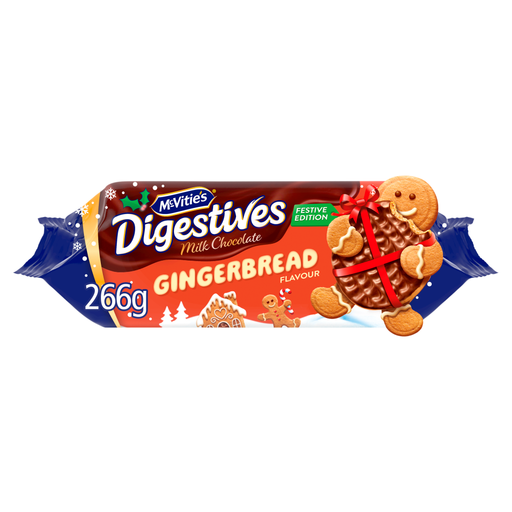
McVitie's Gingerbread Chocolate Digestives 266g
This is a gingerbread-flavoured chocolate digestive for someone who prefers that biscuit format; it is not a traditional ginger nut. Check the packet’s serving nutrition and ingredients for the amount you plan to eat before exercise.
View at Joybuy
Frequently asked questions
Is a chocolate-coated ginger biscuit necessarily suitable before a workout?
No. The cited biscuits supply carbohydrate but also contain fat, while the British Dietetic Association’s general guidance describes a low-fat, high-carbohydrate snack or light meal two to three hours before exercise. Choose according to whether you want a biscuit or food specifically selected for your exercise timing.
What should I check if I have a food allergy?
Read the current packet’s ingredients and precautionary allergen statements for the exact variety before eating it. For example, Asda’s gluten-free-labelled Extra Special ginger cookies list milk, soya and oats and may contain nuts; “gluten free” does not mean free from those ingredients.
Do chocolate-coated ginger biscuits need preparing?
The cited Border biscuits and Tesco Finest cookies are ready to eat. Follow the particular packet’s storage and best-before instructions; their listings advise cool, dry storage and an airtight container after opening.
Can chocolate-coated biscuits be served as part of school food?
Not where England’s current school-food standards apply: Department for Education guidance says chocolate-coated products must not be served across the school day in the state-funded schools subject to those standards. The Requirements for School Food Regulations 2014 include wholly or partly chocolate-coated products in their definition of confectionery. These school-provision rules do not ban an individual’s private pre-workout purchase; proposed changes for September 2027 are subject to Parliamentary approval and are not current rules.


