Holiday snack shoppers
If you are buying biscuits for children at home, decide whether the packet is for an occasional treat or for regular snacking. That changes how useful a per-biscuit serving figure is.


For a school-holiday treat at home, choose plain ginger nuts if you want a crisp ginger biscuit without chocolate; choose a dark-chocolate ginger biscuit if the coating is part of what you want. Check the cocoa-solids declaration for the chocolate, the finished biscuit’s nutrition per serving and the current pack’s allergy advice: “dark” alone tells you neither the cocoa percentage nor the sugar content. For routine children’s snacks, NHS Healthier Families suggests fruit and vegetables in place of biscuits.
If you are buying biscuits for children at home, decide whether the packet is for an occasional treat or for regular snacking. That changes how useful a per-biscuit serving figure is.
If you want ginger with a chocolate coating, look beyond the word “dark”. Cocoa solids in the chocolate and chocolate’s share of the biscuit are different measurements.
Check the ingredients and precautionary statements on the particular pack. A plain biscuit or one labelled vegan is not automatically suitable for someone with an allergy.
Start with the kind of snack you intend to buy, then compare the coating, serving information and ingredients of the actual packs.
| Priority | What to check | Your needs |
|---|---|---|
| Treat or routine snack | Read energy and sugars for the stated biscuit or serving size. NHS Healthier Families suggests fruit and vegetables as alternatives to biscuits for children’s routine snacks. | I’m buying a biscuit treat for the holidays, rather than assuming it needs to be the regular snack. |
| Chocolate and ginger | Check whether the biscuit is uncoated or chocolate-coated, then read the cocoa-solids minimum for the chocolate separately from its share of the biscuit. Waitrose & Partners and M&S each list a 49% minimum for the chocolate in their named ginger biscuits; that is not a percentage for the finished biscuit. | If the chocolate-and-ginger combination is the reason for buying, I want to know what the coating actually is. Otherwise, a plain ginger nut may be closer to what I want. |
| Ingredients and allergens | Read the current pack’s ingredients and precautionary statements for each person eating it. The Food Standards Agency cautions that vegan labelling alone is not a substitute for allergen information. | Everyone eating the biscuits needs a product whose own label I can check; I cannot rely on “plain”, “dark” or “vegan” as an allergy shortcut. |
| Pack and portion | Compare pack weights and current unit prices on the same basis. For portions, use the labelled biscuit or serving size rather than treating different biscuit counts as equivalent. | For a shared holiday packet, I want to know how much the pack contains and what one labelled serving represents. |
A cocoa-solids minimum describes the chocolate component, while the finished biscuit has its own nutrition figures. A percentage showing how much chocolate is in a biscuit answers a different question.
Read the cocoa declaration, ingredient proportions and nutrition panel separately. Compare sugars using equivalent serving or per 100g figures.
Asda’s vegan-labelled ginger nuts list wheat, and chocolate-coated recipes have their own ingredients and precautionary statements. The Food Standards Agency says vegan labelling alone should not stand in for an allergen check.
Check the current packet for the specific allergens relevant to each person who will eat the biscuits.
England’s Department for Education school-food standards address food provided to pupils in the specified school setting; they do not turn a family’s holiday purchase for home into a school meal.
If you are supplying a school or a holiday programme rather than shopping for home, check the rules that apply to that provider and UK nation.
These named products illustrate differences to check on a pack; a figure for one biscuit should not be carried across to another product in the same range.
Its Ginger Nuts are a plain, uncoated option.
Tesco Groceries lists a 300g own-label ginger nut pack alongside other ginger nut products.
Its Taste the Difference Dark Chocolate & Ginger Cookies are a cookie format rather than a plain ginger nut.
Its 250g Ginger Nuts offer a plain, uncoated choice.
Its 175g dark-chocolate ginger biscuit has an oat base and stem ginger.
Its range includes dark-chocolate-coated ginger biscuits and a separate, thinner chocolate-coated product.
These options include dark-chocolate ginger biscuits, a milk-chocolate gingerbread Digestive and an uncoated ginger biscuit. Check the coating and biscuit style before treating them as alternatives for the same preference.
 No image available
A dark-chocolate ginger biscuit for a chocolate-coated treat. Check the pack’s cocoa-solids declaration if the chocolate’s cocoa content matters to you. The product information gives nutrition per 100g; its allergy information lists wheat, milk and soya, with precautionary statements for eggs and nuts.
 No image available
A dark-chocolate ginger oat biscuit made with the sweetener maltitol. “No added sugar” does not describe the finished biscuit’s total sugars, so read its nutrition panel and check the cocoa declaration separately. The product information warns that excessive consumption may have a laxative effect; its allergy information lists milk, oats, soya and wheat, and says it may contain nuts.
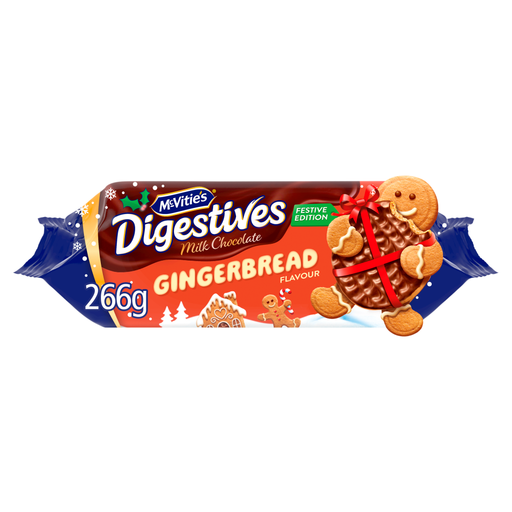 No image available
A gingerbread-flavoured Digestive with milk chocolate, not the dark-chocolate coating in the main comparison. The product information gives nutrition per biscuit and lists wheat, milk and soya among its allergens.
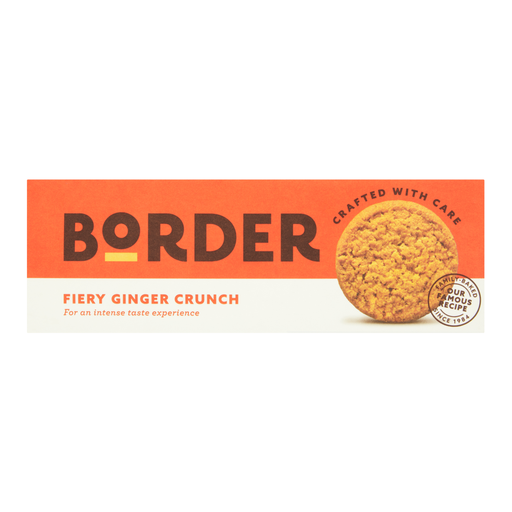 No image available
An uncoated biscuit for someone who wants ginger without chocolate. Its “fiery” flavour may not suit every child’s taste. The product information gives nutrition per 100g and lists wheat, with precautionary statements for eggs, nuts, soya and dairy.
No particular cocoa percentage or sugar level follows from the word “dark” alone. Read the cocoa-solids minimum for the chocolate and the nutrition panel for the finished biscuit separately. Waitrose & Partners, for example, lists 9.9g sugars per biscuit for its eight-pack dark-chocolate ginger biscuits.
Check the current pack’s ingredients and precautionary statements for the specific biscuit. Recipes differ, and the Food Standards Agency cautions that vegan labelling alone does not establish allergen safety.
They serve different purposes when you shop for children at home. If you are choosing a routine snack rather than an occasional biscuit treat, NHS Healthier Families suggests swapping biscuits for options such as fruit and chopped vegetables.
No prohibition on a family’s home purchase follows from England’s school-food standards. Department for Education guidance addresses food provided to pupils in state-funded schools in England; its school-food materials prohibit chocolate-coated products across the school day in that setting. Updated standards proposed for September 2027 remain subject to Parliamentary approval. If you are supplying a school or holiday programme, check the rules applicable to that setting and UK nation.
Follow the instructions on the packet you buy. The cited McVitie’s, Asda and Waitrose product listings advise cool, dry storage and an airtight container after opening.