Long-run fuel planners
If you want to include a biscuit in your on-run plan, count its carbohydrate and consider whether you can comfortably carry and eat it while moving.


Choose a ginger biscuit by the carbohydrate in the portion you plan to eat, not by how dark its coating sounds. A plain ginger nut is a smaller portion to count into a practised plan, while a dark-coated biscuit may suit a snack around training; for fuel during a long run, consider whether a biscuit is comfortable to carry and eat compared with a gel or drink.
If you want to include a biscuit in your on-run plan, count its carbohydrate and consider whether you can comfortably carry and eat it while moving.
If the ginger-and-chocolate flavour is the draw, compare the cocoa-solids statement for the chocolate separately from the nutrition information for the whole biscuit.
Check the current pack’s ingredients and precautionary statements for the particular biscuit you intend to eat, especially if a recipe may have changed.
Start with when you plan to eat the biscuit, then compare the carbohydrate in your intended portion and the practicalities of eating it during a run.
Consider when: You want a solid biscuit whose carbohydrate can be counted into a practised plan.
Trade-off: You may need several biscuits for a larger carbohydrate portion, and a crunchy biscuit supplies no fluid.
Consider when: You want a ginger-and-chocolate snack around training and its ingredients suit you.
Trade-off: Biscuit sizes vary, and the checked coated portions contain more fat per biscuit than the plain McVitie’s reference.
Consider when: Eating a biscuit while running is inconvenient, or you want a drink alongside carbohydrate.
Trade-off: Neither is a ginger biscuit; practise the particular product, amount and hydration plan to assess what suits you.
| Priority | What to check | Your needs |
|---|---|---|
| Carbohydrate portion | Read carbohydrate per biscuit, or use the per-100 g figure and the weight you intend to eat. McVitie’s lists 7.2 g per Ginger Nut; Waitrose lists 6.1 g per No.1 thin and 13.3 g per larger dark-chocolate ginger biscuit. | I want to count the portion I can realistically eat into my training plan, rather than assume one biscuit is a standard amount. |
| Eating during a run | Consider whether you can carry and eat a solid biscuit, and check fat per portion. The Australian Institute of Sport advises practising a fuelling plan that accounts for hydration and gut comfort. | If I plan to eat while running, I need to find out during training whether the food, amount and timing work for me. |
| Chocolate and cocoa | Read the cocoa-solids statement as a description of the chocolate, not the whole biscuit. Waitrose states a minimum of 49% for its larger biscuit’s chocolate and 51% for the No.1 thin’s chocolate; compare whole-biscuit nutrition separately. | I like dark chocolate, but I do not want the word ‘dark’ to stand in for a carbohydrate figure. |
| Ingredients and allergens | Check the current pack’s ingredients and precautionary statements for the exact product. GOV.UK guidance says regulated allergens used as ingredients in prepacked food must be clearly identified in the ingredients list. | For an allergy or ingredient restriction, I need to assess the biscuit I will actually eat, not rely on its flavour name. |
The cocoa percentage describes the chocolate coating, while the carbohydrate and fat figures describe the portion you would eat.
Compare the whole biscuit’s nutrition and decide when you would eat it; do not infer a fuelling advantage from ‘dark’ alone.
Waitrose lists 6.1 g carbohydrate per No.1 thin and 13.3 g per larger dark-chocolate ginger biscuit, so one biscuit represents a different portion in each pack.
Use the per-biscuit figure where available, or calculate your intended portion from its weight and the per-100 g label.
M&S describes its 85% Dark Chocolate Ginger Sticks as candied ginger coated in chocolate. The 85% refers to the chocolate, and the product is not a ginger-nut biscuit.
Check the product type before comparing its cocoa statement with biscuit portions.
Recipes can change, so an earlier online description may not describe the pack you receive.
Read the physical pack’s ingredients and precautionary statements; contact the manufacturer or retailer if suitability remains unclear.
Its plain Ginger Nuts provide a labelled biscuit portion to compare with dark-coated alternatives.
Its larger dark-chocolate ginger biscuit and smaller No.1 thin illustrate why portion size matters.
Its dark-chocolate ginger biscuits can be assessed by their per-100 g nutrition information.
These options include a gingerbread chocolate digestive and a dark-chocolate ginger biscuit. Check each product’s portion information against when you plan to eat it; the two do not cover every fuelling option discussed above.
 No image available
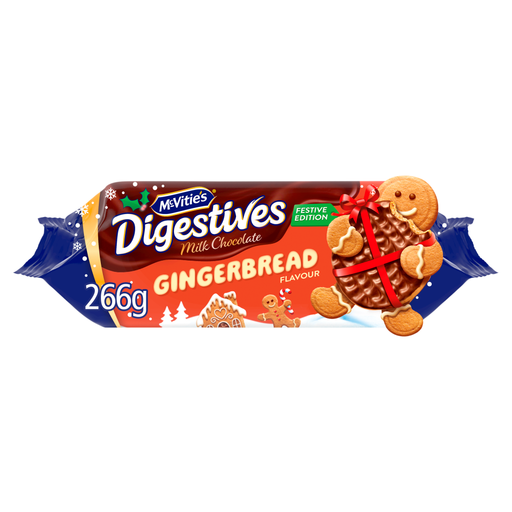
This gingerbread chocolate digestive is an option if you want a biscuit snack around training rather than a product specifically named as a dark-chocolate ginger nut. Check the pack’s carbohydrate and fat figures for the portion you intend to eat.
 No image available
This is a dark-chocolate ginger biscuit for buyers who want that combination of flavours. To count it into a fuelling plan, check the intended portion’s weight and carbohydrate information on the pack; read its ingredient and precautionary allergen statements too.
Use the carbohydrate per biscuit if the label gives it. Otherwise, multiply carbohydrate per 100 g by the weight you intend to eat in grams, then divide by 100. Use total carbohydrate, not the separate ‘of which sugars’ figure, and count other food and drink in the same plan.
Try the intended food and amount on training runs instead. The Australian Institute of Sport advises practising a fuelling plan that suits your hydration needs and gut comfort.
Do not rely on a biscuit alone for everything you plan to eat after a run. The Australian Institute of Sport advises considering other foods or sports products alongside a post-exercise snack to address overall recovery needs.
Read the current pack’s ingredients and relevant precautionary statements. GOV.UK guidance says that, when any of the 14 regulated allergens are ingredients in prepacked food, they must be clearly identified in its ingredients list; that requirement does not establish whether a particular biscuit suits your allergy.
Follow the instructions on the particular pack. For its larger dark-chocolate ginger biscuits, Waitrose advises cool, dry storage and an airtight container after opening.