What should you check before buying?
Start with the guests’ ingredient requirements, then compare the exact packs for portions, flavour and practical storage.
| Priority |
What to check |
Your needs |
| Flavour and texture |
Look at whether the pack describes a ginger nut, snap or another biscuit type. Check its ingredient list for ginger and other flavourings; an ingredient’s presence alone does not establish how strong it will taste. |
I want a crisp ginger biscuit for a tea break, but I would not assume every ginger variety tastes or feels alike. |
| Allergens and gluten |
Read the gluten-free label, ingredients and full allergen statement on the exact pack. Conventional wheat-based examples differ from Tesco Free From Ginger Nuts, which list soya flour, and M&S Made Without Stem Ginger Snaps, which list milk and warn about nuts and peanuts. |
Someone I am serving needs to avoid a particular ingredient, so the name “ginger biscuit” or a gluten-free label on its own is not enough. If I consider a gluten-free oat biscuit, I also need to check whether oats are suitable for that person. |
| Sugars and portions |
Compare sugars per 100g when biscuit sizes differ, then read the per-biscuit figure alongside its weight. Tesco Groceries lists 2.6g sugars per 10g conventional ginger nut; its Free From ginger nuts have a different recipe and biscuit size. |
I want to know what one serving represents rather than assume a ginger or gluten-free biscuit has a particular sugar content. |
| Stomach comfort |
Do not treat ginger in a biscuit as an indigestion claim. NHS indigestion advice cautions against spicy foods; a Royal Marsden NHS Foundation Trust leaflet mentions ginger biscuits as a possible option for nausea in its patient setting, not as a treatment for general indigestion. |
If spice tends to bother me, I will choose a biscuit with that in mind rather than rely on its name for digestive relief. |
| Sharing and storage |
Check pack weight, any labelled biscuit count and the storage directions. Tesco Groceries lists a 300g conventional pack, while its McVitie’s Ginger Nuts 250g listing gives a typical count of 25 biscuits. Keep the original pack available after opening for ingredient checks. |
I need enough biscuits for the group and a way for guests to identify the recipe, even if I transfer opened biscuits to a container. |
Brand and product-line references
These examples illustrate different pack and recipe details; check the particular product rather than treating a brand’s biscuits as interchangeable.
McVitie’s
Tesco Groceries lists McVitie’s Ginger Nuts in a 250g pack, with a typical count of 25 biscuits.
- The listing gives sugars per biscuit: 2.9g for a 10.1g biscuit.
- This wheat-containing conventional biscuit is not a gluten-free choice.
Tesco
Tesco Groceries lists a conventional 300g Ginger Nut Biscuit and a separate 180g Free From Ginger Nut Biscuit.
- The conventional listing identifies wheat and gives a per-biscuit sugar figure; the Free From product is labelled gluten-free.
- The Free From recipe lists soya flour. Its label figures must not be treated as those of the conventional biscuit.
Sainsbury’s
Sainsbury’s lists a 300g pack of conventional Ginger Snaps.
- The listing specifies 1.0% ginger powder and 2.6g sugars per biscuit.
- Its ingredients include wheat and wheat semolina, so it is not a gluten-free option.
Asda
Asda lists a 300g Ginger Nuts pack for conventional biscuit sharing.
- Asda suggests approximately 24 servings and lists 3.5g sugars per biscuit for this pack.
- It contains wheat. Asda’s separate 250g Ginger Nuts listing has different per-biscuit values, so check which pack you are buying.
M&S
M&S Ginger Snaps and M&S Made Without Stem Ginger Snaps are distinct products with different allergen information.
- The Made Without product is labelled gluten-free.
- Ocado’s Made Without listing says it contains milk and may contain nuts and peanuts; its conventional Ginger Snaps listing warns that it is unsuitable for a milk allergy.
Waitrose
Waitrose Essential Ginger Nuts are listed as a 300g conventional biscuit.
- The product listing provides ingredients and per-biscuit nutrition for pack comparisons.
- The biscuits contain wheat. For best quality, Waitrose recommends consuming this product within seven days of opening.
Ginger biscuits on Joybuy
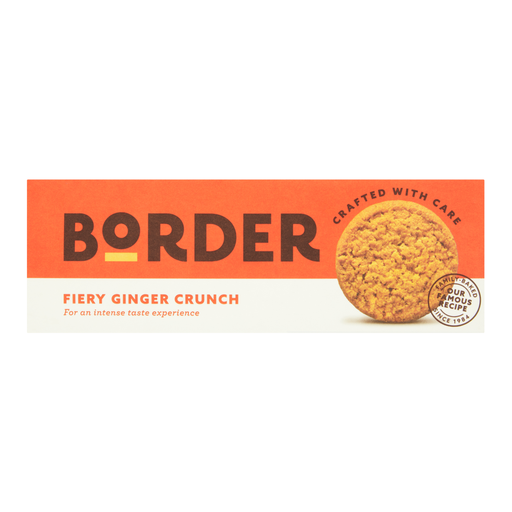
This 135g ginger biscuit is an option for a conventional refreshment break. Check its allergen information before offering it to guests with dietary requirements.
 No image available
Border Biscuits Fiery Ginger Crunch 135g
The 135g pack is a ginger-biscuit option to consider when planning refreshments for a small group.
Contains wheat, so it is not a gluten-free choice. Check the pack for its other allergen warnings before sharing.
View on Joybuy
Questions about buying and serving
Will ginger nuts or biscuits called digestives treat indigestion?
No treatment effect follows from either name. A Royal Marsden NHS Foundation Trust leaflet suggests ginger biscuits as one possible food when its patients feel nauseated, but that is not evidence that retail ginger nuts treat general indigestion. NHS indigestion advice cautions against spicy foods.
Is a gluten-free ginger biscuit suitable for anyone avoiding ingredients?
Not necessarily. Tesco Free From Ginger Nuts list soya flour, while M&S Made Without Stem Ginger Snaps contain milk and warn about nuts and peanuts. If considering an oat-and-ginger biscuit, check oat tolerance too: Coeliac UK notes that a small number of people are sensitive even to gluten-free oats. Read the exact pack for the person who will eat it.
How should I keep opened biscuits during the outing?
Follow the storage directions on the pack; the cited conventional biscuit listings call for cool, dry storage and an airtight container after opening. Keep the original packaging available for ingredient checks. Waitrose recommends consuming its Essential Ginger Nuts within seven days of opening for best quality.
Does selling biscuits at a car boot sale require food-business registration?
The event name alone does not decide it. Food Standards Agency community-event guidance for England, Wales and Northern Ireland, dated September 2026, says a local authority may decide that registration is unnecessary for very limited and infrequent food activity. Ask the local authority about how you intend to sell or supply the biscuits; Scottish events have separate guidance.


