Who is this comparison for?
The useful comparison depends on whether carbohydrate, sugar or a separate ingredient requirement is driving the purchase.
Shoppers keeping track of carbohydrate portions
If carbohydrate counting is part of your diabetes-care plan, the relevant figure is for the number of biscuits you intend to eat, not necessarily the serving printed on the pack. Diabetes UK notes that manufacturers’ serving sizes may differ from your own.
Shoppers comparing sugars in an occasional biscuit
A lower sugars figure can help distinguish biscuits, but it does not tell you their total carbohydrate. McVitie’s labels show why both figures matter: its The Light One Digestive has less sugar per biscuit than its Ginger Nut, but more carbohydrate.
Shoppers with a separate gluten or allergen requirement
Gluten-free suitability and carbohydrate content answer different questions. Check the current pack’s ingredient and allergen statements as well as its nutrition table; an oat-containing gluten-free biscuit may still be unsuitable for someone who reacts to avenin in oats.
What should you check before choosing?
Start with total carbohydrate for your intended portion, then compare sugars and any ingredient requirements separately.
| Priority |
What to check |
Your needs |
| Total carbohydrate |
Find carbohydrate per biscuit or per 100g on the nutrition table. If only a per-100g figure is shown, use the weight of the portion you intend to eat to work out its carbohydrate. |
I want to compare the amount in my actual serving, rather than assume one biscuit is the serving. Diabetes UK identifies total carbohydrate as an important figure when considering blood glucose after eating. |
| Sugars |
Compare sugars on the same basis, such as per biscuit or per 100g, alongside total carbohydrate. McVitie’s lists 1.3g sugars and 9.1g carbohydrate per The Light One Digestive, compared with 2.9g sugars and 7.2g carbohydrate per 10.1g Ginger Nut. |
If I am looking for less declared sugar, I still want to know whether that choice changes the carbohydrate in the portion I will eat. |
| Serving size |
Check whether the pack’s serving matches the number of biscuits you plan to have. Compare energy, saturated fat and salt for that portion too, rather than relying on a sugar traffic-light colour alone. |
One biscuit on the label may not match the snack I have in mind. I want the figures to reflect the portion I am considering. |
| Ingredients and allergens |
Read the current ingredient list and allergen or may-contain statements. Treat a gluten-free claim as a separate check from the carbohydrate and sugars figures; check oat warnings where relevant. |
If I need to avoid an ingredient, I need to establish that the particular biscuit meets that requirement without assuming it also meets my other food-selection needs. |
Brands and product lines to compare
These labelled examples show why a brand name, biscuit type or specialist wording cannot replace a comparison of the particular products.
McVitie’s
Its Ginger Nuts and The Light One Digestives offer a direct comparison between a ginger biscuit and a lower-sugar digestive.
- McVitie’s declares 7.2g carbohydrate and 2.9g sugars per 10.1g Ginger Nut; The Light One declares 9.1g carbohydrate and 1.3g sugars per biscuit.
- The lower sugars figure for The Light One does not mean it has less total carbohydrate. Check the current pack for wheat and other allergen statements.
Sainsbury’s
Its Ginger Snaps provide an own-label ginger-biscuit example with per-biscuit nutrition.
- Sainsbury’s declares 7.5g carbohydrate, 2.6g sugars and 45kcal per biscuit.
- Its front-of-pack guide marks sugars high; that colour does not state the total carbohydrate in a serving.
Waitrose Essential
Essential Ginger Nuts offer another per-biscuit label to compare with ginger snaps and branded ginger nuts.
- Waitrose & Partners declares 7.5g carbohydrate and 2.6g sugars per Essential Ginger Nut.
- A similar per-biscuit figure does not establish that another product’s biscuit is the same size or that its ingredients meet your needs; check each current pack.
Nairn’s
Its stem-ginger oat biscuits and separate gluten-free oat-and-ginger biscuit breaks address different ingredient preferences.
- Waitrose & Partners lists 65.9g carbohydrate per 100g for Nairn’s Stem Ginger Oat Biscuits and 62.4g per 100g for its Gluten Free Oat & Ginger Biscuit Breaks.
- The gluten-free biscuit breaks contain oats and carry an avenin warning. Gluten-free status does not establish a lower carbohydrate portion.
Digestive and ginger biscuit options on Joybuy
These options include a digestive biscuit and a ginger-flavoured oat biscuit. Compare each pack’s nutrition and ingredients for the portion and requirements that matter to you; neither product name establishes diabetes suitability.
 No image available
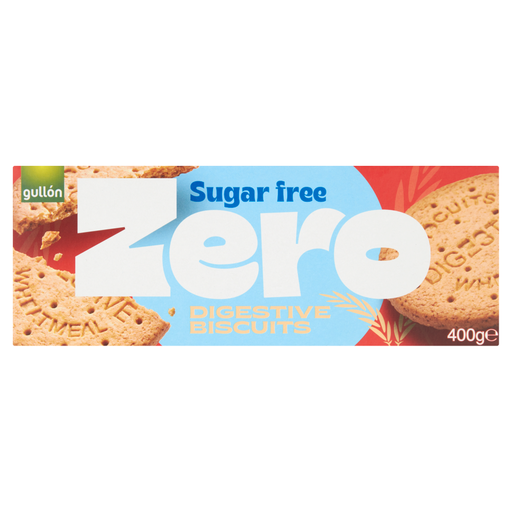
Gullon Zero Sugar Free Original Digestives 400g
A digestive option for comparing sugars and total carbohydrate. Check the nutrition table for the portion you intend to eat rather than treating “Sugar Free” in the product name as a measure of total carbohydrate.
View on Joybuy
 No image available
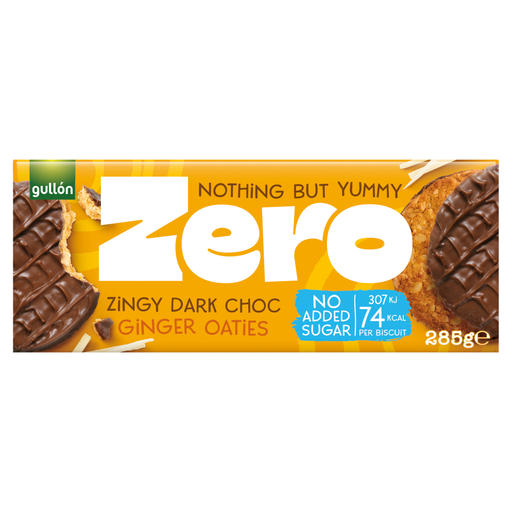
Gullon Zero Dark Chocolate Ginger Oaties 285g
An oat-and-ginger biscuit with dark chocolate for shoppers considering ginger flavour alongside digestives. Compare total carbohydrate for your intended portion and check the current ingredient and allergen statements if those affect your choice.
View on Joybuy
Questions about ginger nuts and digestives
Are ginger nuts diabetic friendly?
Not as a general category: a ginger nut is a sweet biscuit containing carbohydrate. Diabetes UK advises considering total carbohydrate and portion size, and advises people with type 2 diabetes who are trying to limit carbohydrate intake or manage weight to avoid biscuits as routine snacks. If you choose one occasionally, check the particular product’s label against your own eating plan.
Are digestives a better choice than ginger nuts when managing diabetes?
Not automatically. McVitie’s declares 1.3g sugars and 9.1g carbohydrate per The Light One Digestive, compared with 2.9g sugars and 7.2g carbohydrate per 10.1g Ginger Nut. The lower-sugar choice in this pair is therefore not the lower-carbohydrate choice per biscuit; compare the products and portion you would actually eat.
Which figures should I compare on a biscuit label?
Start with total carbohydrate and sugars for your intended portion, using per-biscuit or per-100g figures on the pack. Energy, saturated fat and salt can inform a broader comparison. Diabetes UK advises checking total carbohydrate on the nutrition label and notes that the manufacturer’s serving may differ from yours.
Does gluten free mean a biscuit contains less carbohydrate?
No: gluten-free wording addresses gluten suitability, not carbohydrate content. The Waitrose & Partners listing for Nairn’s Gluten Free Oat & Ginger Biscuit Breaks declares 62.4g carbohydrate per 100g and states that they are unsuitable for people who react to avenin in oats. Check both the nutrition and ingredient information for your particular requirements.
Can I choose a biscuit on a “diabetic” label claim alone?
No. Diabetes UK’s position is that foods marketed as “diabetic” offer no particular benefit on that basis. For a biscuit, use the current nutrition and ingredient label to assess the portion and any separate allergen requirements instead of relying on that wording.


