For a weekend breakfast where several people will have small pours, a larger glass bottle of still apple juice is a practical choice; Folkington's lists a 1-litre cloudy apple juice in its glass-bottle range. Individual bottles suit a table where separate presentation matters, while a sparkling bottle suits a brunch where guests want fizz rather than still juice. Whichever format you choose, bottle capacity is not a serving recommendation: NHS guidance limits unsweetened juices and smoothies to a combined 150ml a day.
Who is each format for?
The useful distinction for a weekend breakfast is whether you plan to pour from one bottle, set out individual bottles or serve something sparkling.
Breakfast hosts sharing a bottle
A larger glass bottle makes sense when several guests want still juice poured into small glasses. Folkington's lists a 1-litre cloudy apple juice in its glass-bottle range; plan the pours rather than treating the bottle as one serving.
Hosts setting out individual bottles
Separate glass bottles can be placed at each setting. Luscombe lists English Apple Juice in a case of 12 × 270ml glass bottles, so check both the case format and how much each guest is likely to pour.
Shoppers planning a sparkling brunch
If fizz is part of the occasion, a sparkling glass-bottle drink is a different choice from still juice. Asda describes its 750ml Appletiser bottle as carbonated apple juice from concentrate.
What should you check before buying?
Confirm the exact bottle material first, then choose between still and sparkling juice and decide how you will serve it.
| Priority |
What to check |
Your needs |
| Glass packaging |
Look for an explicit glass-bottle description for the exact product and size. Check the bottle volume and whether it is sold singly or as a case. |
I want glass bottles on the breakfast table, so the packaging of the particular format matters more than how the drink looks in a listing. |
| Drink style |
Check whether the juice is still or carbonated, and whether its description says it is from concentrate. Folkington's describes its cloudy apple juice as not from concentrate; Asda describes Appletiser as carbonated juice from concentrate. |
For a conventional breakfast pour, I'd choose still juice. If the occasion calls for fizz, I'd consider a sparkling bottle instead. |
| Serving volume |
Compare bottle capacity with the amounts you intend to pour. NHS guidance limits unsweetened fruit or vegetable juices and smoothies to a combined 150ml a day, counting as one portion. |
A sharing bottle works for my table if I pour small glasses; I wouldn't assume an individual bottle is meant to be finished by one person. |
| Ingredients and label |
Read the ingredients, any concentrate description and the sugars figure per 100ml when comparing products. Asda lists 10.5g sugars per 100ml for its 750ml Appletiser bottle. |
I want to know what is in the drink, rather than choosing on the strength of its glass-bottle presentation alone. |
Common buying mistakes
-
Assuming an apple juice comes in glass
A brand or product photograph does not establish the bottle material for every size it sells. For example, the cited Tesco and Sainsbury's Copella listings describe juice formats without confirming glass packaging.
Check that the listing for the exact size explicitly says “glass bottle” before choosing it for a glass-bottle table setting.
-
Choosing sparkling juice as though it were still juice
Asda describes Appletiser as carbonated apple juice from concentrate, while Folkington's describes its cloudy apple juice as not from concentrate. Fizz changes the kind of drink being served.
Decide whether guests want a sparkling brunch drink or a still breakfast pour, then check the product description.
-
Using bottle size as the serving size
A 270ml individual bottle is larger than the 150ml combined daily amount in NHS guidance for unsweetened juices and smoothies. A larger sharing bottle also needs to be divided into pours.
Set out small glasses and follow the particular bottle's storage instructions after opening.
Apple juice brands and formats to compare
These brand examples illustrate different breakfast formats; check the exact product and bottle material rather than assuming every format from a brand is packaged alike.
Folkington's
Folkington's lists cloudy apple juice made from Russet and Jonagold apples and describes it as not from concentrate. Its juice range includes 250ml and 1-litre glass-bottle formats.
- Consider the 1-litre format when several people will share still juice, or check the 250ml format for smaller bottles.
- Check the exact format and delivery arrangements before ordering for a single breakfast.
Luscombe
Luscombe lists English Apple Juice made with organic English apple juice in 12 × 270ml glass bottles.
- Separate bottles offer a distinct presentation for guests.
- The listed purchase format is a case, and 270ml exceeds the NHS's 150ml combined daily guidance for unsweetened juices and smoothies.
Appletiser
Asda lists Appletiser as a 750ml glass bottle of carbonated apple juice from concentrate.
- A sparkling format to consider when guests want fizz at brunch.
- It is not a still, not-from-concentrate choice; Asda lists 10.5g sugars per 100ml for this product.
Copella
Tesco lists Copella apple juice in 900ml and 1.35-litre formats, while Sainsbury's describes its 900ml cloudy apple juice as not from concentrate.
- The listed formats offer sizes to consider for a shared breakfast.
- Confirm the packaging of the exact format before choosing it specifically for a glass bottle.
Tropicana
Tesco lists Tropicana Pressed Apple Fruit Juice in a 1.5-litre format.
- The listed capacity is relevant when planning pours for a group.
- Check the exact product's packaging before treating it as a glass-bottle option.
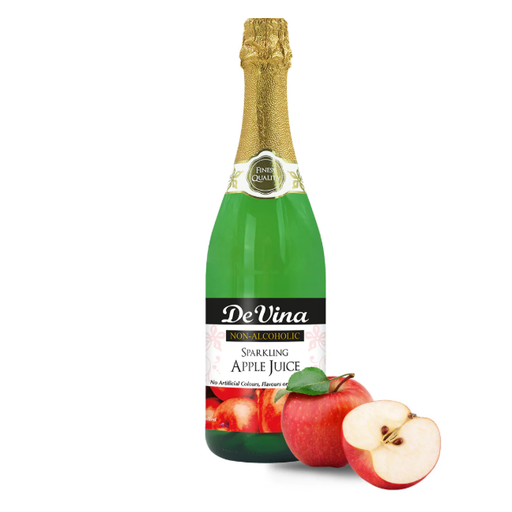
A sparkling apple option on Joybuy
This sparkling apple drink is an option to consider for a weekend brunch where fizz is wanted. If a glass bottle is essential, confirm the packaging of the exact item before ordering.
 No image available
De Vina Sparkling Apple 750ml
Consider this 750ml sparkling apple drink if you want fizz rather than still juice at brunch. Check the bottle material, ingredients and on-pack nutrition panel for the exact item before comparing it with glass-bottle juices.
View on Joybuy
Questions about glass-bottle apple juice
How much juice should I pour at breakfast?
NHS guidance limits unsweetened fruit or vegetable juices and smoothies to a combined 150ml a day, counting as one portion. Pour into small glasses rather than assuming a 270ml individual bottle or a larger sharing bottle is one person's serving.
Does a glass bottle mean the juice is not from concentrate?
No. Folkington's describes its cloudy apple juice as not from concentrate, whereas Asda describes Appletiser in a glass bottle as carbonated apple juice from concentrate. Check the ingredients and description of the exact product.
How do I recycle an apple-juice glass bottle?
Follow your local collection instructions for glass bottles and any directions on the bottle. Recycle Now provides a locator to check how glass bottles and jars can be recycled in your area.


