For a child-focused school-holiday lunch, choose a non-energy drink rather than treating a glass bottle as a reason to buy a high-caffeine energy drink. If the drink is for an adult who wants glass packaging, check the exact bottle’s caffeine and sugar declarations, container material and seller details before choosing it.
Who is choosing the drink?
Parents and carers packing a child’s lunch
Start with who will drink it, not how the bottle looks. For a school-aged child, a non-energy drink avoids making a high-caffeine energy drink the lunch choice. GOV.UK announced in July 2026 that England plans to ban sales of high-caffeine energy drinks to under-16s from April 2027.
Adults who prefer a glass bottle
An imported Red Bull 250ml glass bottle is listed by MCR Snack Distro. If that packaging is the reason for choosing it, check the bottle’s label and seller details rather than applying figures from a different Red Bull pack.
Family-lunch shoppers set on glass
Glass packaging does not require an energy drink. Compare non-energy drinks in glass separately, reading each label for caffeine, sugars and ingredients. Tesco describes its glass-bottle Irn-Bru 1901 as caffeine free; that description alone does not establish whether it meets every other lunch requirement.
What should you check first?
Decide who the lunch is for, then read the quantities for the complete container. Treat glass as a separate packaging choice.
| Priority |
What to check |
Your needs |
| Recipient and caffeine |
Identify who will drink it. Read the caffeine declaration for the exact product; a glass bottle does not change its contents. |
For a child’s lunch, I would choose outside the high-caffeine energy-drink category. For an adult, I want to know how much caffeine is in the bottle. |
| Whole-container quantities |
Compare caffeine and sugars for the amount actually purchased, checking both serving size and nutrition information. Red Bull UK states 80mg caffeine per 250ml standard can; Monster Energy UK states 160mg per 500ml Original Green can. These are can figures, not specifications for an imported glass bottle. |
A smaller-looking pack is not enough information for my lunch choice; I want the figures for the complete drink I would serve. |
| Glass packaging |
Confirm that the exact item is supplied in glass and check its label. For an imported listing, confirm the seller’s product and delivery details before ordering. |
If glass is essential for a family lunch, I can compare non-energy drinks in glass rather than choosing an energy drink for its container. |
Common buying mistakes
-
Taking a glass bottle as a sign that a drink suits a child
Packaging does not alter the caffeine in the drink. GOV.UK announced in July 2026 a forthcoming England sales ban for high-caffeine energy drinks to under-16s; the announcement is not a reason to assume a glass-packaged version is different.
For a child-focused lunch, compare non-energy drinks. If the recipient is an adult, read the caffeine amount on the exact bottle.
-
Comparing pack appearance rather than the whole drink
Container sizes differ. Red Bull UK states 80mg caffeine per 250ml standard can, while Monster Energy UK states 160mg per 500ml Original Green can; neither figure describes every product from those brands.
Use the complete bottle or can as your comparison point, and read its own caffeine and sugar declarations.
-
Reading “sugar free” as “caffeine free”
Red Bull UK states that its 250ml Sugarfree can contains 80mg caffeine. A sugar-related name therefore cannot answer the separate caffeine question.
Check caffeine independently, particularly when selecting a drink for a school-holiday lunch.
-
Assuming an imported listing matches a standard UK can
MCR Snack Distro identifies an imported Red Bull 250ml glass bottle, while Red Bull UK’s 250ml caffeine information describes its standard can. The can specification should not be transferred to the imported bottle.
Confirm the actual container, label and seller details, including how a glass bottle will be delivered.
Brand references for comparison
These references describe particular drinks or ranges, not every product sold under each brand or the Joybuy options below.
Red Bull
A reference for an adult comparing a standard 250ml can with a separately listed imported glass-bottle product.
- Red Bull UK states 80mg caffeine per 250ml standard Energy Drink can.
- MCR Snack Distro’s imported 250ml glass-bottle listing is a separate product listing; check its own label rather than assuming the UK can specification applies.
Monster Energy
A larger-can reference when comparing caffeine for a complete adult serving.
- Monster Energy UK states 160mg caffeine for its 500ml Original Green can.
- That Original Green product information describes a can, not a glass-bottle option.
Lucozade Energy
A sparkling energy-drink range to assess by its exact product and pack label.
- Lucozade describes its Energy range as containing glucose.
- Check the chosen pack for its caffeine, sugars and container material rather than treating the range description as an individual product specification.
Non-energy options on Joybuy
These canned soft drinks are options for a school-holiday lunch where an energy drink is not wanted. Neither meets a glass-bottle requirement; check the individual pack label before serving.
 No image available
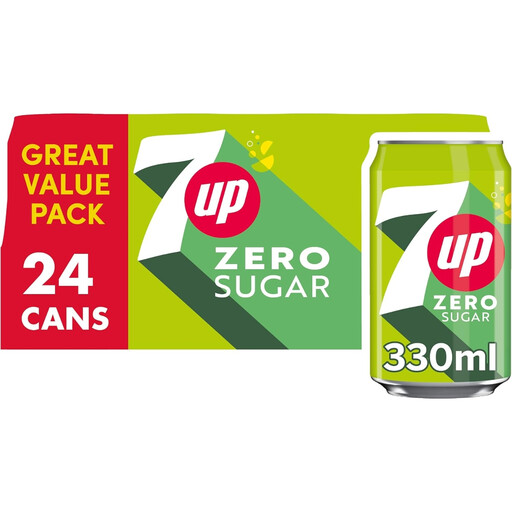
7UP Zero 330ml 24-pack
A canned soft-drink option for a lunch where an energy drink is not wanted. The pack contains 24 × 330ml; it does not meet a glass-packaging preference. Read the pack label for caffeine, ingredients and nutrition information before serving.
View on Joybuy
 No image available
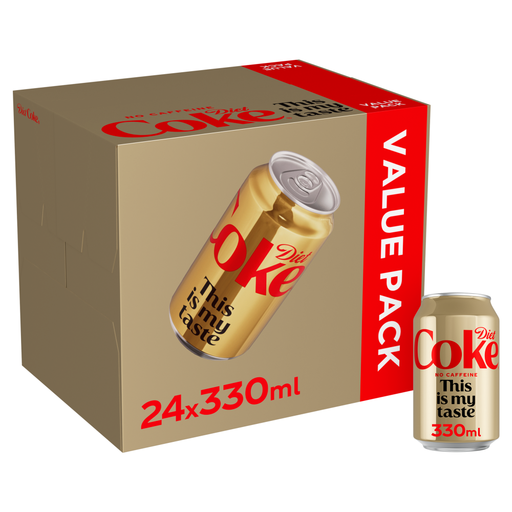
Diet Coke No Caffeine 24 × 330ml
A no-caffeine soft-drink option for a lunch where an energy drink is not wanted. The pack contains 24 × 330ml cans, so it does not meet a glass-packaging preference. Check the ingredient label against any individual dietary requirements before serving.
View on Joybuy
Questions about lunch drinks
Is a high-caffeine energy-drink sales ban already in force for under-16s in England?
The GOV.UK announcement of July 2026 describes an England ban on sales of high-caffeine energy drinks to under-16s from April 2027, not an already active UK-wide ban. For a child-focused lunch, the practical choice here is to compare non-energy drinks rather than rely on a forthcoming sales rule to decide what to serve.
Does a sugar-free energy drink contain no caffeine?
Not necessarily. Red Bull UK states that its 250ml Sugarfree can contains 80mg caffeine. Read caffeine and sugar information separately on the exact drink you are considering.
Does a glass bottle make an energy drink a better lunch choice?
No conclusion about caffeine or sugars follows from the container alone. MCR Snack Distro lists an imported Red Bull 250ml glass bottle, but an adult considering it should check that bottle’s label, packaging and seller details rather than use figures for Red Bull UK’s standard can.
What if the family lunch drink has to come in glass?
Compare glass-bottled non-energy drinks separately. Tesco describes its glass-bottle Irn-Bru 1901 as caffeine free; read the exact product’s nutrition and ingredient label as well, because glass and caffeine-free are different selection criteria.


