What matters when choosing?
Decide when you will drink the water, then check whether the bottle format and any separate fuel suit that session.
| Priority |
What to check |
Your needs |
| Plain-water hydration |
Check whether you need water at home, at a support point or during the run. Consider access to drinks when a session lasts longer or conditions change. |
I want plain water available where I will actually drink it, without treating the bottle as my whole fuelling plan. |
| Fuel for longer exercise |
Check the carbohydrate content of any drink or separate fuel and practise the combination during training. World Athletics gives 30–60 g of carbohydrate per hour for exercise lasting 1–2.5 hours and up to 90 g per hour beyond 2.5 hours. |
For a longer run, I need to plan carbohydrate separately if my drink is plain bottled water. |
| Bottle format |
Check the material, volume, closure and whether the bottle must be carried. Highland Spring lists 330 ml and 750 ml glass bottles; check event or venue rules before taking glass to a support point. |
Glass suits a place where I can leave the bottle. If I am carrying water, I want a secure, portable format instead. |
| Mineral content |
Read the figures for the exact water and variant, using the stated units. Buxton lists 24 mg of sodium per litre for its sparkling natural mineral water; that figure does not describe every bottled water or a complete endurance drink. |
I do not want to mistake naturally occurring minerals in plain water for a planned drink-and-fuel combination. |
Which water brands are relevant?
These brand references help distinguish a documented glass range from other still-water formats; they do not imply that every listed brand has a glass option.
Highland Spring
Highland Spring lists still and sparkling water in 330 ml and 750 ml glass bottles, presented for occasions and dining.
- A stated glass-bottle range makes it relevant when glass is the deciding feature.
- Its plain water is not a substitute for carbohydrate fuel during prolonged exercise.
Buxton
Buxton is a natural mineral-water option; Tesco lists a 1 L still-water bottle with a sports cap.
- Buxton publishes mineral figures for its sparkling variant, including 24 mg sodium per litre.
- That sparkling-water figure should not be applied to other variants or treated as evidence of a complete endurance-drink formulation.
Volvic
Volvic offers natural mineral water, and Tesco lists a 1.5 L still-water format.
- The listed still-water format offers a comparison when choosing plain water by bottle size.
- Check the material of the exact bottle if glass is essential; a still-water listing does not establish that it is glass.
Evian
Evian natural mineral water appears in Tesco’s still-water listings, including a 500 ml single bottle.
- The listed size offers a plain-water comparison for someone considering a smaller bottle.
- Check the packaging of the exact product rather than assuming a listed still-water bottle is glass.
Joybuy options for carrying plain water
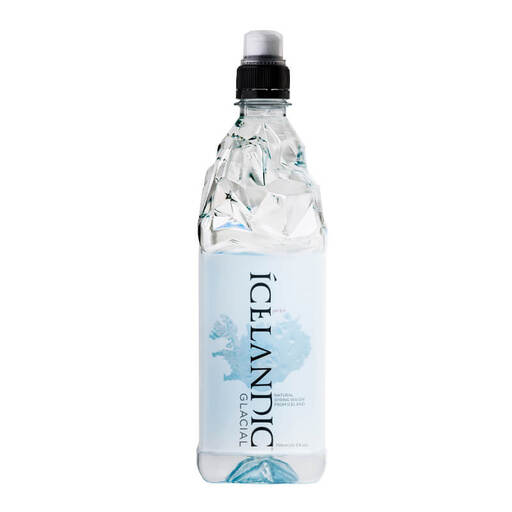
This PET-bottled option is for carrying plain water, rather than for choosing a glass bottle or a carbohydrate-containing drink.
 No image available
Icelandic Glacial Natural Mineral Water, 750 ml PET sports-cap bottle
Consider this 750 ml sports-cap bottle when you want to carry plain water. It is PET, not glass; plan carbohydrate fuel separately for longer sessions rather than relying on plain water for it.
View on Joybuy
Common questions
Is glass-bottled water enough for marathon training fuel?
No: plain water provides fluid but not carbohydrate fuel. World Athletics gives carbohydrate guidance for endurance exercise according to duration, so consider what you will drink and what fuel you will use during longer sessions.
When does a glass bottle make sense for a runner?
A stationary setting, such as home, a meal or a permitted support point, avoids the need to carry glass while running. Highland Spring lists still and sparkling glass bottles in 330 ml and 750 ml sizes; check local rules before bringing glass to an event or venue.
Should I choose still or sparkling water around a run?
Choose a water you are comfortable drinking, but do not use the still-versus-sparkling choice as a substitute for planning fuel for a longer run. The NHS discusses water as a way to replace fluids lost through physical activity; that general hydration advice does not make either type a carbohydrate drink.
How should I store unopened bottled water?
Buxton advises storing bottled water at room temperature or cooler, away from direct sunlight, solvents and chemicals. Check the instructions on the bottle you buy as well.


