Parents packing a secondary-school lunch
The immediate choice is whether the drink and its container meet the school’s rules. A glass cordial bottle is not a practical substitute for a suitable drinks bottle carried in a school bag.


Keep the glass bottle at home rather than putting it in a secondary-school bag. Dilute the cordial as its label directs and, if the school allows cordial, send the prepared drink in a suitable non-glass bottle; check how that bottle seals before it travels.
The immediate choice is whether the drink and its container meet the school’s rules. A glass cordial bottle is not a practical substitute for a suitable drinks bottle carried in a school bag.
Glass-bottle cordial can stay at home while the diluted drink goes into a separate non-glass bottle, provided the school permits cordial and the container.
Dilution instructions, sugars in the prepared drink, allergen declarations and storage directions matter more to this decision than a bottle’s premium presentation.
Start with the school’s drinks and container rules, then compare cordials as prepared drinks and plan how the opened bottle will be stored.
| Priority | What to check | Your needs |
|---|---|---|
| School transport | Check the individual school’s rules for glass, cordial and reusable bottles. If decanting, check that the non-glass container closes securely in the form in which it will be carried. | I need a drink that can travel in a school bag without carrying the original glass bottle. |
| Sugars | Compare sugars per 100ml of the drink diluted as directed, rather than comparing concentrate with a prepared drink. Check the exact label if seeking a no-added-sugar alternative. | I want to know how much sugar is in the drink that will actually go into the bottle. |
| Dilution | Read the ratio on each bottle and measure accordingly. Tesco Groceries lists Robinsons Lime & Mint at 1 part cordial to 6 parts water; Belvoir Farm lists its Elderflower Cordial at 1:10, so the same measure of concentrate will not prepare them in the same way. | Preparing the drink at home needs to fit into the morning routine. |
| Storage and ingredients | Check refrigeration and use-within directions after opening, alongside the current ingredient and allergen label. Belvoir Farm specifies refrigeration and use within 3 weeks; Tesco Groceries declares sulphur dioxide/sulphites for the Robinsons Lime & Mint product. | We may use cordial occasionally, so I need to know how to store an opened bottle and whether its ingredients suit the pupil. |
Robinsons describes its glass-bottle Fruit Cordials as designed for the dinner table. A published Meadowfield Primary School packed-lunch policy prohibits glass bottles for safety, illustrating why a secondary school’s own rules need checking.
Keep the glass bottle at home. If the school permits cordial, dilute it there and use a suitable non-glass bottle for the prepared drink.
Cordials have different mixing instructions, so a figure for concentrate or for a differently prepared drink does not describe the same serving.
Follow each product’s stated ratio and compare sugars per 100ml of the prepared drink. Do not use floral or premium wording as a shortcut for reading the nutrition panel.
Storage periods and allergen declarations differ between products. An opened bottle may need refrigeration and use within a stated period.
Read the bottle label before serving, particularly where an ingredient or allergen matters to the pupil, and follow its storage directions.
These examples help compare concentrates kept at home; a brand’s presence here does not establish that its glass bottle is permitted at school.
Robinsons describes its glass-bottle Fruit Cordials as drinks designed for the dinner table.
Its Elderflower Cordial is a concentrate for preparing a drink at home, not a ready-to-drink lunchbox bottle.
Its Elderflower Cordial is sold in a glass-bottle format, according to the DDC Foods product listing.
Waitrose & Partners lists its No.1 Elderflower Cordial in a glass bottle.
This Joybuy tumbler fits the option of diluting cordial at home and carrying the prepared drink separately, if the school permits both the drink and the container.
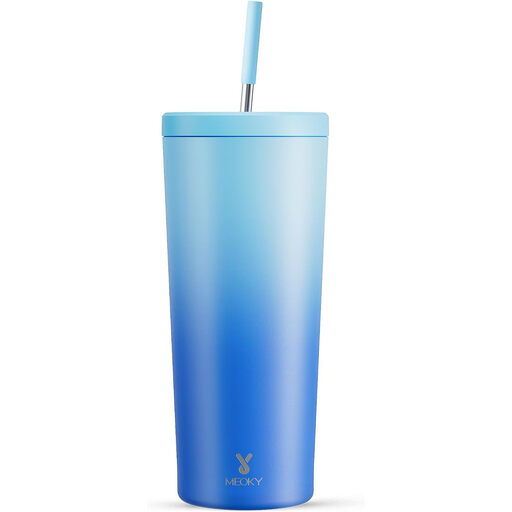 Image unavailable
This non-glass tumbler could carry cordial prepared at home if the school permits it. It has a stated 24 oz capacity and vacuum-insulated stainless-steel construction; check how the lid seals with the straw fitted before putting it in a school bag. The product instructions specify hand washing and say not to use it for hot drinks.
Do not assume it is permitted; check your secondary school’s packed-lunch policy and keep the glass bottle at home in the meantime. The Department for Education’s guidance on school food in England concerns food and drink provided in state-funded schools, rather than setting a universal packed-lunch rule. Meadowfield Primary School’s own policy prohibits glass bottles for safety, but its rule does not determine another school’s policy.
The Belvoir Farm and Bottlegreen examples are concentrates that need diluting. Belvoir Farm specifies 1:10, while Waitrose & Partners lists 1:15 for Bottlegreen Elderflower Cordial. Prepare the drink according to the bottle and, if the school permits cordial, decant it into a suitable non-glass container.
No. Read the nutrition panel for the drink diluted as instructed: Belvoir Farm lists 4.2g sugars per 100ml of its Elderflower Cordial prepared at 1:10. Check each other product on its own stated preparation basis rather than assuming its figures are the same.
Follow that bottle’s refrigeration and use-within instructions, and check its current ingredient and allergen label before serving. Belvoir Farm specifies refrigeration and use within 3 weeks for its Elderflower Cordial; Waitrose & Partners lists refrigeration and consumption within 1 month for Bottlegreen Elderflower Cordial. Tesco Groceries declares sulphur dioxide/sulphites for Robinsons Lime & Mint.