
24/7 Customer Support

Free returns

Same-day & Next-day Delivery

Quality Guaranteed

Unlock Your Welcome Offers: FREE Delivery | Up to 80% OFF | Free 30-day JoyPlus trial
Download the APP
Glass cups with lids can make everyday drinks more convenient while reducing reliance on disposable cups. However, product listings do not always make the practical differences clear. A cup may look suitable for commuting but lack a secure closure, while a stylish iced coffee cup may be intended only for cold drinks.
The right choice depends on how you drink, where you use it and which details are clearly stated. Use the guide below to compare capacities, materials, lid styles and cleaning requirements before buying.
A lid can simply protect a drink from dust, or it may be designed to reduce splashes during transport. These are not the same thing. Before purchasing, check whether the listing describes a seal, closure mechanism, straw opening or travel use. Avoid assuming that a decorative lid makes a glass cup suitable for a handbag or crowded train journey.
For commuting, keep the cup upright unless the product information specifically confirms a secure, leak-resistant design. A straw aperture can also allow liquid to escape if the cup is tilted.
A listed 500ml glass cup may hold less in normal use because space is needed for ice, coffee toppings or a comfortable gap below the lid. Capacity can also be measured close to the rim. For a morning drink, compare the stated volume with your usual serving size rather than choosing by the number alone.
A 520ml cup, for example, offers slightly more stated capacity than a 400ml iced coffee tumbler, but the larger format may be less convenient for compact cup holders.
Standard glass, tempered glass and borosilicate glass have different characteristics. Tempered glass is treated to improve resistance to everyday impacts, while borosilicate glass is commonly selected for its ability to handle temperature changes better than some ordinary glass types. Neither material should be treated as unbreakable.
Check whether the product is intended for hot drinks, cold drinks or both. Also look for care instructions covering dishwashers, microwaves, lids and straws. If the listing does not provide this information, use the cup conservatively.
For cold drinks, smoothies and iced coffee, glass offers a clear view of the contents and does not retain flavours in the same way as some plastics. A borosilicate glass cup can be a practical option for users who want to move between different drink temperatures, provided the product instructions support that use.
Tempered glass may suit everyday cold beverages and general home use. Do not pour boiling liquid into a cold glass or add ice to very hot liquid unless the manufacturer’s instructions allow it. Sudden temperature changes can stress glass.
Choose the lid around your routine:
Look for removable silicone components, as these can trap residue if they cannot be separated for cleaning. A lid that is difficult to wash may become inconvenient even when the cup itself is easy to maintain.
A 500ml glass cup is a useful middle size for water, cold brew or a generous soft drink. A 400ml glass tumbler may be easier to fit beneath a home coffee machine or into a smaller bag, although the usable space reduces when filled with ice.
For kitchens, distinguish between drinkware and storage. An airtight glass storage jar needs a properly described sealing mechanism, gasket and closure. It is not interchangeable with a lidded drinking cup.
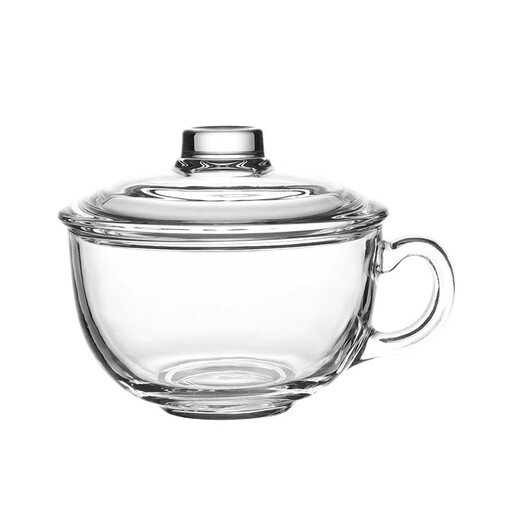
Why This Fits Their Persona: The 520ml stated capacity suits users wanting one larger drink for a desk, kitchen or relaxed home routine.
Its listing identifies tempered glass and a lid, helping buyers compare material and closure details instead of relying on appearance alone.
Tempered glass construction; 520ml stated capacity; lidded format.
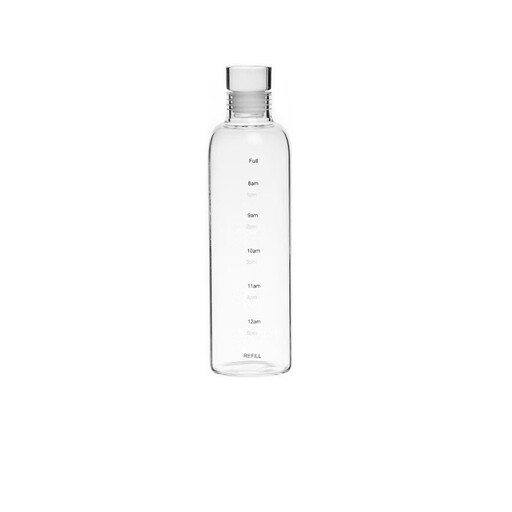
Why This Fits Their Persona: A 500ml format and travel-mug styling suit office commuters and users who prefer measured hydration prompts during the day.
The material and capacity are stated clearly, so shoppers can assess temperature and size requirements before checking the lid’s transport suitability.
Borosilicate glass; 500ml stated capacity; time scale included in the product name.
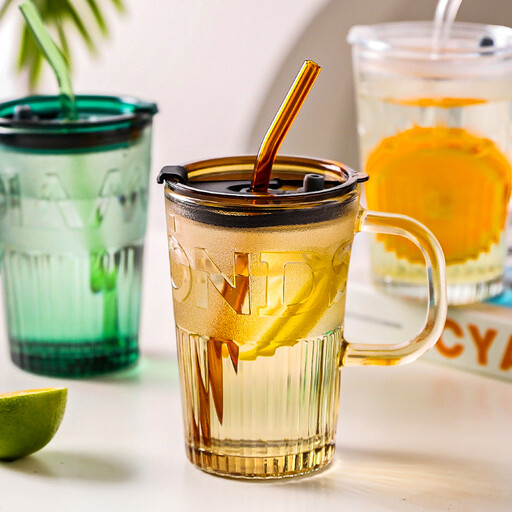
Why This Fits Their Persona: Cold-drink fans wanting an iced coffee cup, smoothie tumbler or juice glass with a straw can focus on this 400ml amber ribbed design.
The intended use is clear from the stated lid, straw and 400ml capacity. Buyers should still check how the straw opening closes before travelling with it.
400ml stated capacity; lid and straw included; ribbed amber glass design.
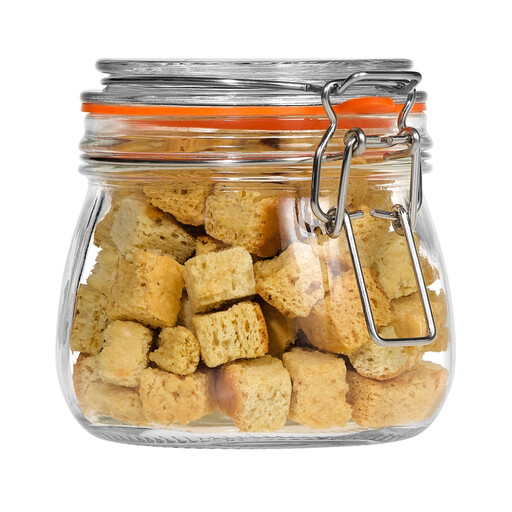
Why This Fits Their Persona: This is suited to pantry organisation, preserves, dry goods and household storage rather than drinking on the move.
The listing specifies an airtight lever-arm closure and silicone gasket, rather than using a generic “sealed” description.
500ml stated capacity; clear glass; lever-arm closure with silicone seal.
Rinse drinks from the lid and straw soon after use, particularly when using milk, syrup or smoothies. Remove silicone seals where the design permits and allow all parts to dry fully before reassembly. Avoid abrasive pads that can mark the surface.
For commuting, place a glass travel mug in a stable section of your bag and use a separate protective sleeve if available. Do not assume a lid is airtight simply because it fits tightly. Replace damaged seals, cracked glass or loose components rather than continuing to use them.
We have compiled a complete, real-time list of products that fully satisfy these strict selection criteria and UK safety regulations.
Some are, but suitability depends on the closure design, seal and drinking opening. A lidded cup designed for cold drinks may reduce splashes without being leak-resistant when tilted. Keep it upright unless the product listing clearly explains its transport use.
Borosilicate glass is often selected for improved resistance to temperature changes, but individual products have different instructions. Check the manufacturer’s guidance before using hot water, and avoid sudden changes such as adding boiling liquid to a chilled cup.
Their lifespan depends on handling, cleaning and the condition of the lid components. Glass can remain usable for a long time when free from chips and cracks, while silicone seals, straws and plastic fittings may need earlier replacement. Inspect the complete cup regularly rather than judging its condition by the glass alone.