
24/7 Customer Support

Free returns

Same-day & Next-day Delivery

Quality Guaranteed

Unlock Your Welcome Offers: FREE Delivery | Up to 80% OFF | Free 30-day JoyPlus trial
Download the APP
Glass food storage containers can make cupboards easier to organise, leftovers simpler to manage and everyday cooking more convenient. However, attractive designs and phrases such as “airtight” do not always tell you whether a container will suit your kitchen.
Before buying, UK households should look beyond appearance and check the lid, capacity, material and care instructions. The right choice depends on whether you are storing dry ingredients, meal-prep portions, oils, dressings or drinks.
A wooden, bamboo or cork lid can add a natural finish, but these materials usually need different care from the glass. Wooden and bamboo lids may not be suitable for soaking, dishwashers, ovens or microwaves. Cork can also absorb moisture if it is repeatedly exposed to spills.
Check whether the lid should be wiped rather than submerged, and whether the seal is made from silicone or another removable material. A seal that becomes loose, cracked or misshapen can affect how securely the container closes.
Standard glass and borosilicate glass are not interchangeable in product descriptions. If you want to reheat leftovers, look for a clearly stated oven-safe specification and follow the manufacturer’s instructions.
Even when a borosilicate glass container is suitable for oven use, the lid may not be. Bamboo, cork, silicone components and other lid materials should generally be removed before heating unless the product instructions specifically say otherwise. Avoid sudden temperature changes, such as moving a very hot container directly onto a cold surface.
A tall 375ml bottle may be useful for dressing or table serving but unsuitable for a large batch of leftovers. Conversely, a wide 950ml container can take up more shelf space than necessary for a small portion of dry goods.
Measure your cupboard depth and shelf height before ordering. For pantry storage containers, also consider whether you can reach a spoon or measuring cup into the opening without spilling the contents.
Clear glass makes it easy to identify contents without opening the container, which is useful for dry food storage jars and meal-prep routines. Borosilicate glass is specifically listed for the 950ml Maison by Premier container and is described as oven-safe. Use it without the bamboo lid when reheating or cooking, following the supplied guidance.
For bottles, check the diameter and height as well as capacity. A narrow bottle may fit neatly beside kitchen storage jars, while a wider design can be easier to clean and refill.
An airtight seal helps limit exposure to moisture and air, but it is only effective when the lid is positioned correctly and the silicone ring remains intact. Look for wording that identifies the sealing component rather than relying solely on a product photograph.
Airtight glass containers are particularly practical for tea, coffee, sugar, rice and other dry goods. They can also help reduce spills when stored on a worktop, although they should still be handled carefully.
Glass is generally straightforward to wash, but lids require closer attention. The Maison by Premier 500ml jar has a wooden lid with an airtight silicone seal; its care guidance recommends warm, soapy water for the glass and a damp cloth for the lid. The lid should not be soaked.
For bottles with cork lids, clean according to the supplied instructions and allow the stopper to dry properly before replacing it. Regularly inspect seals, corks and lid edges for visible wear. Reusable food storage containers are most useful when their parts remain clean, functional and easy to handle.
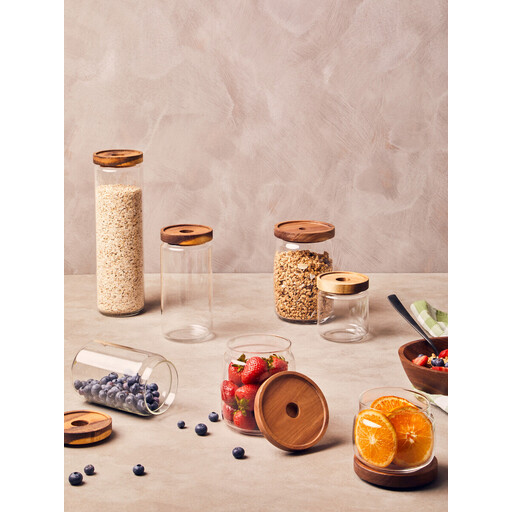
Why This Fits Their Persona: A manageable size for starting a pantry organisation system, storing tea, coffee, sugar or rice in a flat or family kitchen.
Its listed airtight silicone seal addresses moisture exposure, while the care instructions make the wooden lid’s limitations clear.
500ml capacity; clear glass; removable wooden lid with silicone seal.
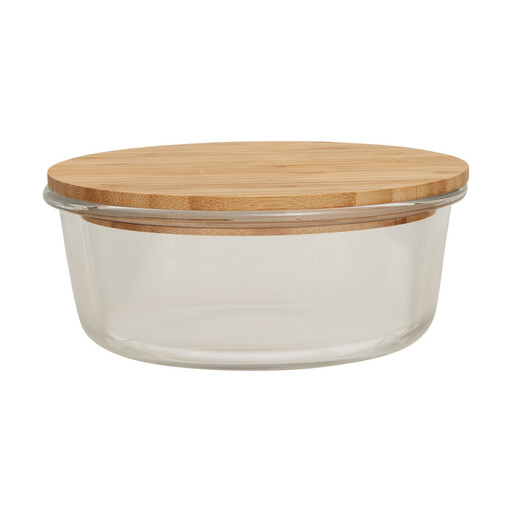
Why This Fits Their Persona: Suited to shoppers seeking a larger, coordinated container for meal preparation, leftovers or visible worktop storage.
The product specifies borosilicate glass and separates oven use from lid use, helping buyers avoid unsafe assumptions.
950ml capacity; stated oven-safe borosilicate glass; bamboo lid with airtight silicone seal.
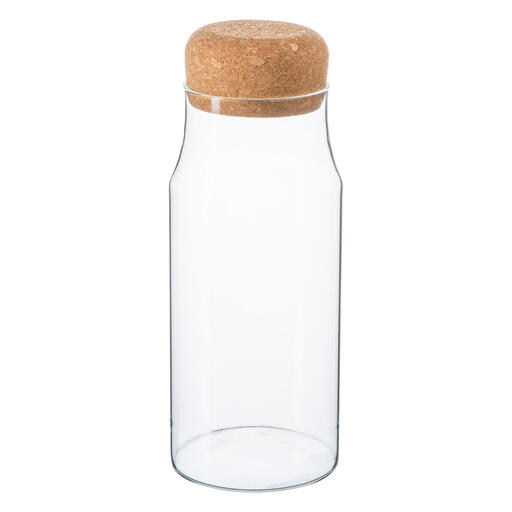
Why This Fits Their Persona: A practical choice for households that regularly prepare oil, dressing or drinks and need a larger serving bottle.
The stated 720ml capacity and 21cm height make its footprint clearer than relying on a lifestyle photograph alone.
720ml capacity; 8.5cm diameter; natural cork lid; listed two-year warranty.
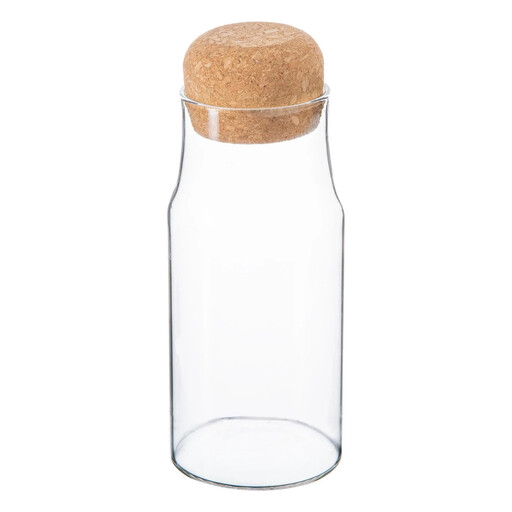
Why This Fits Their Persona: Its compact proportions work well for a smaller kitchen, tabletop serving or storing a modest quantity of oil or dressing.
Its 375ml capacity, 7cm diameter and 17cm height help prevent overbuying for a limited storage area.
Compact 375ml size; cork lid; listed two-year warranty.
We have compiled a complete, real-time list of products that fully satisfy these strict selection criteria and UK safety regulations.
Many are suitable, but capacity, shape and heating instructions matter. A 950ml container may accommodate a larger meal or leftovers, while 500ml glass jars are more suited to dry ingredients or smaller portions. If reheating is important, confirm that the glass is oven- or microwave-safe and remove any lid that is not approved for heating.
There is no single lifespan. Glass can remain usable for a long time when it is not chipped, cracked or exposed to sudden temperature changes. Lids and silicone seals may need replacing sooner because they can wear through regular handling. Inspect every component before use and stop using damaged glass.