
24/7 Customer Support

Free returns

Same-day & Next-day Delivery

Quality Guaranteed

Unlock Your Welcome Offers: FREE Delivery | Up to 80% OFF | Free 30-day JoyPlus trial
Download the APP
Finding suitable gluten free biscuits UK shoppers can trust is not simply a matter of choosing a packet marked “gluten-free”. Ingredients, allergen statements, texture, intended age and storage all affect whether a product fits your household.
For people with coeliac disease, gluten intolerance or a gluten-free dietary preference, the wrong purchase can mean wasted money or an unsuitable snack. Parents also need to distinguish between ordinary gluten-free biscuits and products specifically designed for baby weaning snacks.
Gluten-free does not automatically mean dairy-free, egg-free, nut-free or vegan. For example, some gluten free wafers contain milk and soya, while certain gluten free chocolate biscuits may contain milk or soya through their chocolate chips.
Always check:
For strict avoidance, check the current packaging before every purchase, as recipes and manufacturing arrangements can change.
The word “digestive” describes a traditional biscuit style and does not mean that the product provides medicinal or digestive benefits. A gluten free digestive biscuit can offer a firm, crumbly texture for tea breaks, but it remains a sweet biscuit rather than a therapeutic food.
Likewise, terms such as “natural”, “light” or “wholesome” should not replace checking sugar, fat, salt and portion information.
Products made for babies aged 6 months and over still require careful supervision. A wafer’s texture may be designed to dissolve more easily, but this does not remove choking risk. Follow the packet’s age guidance, ensure the child is seated upright and supervise them throughout eating.
Do not confuse children’s wafers with ordinary gluten free wafers, which may have harder textures, larger portions or ingredients unsuitable for babies.
In the UK, “gluten-free” is a regulated claim generally associated with a maximum gluten level of 20 mg/kg. However, shoppers should still read the product label and manufacturing information, particularly when buying for someone with coeliac disease.
Look for a clear gluten-free statement and review warnings such as “may contain”. Oat-based products also deserve attention. Gluten-free oats may still be unsuitable for some people who react to avenin, an oat protein. This is different from gluten sensitivity, so individual dietary advice may be needed.
Different products work better for different routines:
A 150g pack may be convenient for a couple or an individual, while individually wrapped baby snacks can be useful for changing bags. Once opened, many biscuits and crackers need an airtight container to preserve texture.
Compare the per 100g nutrition panel, not only the per-serving figures. This makes it easier to assess similar products with different serving sizes. A product labelled gluten-free is not automatically lower in calories, sugar or salt than a conventional biscuit.
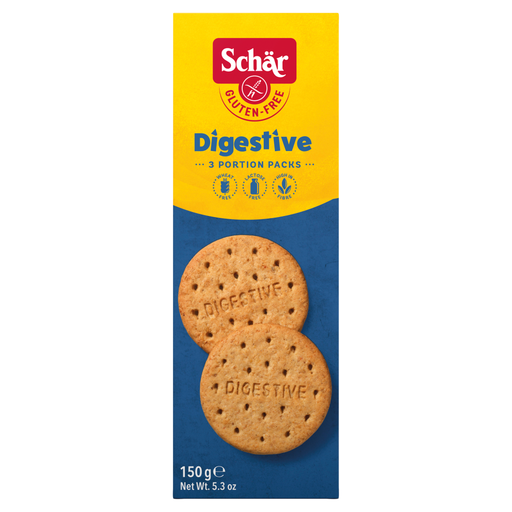
Why This Fits Their Persona: A familiar everyday biscuit format for shoppers building a gluten-free cupboard without buying several specialist varieties at once.
The pack identifies wheat-free ingredients and states that it contains soya, helping shoppers avoid treating a gluten-free claim as an all-allergen claim.
150g pack; semi-sweet biscuit style; 8.5g fibre per 100g according to the supplied nutrition information.

Why This Fits Their Persona: A savoury, oat-based option for shoppers who want more variety than sweet biscuits at lunch or afternoon snack time.
The ingredient list specifies gluten-free wholegrain oats and cheese, while also declaring milk and a possible nut warning.
180g pack; 72% gluten-free wholegrain oats; suitable for toppings, dips or eating alone.
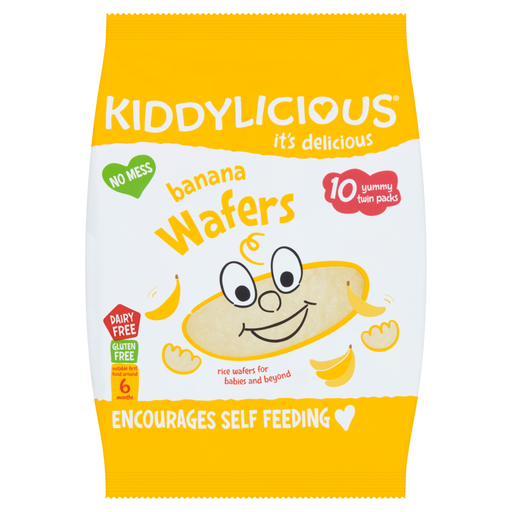
Why This Fits Their Persona: Individually portioned baby weaning snacks for families needing a portable option for days out, nursery bags or supervised snack times.
It is labelled for children aged 6 months and over and identifies itself as dairy-free, gluten-free and egg-free. Adult supervision remains essential.
10 individual 4g sachets; banana flavour; no artificial colours, flavours or preservatives listed in the supplied details.

Why This Fits Their Persona: A light, layered sweet snack for coffee breaks, dessert toppings or occasions when a crisp wafer is preferred over a dense biscuit.
The supplied label information identifies milk and soya, making it unsuitable for shoppers who need dairy-free biscuits despite its wheat-free positioning.
125g pack; vanilla filling; four-cookie serving information provided on the product details.
We have compiled a complete, real-time list of products that fully satisfy these strict selection criteria and UK safety regulations.
They may be suitable when the packaging clearly states that the product is gluten-free and the ingredients and precautionary allergen information meet the individual’s requirements. Always check the current label, especially for oats, “may contain” warnings and possible cross-contact information.
Not necessarily. Gluten-free describes the absence or controlled level of gluten; it does not automatically indicate lower sugar, fat or calories. Compare the nutrition panel per 100g and consider portion size as part of your usual diet.