
24/7 Customer Support

Free returns

Same-day & Next-day Delivery

Quality Guaranteed

Unlock Your Welcome Offers: FREE Delivery | Up to 80% OFF | Free 30-day JoyPlus trial
Download the APP
Finding suitable gluten-free biscuits should be simple, but packaging and marketing language can make shopping harder than expected. A biscuit may appear suitable because it uses oats, rice flour or a “free-from” style design, yet the allergen statement can tell a different story.
For UK shoppers with coeliac disease, gluten intolerance or dietary preferences, the main priorities are clear: check the ingredients, confirm allergen information, compare pack sizes and choose a flavour that suits the occasion. The following guide explains the main buying pitfalls and highlights practical options available through Joybuy.
Wheat is a source of gluten, but gluten can also be present in other cereals such as barley and rye. Some products may also contain malt extract, which is commonly derived from barley. Always look for an explicit gluten-free statement and read the full ingredients list rather than relying only on the front of the pack.
For coeliac shoppers, also check whether the packaging mentions possible cross-contamination or shared manufacturing equipment. Product information can change, so the label supplied with your order should take priority.
These terms are not interchangeable:
Schar Gluten Free Custard Creams are listed as gluten-free, lactose-free and suitable for vegans, making them a useful option for households with several dietary requirements. By contrast, McVitie’s Gluten Free Hobnobs are made with gluten-free oats but may contain milk, egg, soya and nuts.
A large family pack may offer a lower price per 100g, but it can lose its crisp texture if it remains open in a humid kitchen. Individually wrapped or snack-sized packs can be more convenient for lunchboxes, commuting and office drawers.
For larger packs, transfer biscuits to an airtight container after opening. Store them in a cool, dry place and always follow the best-before guidance on the packaging.
For people avoiding gluten for medical reasons, the most important detail is the product’s stated gluten-free status and allergen information. Check for:
The term biscuits for gluten intolerance is often used in searches, but it is not a substitute for checking the label. If you have coeliac disease or a diagnosed allergy, follow advice from your healthcare professional and use the latest packaging information.
Custard fillings, chocolate coatings and cream-flavoured centres can contain milk powder, whey or lactose. Some biscuits also include egg or soya lecithin. This matters when choosing dairy-free biscuits, vegan biscuits or snacks for a mixed-allergen household.
For example, the Schar custard creams use rice flour and maize ingredients, while their listed filling contains palm oil, sugar and potato starch rather than milk. The product description identifies them as lactose-free and vegan, but shoppers should still verify the pack before eating.
Gluten-free does not automatically mean low in sugar, fat or calories. Compare the nutrition panel per 100g and consider the serving format:
For biscuits for tea, focus on texture and flavour as well as dietary suitability. A crisp custard cream, oat biscuit or chocolate biscuit may each suit a different tea break.
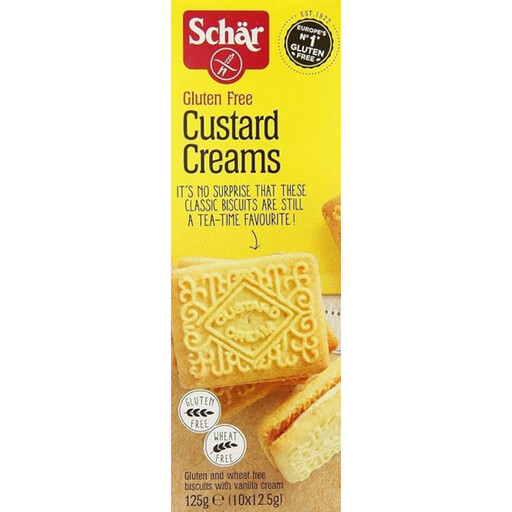
Why This Fits Their Persona: A modest 125g pack offers a straightforward way to try gluten-free custard creams without committing to a large quantity. Five listed servings also suit lunchboxes and weekday tea breaks.
The listing identifies the product as gluten-free, lactose-free and vegan, helping shoppers distinguish it from ordinary custard creams. Check the physical pack for current allergen wording.
Rice and maize-based biscuit; 125g pack; listed at 60 kcal per 12.5g biscuit.
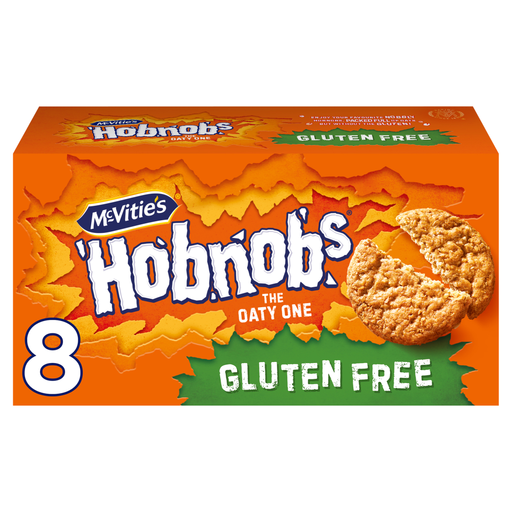
Why This Fits Their Persona: Shoppers who prefer a familiar oat-based texture may appreciate a 150g pack for regular tea breaks and cupboard storage.
The ingredients specify gluten-free rolled oats and gluten-free wholegrain oat flour, while also clearly stating possible milk, egg, soya and nut presence.
Contains 42% gluten-free rolled oats; provides 4.6g fibre per 100g; made in the UK according to the supplied listing.
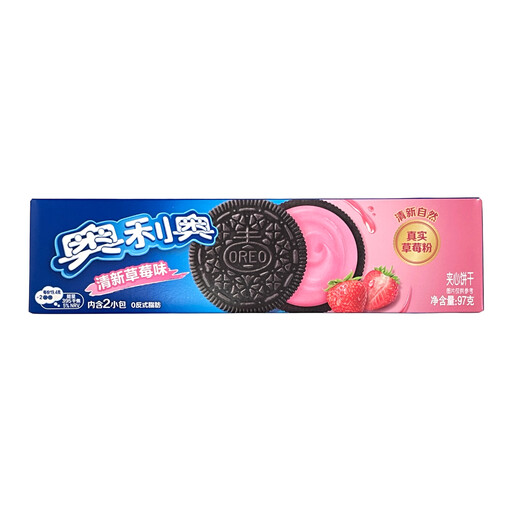
Why This Fits Their Persona: This is a convenient option for mixed households where some shoppers want a compact sweet snack, but it is not suitable for a gluten-free diet.
It demonstrates why checking the allergen panel matters: the listing contains wheat and soya. Do not select it as gluten-free biscuits.
97g pack; strawberry filling; individually wrapped according to the supplied product information.
We have compiled a complete, real-time list of products that fully satisfy these strict selection criteria and UK safety regulations.
Only products clearly labelled gluten-free and suitable for the individual’s dietary requirements should be considered. Check the latest packaging, ingredients and cross-contamination advice each time you buy. “Wheat-free” alone is not enough.
The supplied McVitie’s Gluten Free Hobnobs information lists possible milk, egg and soya traces. They should not automatically be treated as vegan. Check the pack for the current vegan and allergen position.
Yes. Some products are formulated without lactose, but this does not apply to every gluten-free biscuit. Schar Gluten Free Custard Creams are listed as lactose-free, while other products may contain milk, whey or butter. Always compare the ingredient and allergen panels before ordering.