Coeliac households buying bars to share
You need to check the exact multipack rather than relying on its brand, cereal-bar format or wholegrain wording. The other people sharing it may have additional allergen requirements.


For a coeliac household, start with a cereal-bar multipack explicitly labelled gluten free, then check the current pack’s ingredients and other allergens for everyone sharing it. Protein and fruit-and-nut bars offer different formats; with an oat-based bar, check that the oats are gluten free and consider whether the intended eater tolerates them.
You need to check the exact multipack rather than relying on its brand, cereal-bar format or wholegrain wording. The other people sharing it may have additional allergen requirements.
Protein may help you choose between formats, but it does not establish gluten-free status. Check the claim and allergen declaration on the particular bar before choosing a pack.
Recipes vary, so compare the current pack’s declaration for peanuts, tree nuts, milk and soya against the needs of everyone who might eat a bar.
Establish whether the exact bar is suitable for coeliac shopping before comparing flavours, pack sizes or nutrition information. For a shared pack, check the requirements of each intended eater.
| Priority | What to check | My needs |
|---|---|---|
| Gluten-free status | Look for a gluten-free claim on the exact pack. Read the ingredients declaration for cereals containing gluten and check any precautionary statement, particularly if there is no gluten-free claim. | I need a bar I can assess from its current label, not from a wholegrain description or the reputation of its brand. |
| Oats | Distinguish gluten-free oats from ordinary oats. Coeliac UK warns that standard oats may be contaminated with wheat, barley or rye, and that a small number of people with coeliac disease remain sensitive even to gluten-free oats. | If I am choosing a flapjack, I need to know which oats it uses and whether the person eating it tolerates gluten-free oats. |
| Other allergens | Check each recipe’s ingredients and precautionary allergen statements for relevant ingredients, including peanuts, tree nuts, milk and soya. Do not treat a gluten-free claim as an answer to a different allergy requirement. | A pack for several people needs to work for each intended eater, not just the person avoiding gluten. |
| Pack format | Compare the stated number of bars and weight per bar. Confirm the individual-bar packaging if that matters for carrying or sharing them. | Three bars may suit a different shopping plan from an eight-bar pack; I want to choose the count deliberately. |
| Nutrition information | If protein or fibre matters to your choice, compare the stated amount on the same per-bar or per-100g basis. Read the rest of the nutrition panel alongside serving size. | I want a protein-oriented or fruit-and-nut format, but I would not use that description in place of the gluten-free and allergen checks. |
Coeliac UK warns that standard oats may be contaminated with gluten-containing cereals. Specific mainstream products also contain wheat or barley: Weetabix Cereals lists whole wheat in Alpen Fruit & Nut Bars, while Kellogg’s describes its Special K flakes as containing wholewheat and barley.
Check the exact cereal-bar pack for a gluten-free claim and read its ingredients; do not substitute an ordinary oat or multigrain product on the basis of its name.
A gluten-free recipe can still contain other allergens. The listed Nature Valley Protein Peanut & Chocolate product, for example, contains peanuts, soya and milk.
Check the current ingredient and precautionary allergen information against the requirements of everyone who may share the pack.
A protein figure does not establish whether a bar meets a coeliac shopper’s needs or another household member’s allergen requirements. Protein bars and oat flapjacks can also have different serving sizes.
Check gluten-free status and allergens first, then compare protein and the wider nutrition panel using the same serving basis.
A brand name alone does not establish whether a particular cereal bar is suitable: these examples refer to specific products or ranges.
Selected Protein bars, including Peanut & Chocolate, are described by Nature Valley UK as gluten free; that does not extend the claim to its other ranges.
TREK offers gluten-free protein flapjacks; the Cocoa Oat product is listed by Tesco as a vegan 3 x 50g multipack.
Eat Natural UK lists several styles in its gluten-free range, including fruit-and-nut and protein bars.
Alpen Fruit & Nut Bars illustrate why an ordinary cereal-bar description is not a gluten-free claim.
The ingredients of a named Kellogg’s product cannot establish the suitability of every product bearing the brand.
These options cover protein flapjacks, other protein bars and a fruit-and-nut bar for the coeliac-household shopping question. Check the current pack’s gluten-free claim and allergen information before choosing one to share.
 No image available
An oat-based protein-flapjack multipack described as using gluten-free oats. It contains soya and carries a precautionary warning for peanuts, nuts and milk; consider oat tolerance and check the current pack before sharing.
 No image available
A four-bar protein multipack described as gluten free. Nature Valley UK states 10g protein per bar for Peanut & Chocolate. It contains peanuts, soya and milk and carries a precautionary nut warning; check the current pack for everyone sharing it.
 No image available
A four-bar protein multipack described as gluten free. Its listed allergens include almonds, milk, peanuts and soya, making the exact ingredient declaration important when choosing for a household.
 No image available
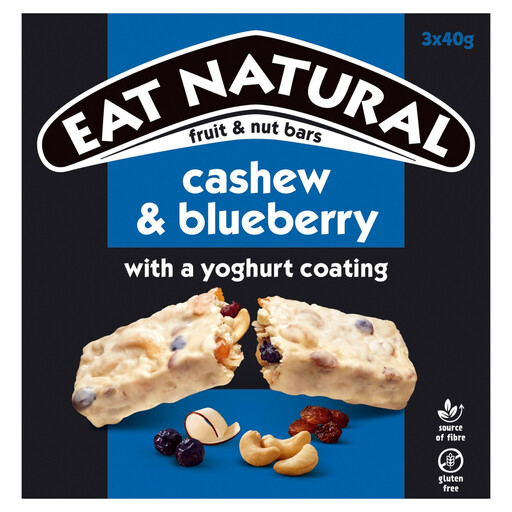
A three-bar fruit-and-nut option described as gluten free. The listed ingredients include cashews, almonds and milk, with a precautionary warning for nuts, peanuts and soya; check the current pack before sharing.
 No image available
An eight-bar version of the Peanut & Chocolate protein multipack, described as gluten free. Nature Valley UK states 10g protein per bar. It contains milk, peanuts and soya and may contain tree nuts, so check the current pack against each intended eater’s requirements.
Not automatically. Coeliac UK warns that standard oats may be contaminated with wheat, barley or rye, and that a small number of people with coeliac disease remain sensitive even to gluten-free oats. Check for a gluten-free claim on the exact oat bar and consider the intended eater’s tolerance.
The UK Food Standards Agency states that food labelled gluten free must contain no more than 20 mg/kg of gluten in the food as sold to the final consumer. A wholegrain, natural or oat-based description does not make the same claim; still read the specific pack’s ingredients and allergen information.
Yes, particularly when sharing it with someone who has another allergy or dietary restriction. A gluten-free claim does not rule out ingredients such as peanuts, tree nuts, milk or soya; check the current pack for each relevant ingredient and precautionary statement.
No. The absence of that warning is not an explicit gluten-free claim. Coeliac UK advises checking precautionary statements for cereals containing gluten when a product has no gluten-free claim; read the full ingredients and labelling rather than deciding from one absent warning.
First compare packs that meet the intended eaters’ gluten-free and other allergen requirements. Then check the number of bars, weight per bar and individual packaging where carrying or sharing portions matters; a larger count does not resolve a dietary mismatch.