Coeliac shoppers comparing fat
Start with an explicit gluten-free statement on the exact bar. Once a bar meets that requirement, its nutrition panel lets you compare total fat per 100g with other suitable options.


For coeliac shopping, check that the exact cereal bar is labelled gluten free before comparing fat per 100g. Among three gluten-free examples, listings from Snappy Shopper, Sainsbury's and Nature Valley give 20g for TREK Salted Caramel, 24.6g for Eat Natural Almond & Cranberry and 28.3g for Nature Valley Protein Peanut & Chocolate, respectively. That limited comparison does not establish a reduced-fat claim for any of them; oats and other allergens also matter to the choice.
Start with an explicit gluten-free statement on the exact bar. Once a bar meets that requirement, its nutrition panel lets you compare total fat per 100g with other suitable options.
Check that an oat bar is labelled gluten free, rather than relying on the word “oats”. Coeliac UK notes that standard oats can be contaminated with gluten-containing cereals and that a small number of people remain sensitive even to gluten-free oats.
A gluten-free protein or fruit-and-nut bar may still contain peanuts, tree nuts, milk or soya. Read the ingredient and allergen information for the flavour and pack size you intend to buy.
Treat gluten-free suitability as the first screen. Then compare the same fat measure across exact variants, keeping oat tolerance and other allergens in view.
| Priority | What to check | Your needs |
|---|---|---|
| Gluten-free status | Look for an explicit gluten-free statement on the exact pack. Read its ingredients and allergen information as well; an oat or cereal-bar name alone does not establish suitability. Coeliac UK advises checking food labels for cereals containing gluten. | I need to establish that this particular bar is suitable for coeliac shopping before its nutrition figures influence my choice. |
| Total fat | Compare total fat per 100g on like-for-like nutrition panels, then check the bar's portion size. Listings from Snappy Shopper, Sainsbury's and Nature Valley give 20g, 24.6g and 28.3g per 100g for the TREK Salted Caramel, Eat Natural Almond & Cranberry and Nature Valley Protein Peanut & Chocolate examples, respectively. | If lower fat is my priority, I want to compare bars that have already passed the gluten-free check. A lower figure in this small group does not, by itself, establish a reduced-fat claim. |
| Reduced-fat wording | Check whether the exact pack makes a reduced-fat claim and identifies a meaningful comparison with a similar product. Do not use a difference between unrelated bars as proof of that claim. | I want to know whether “reduced fat” is a claim about this product, rather than my own description of a bar with a smaller fat figure. |
| Oats and other allergens | For oat bars, check the gluten-free declaration and whether gluten-free oats suit you. For nut or protein bars, read the full ingredient list and precautionary allergen statements for the exact variant. | An oat flapjack may not fit my needs even when labelled gluten free; alternatively, I may need to avoid a bar containing peanuts, milk or soya. |
A smaller per-100g figure than another bar is a useful comparison, but it does not establish that the product itself qualifies for a reduced-fat claim.
Compare nutrition panels when choosing between gluten-free bars. If a reduced-fat claim matters to you, check the wording and comparison basis on the exact pack.
Coeliac UK warns that standard oats can be contaminated with gluten-containing cereals. A lower-fat figure cannot resolve that issue; Tesco's listing for the Marshmallow Rice Krispies Squares variant also states that it contains wheat gluten.
Check for an explicit gluten-free statement and read the ingredients and allergens for the exact flavour and pack size before comparing nutrition panels.
Those features describe different aspects of a bar. The gluten-free TREK, Eat Natural and Nature Valley examples have distinct fat figures in their Snappy Shopper, Sainsbury's and Nature Valley product information.
Use total fat per 100g for the comparison, then check portion size, saturates and allergens that matter to you.
Brand names alone do not establish whether a cereal bar is gluten free or lower in fat: the examples below concern specific variants.
Nature Valley describes its Protein Peanut & Chocolate bars as gluten free; that does not extend to every Nature Valley range.
An Alpen Light name describes a product line, not its suitability for coeliac shopping.
The Marshmallow Rice Krispies Squares variant illustrates why a familiar cereal-bar name is not a gluten-free check.
Graze Honey Oat Boost has product claims concerning sugar, which should not be read as fat or gluten-free claims.
Sainsbury's lists the Almond & Cranberry with Pomegranate & Honey bar as gluten free.
The Salted Caramel Protein Flapjack is a gluten-free oat-based option, according to Tesco's product listing.
These Joybuy options cover a gluten-free oat flapjack and a gluten-free peanut-and-chocolate protein bar. Compare their per-100g fat figures and check each exact pack's ingredients and allergens.
 No image available
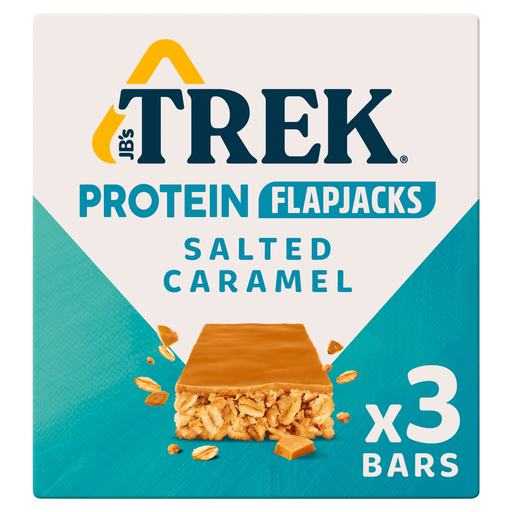
An oat-based option for shoppers checking gluten-free status before comparing fat. Tesco lists gluten-free oats and 9g plant-based protein per 50g bar; Snappy Shopper lists 20g total fat per 100g. Check whether gluten-free oats suit you and read the pack's soya and precautionary allergen information.
 No image available
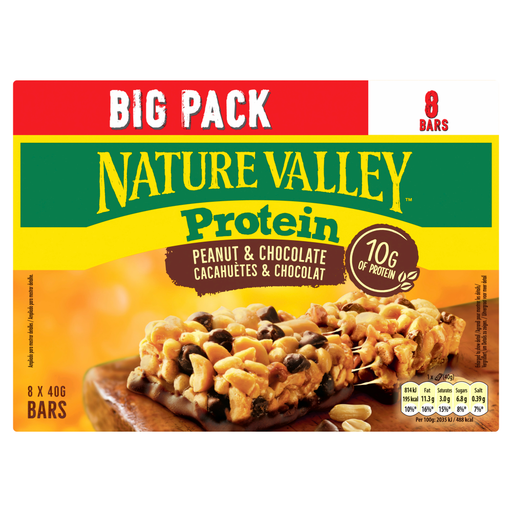
A gluten-free peanut-and-chocolate option for shoppers considering a protein bar. Nature Valley lists 28.3g total fat per 100g and around 10g protein per 40g bar. It contains peanuts, soya and milk; check the exact pack for its full allergen information.
No. “Reduced fat” is a comparison claim, not a description of how much fat a bar contains on its own. If that claim matters to you, check the exact pack and its comparison basis; use the per-100g nutrition figures to compare bars you have already established are suitable for coeliac shopping.
Check that the exact pack explicitly says gluten free, then read its ingredients and allergen information. Compare fat per 100g only among bars that meet your gluten-free and other ingredient requirements.
Choose an oat bar only after checking its explicit gluten-free labelling and whether gluten-free oats suit you. Coeliac UK explains that standard oats can be contaminated with wheat, barley or rye and that a small number of people remain sensitive to gluten-free oats.
Within the three examples compared here, TREK Salted Caramel Protein Flapjacks have the lower listed total-fat figure at 20g per 100g in the Snappy Shopper listing. Sainsbury's lists 24.6g per 100g for Eat Natural Almond & Cranberry, while Nature Valley lists 28.3g for its Protein Peanut & Chocolate bars. This comparison does not establish a reduced-fat claim or settle whether an oat or nut-based bar suits your other requirements.